The UK PMI services-sector index increased to 51.4 for July from 50.2 in June, above consensus forecasts of 50.4 and the strongest reading for 9 months.
The rate of new business growth strengthened to the highest level since September 2018 with UK companies boosted by the competitive currency as export orders increased at the fastest pace since June 2018.
There is, therefore a significant difference between manufacturing and services: manufacturing has failed to benefit from the pound sterling weakness with global companies looking to re-source supply chains.
In contrast, services companies have benefited from the pound sterling weakness with given that supply chains are less of an issue.
The services data will ease pessimism slightly and CFTC data recorded the largest short pound sterling position for over two years with substantial scope for short covering if there is a shift in sentiment. The pound sterling, however, still faces major hurdles in the short-term.
Political uncertainty will remain extremely high in the short-term as Johnson's government looks to establish a Brexit strategy. Given the EU holiday season, negotiations will be very limited in the short-term with the real action taking place from early September.
At this stage, the UK will continue to insist on leaving the EU on October 31st with or without a deal.
The pound sterling's moves will also be influenced by global risk appetite and fears that have increased sharply since President Trump's announcement that tariffs on the Chinese exports will be levied from September 1st.
Given the UK's economic dependence on international trade, fears over global trade and growth developments will hurt the UK economy and undermine the pound sterling. Therefore, there is little scope for more than a limited pound sterling correction.
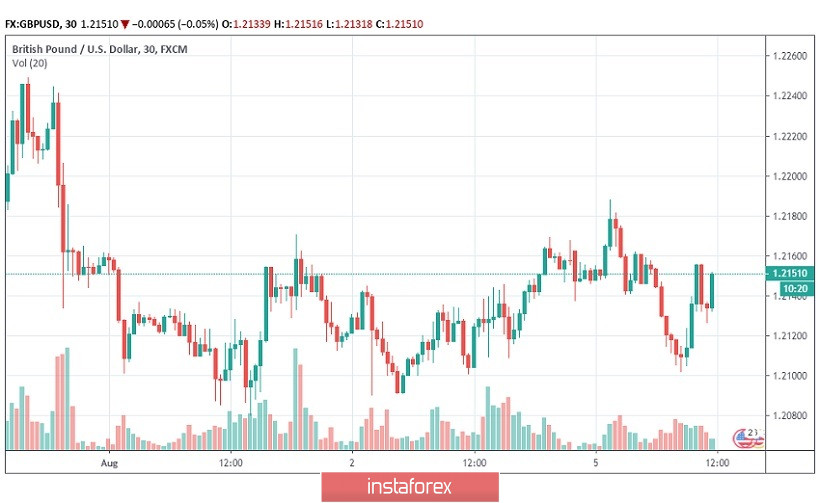
GBP/USD has scope for support close to 1.2100 given increased US dollar vulnerability, but a move above 1.2185 is needed to improve the technical outlook.