


















At the beginning of this week, an upward movement was formed and directed toward a medium-term impulse. If the reversal model is formed on the junior time frame, the growth will continue, and the monthly maximum is updated.
Medium-term plan.
In the medium term, the potential for the fall of the British pound is still high, since the downward model was not implemented. The main purpose of the fall is the weekly short-term fault of 142.55-142.03. Thus, achieving this zone will close most of the sales. The advantageous prices for sale should be looked for tests of the younger control zones, one of which is located within the current intraday move. The movement to a weekly short-term will allow forming a long-term accumulation zone.
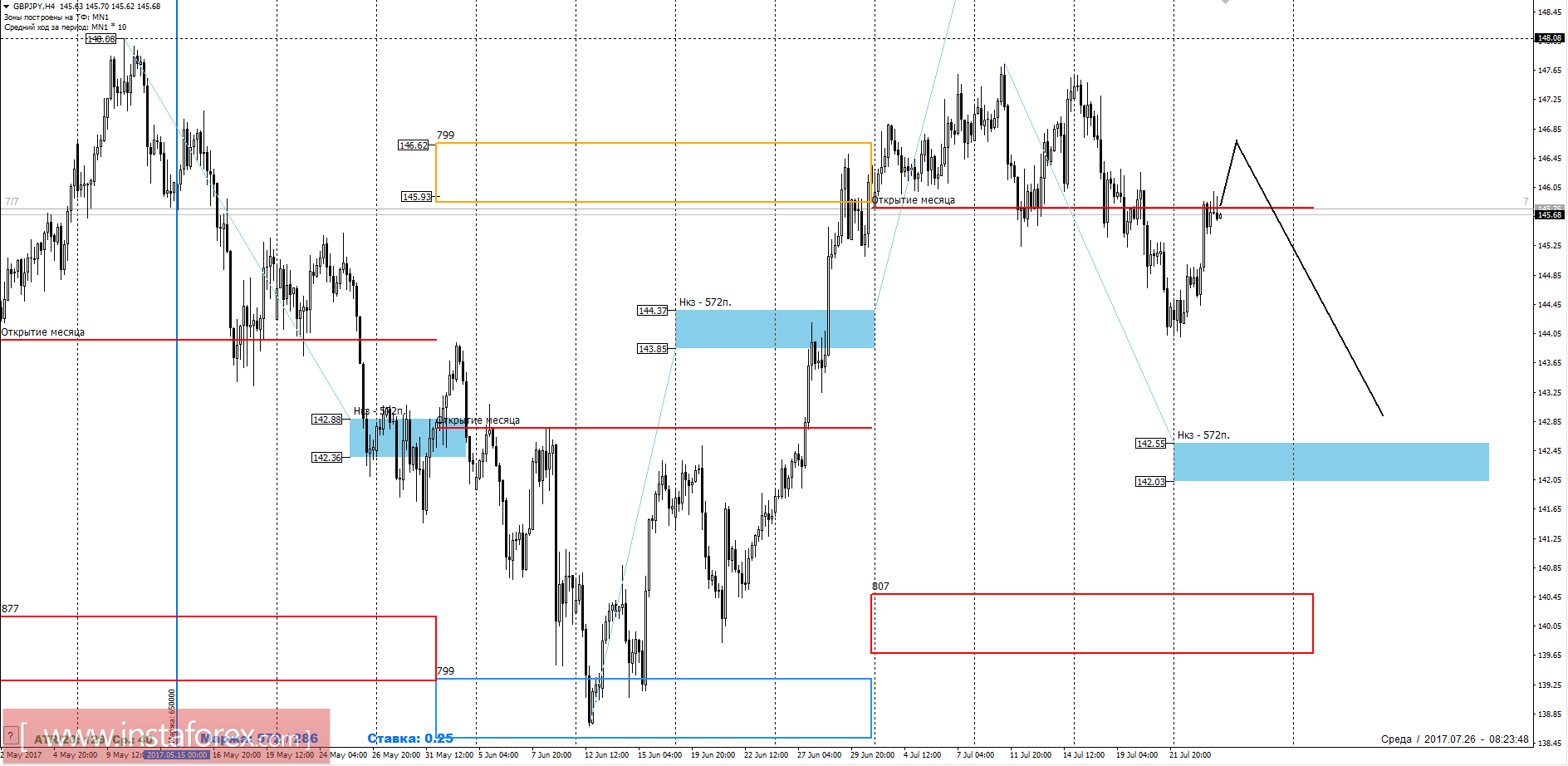
An alternative model will develop if the pair can form a reversal model on the junior timeframe. This will open the way for updating the monthly and annual maximum.
Intraday plan.
The determining resistance in the current week is NKZ 1/2 146.86-146.60. While the pair is trading below this zone, the downward movement remains a priority. The favorable prices for sale are located within the specified zone. The purpose of the fall will be the weekly short-term fault of 142.55-142.03. To form a reversal upward model, it will be necessary to consolidate above the level of 146.86 at one of the American sessions. This will make it possible to look for purchases and wait for the update of the annual maximum in the medium term.
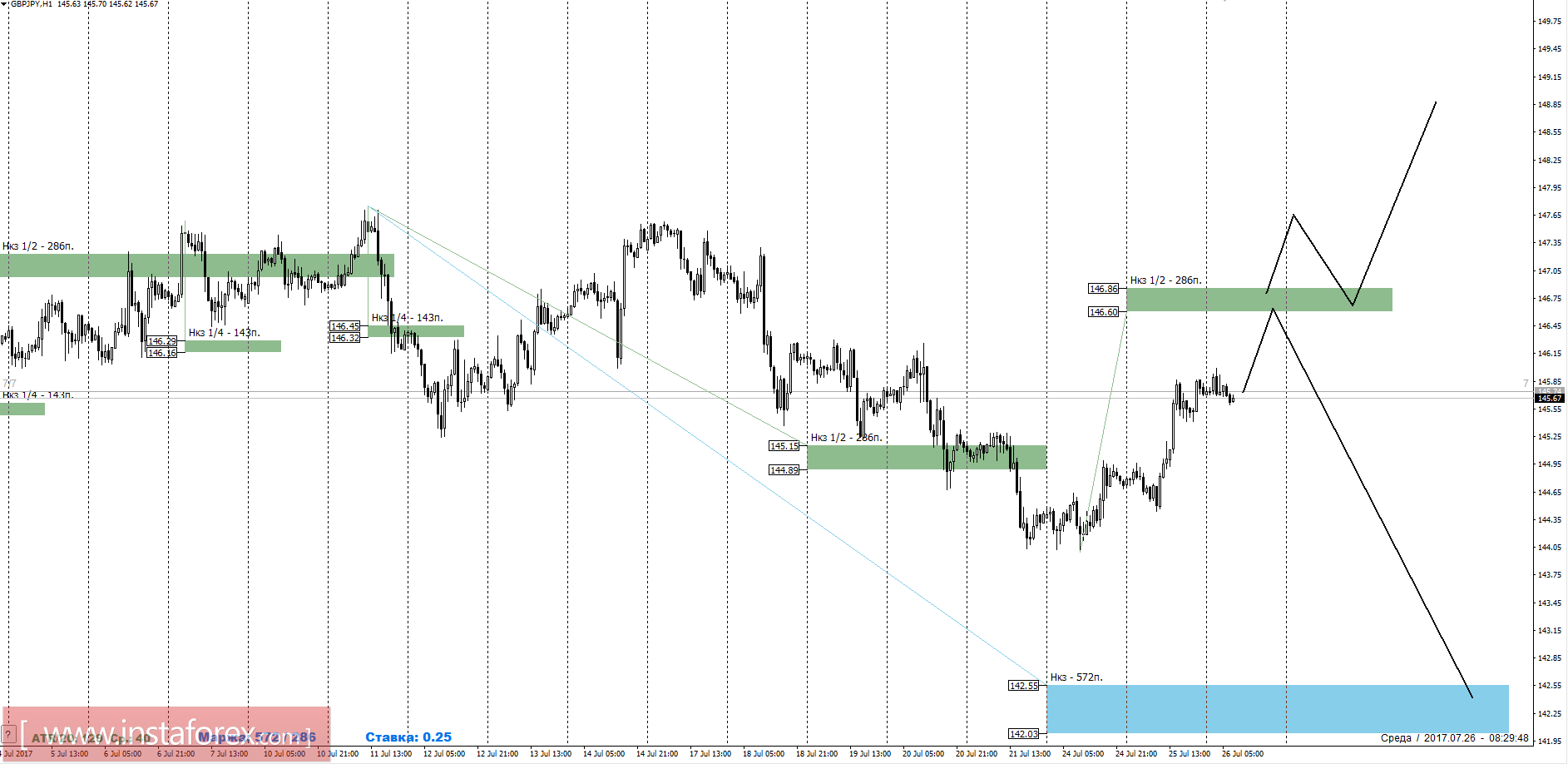
Daytime short-term fault is the daytime control zone. The zone formed by important data from the future market, which change several times a year.
Weekly short-term fault is the weekly control zone. The zone formed by important future market marks, which change several times a year.
Monthly short-term fault is the monthly control zone. The zone, which is a reflection of the average volatility over the past year.


