


















During the past two weeks, the pair continues to move in a downward direction. The immediate goal of the reduction is a weekly short-term clearance of 1.2460-1.2446. Within the weekly course, there is an annual minimum, the test of which will record the majority of sales.
Medium-term plan.
At the beginning of this week, the pair is close to several significant levels and zones. The first support will be a one-week short-term call of 1.2460-1.2446. If fixed below this zone, the annual minimum of 1.2415, formed in July, will be updated. At the levels 1.2333-1.2271, there is a monthly short-term fault, which adds probabilities in the formation of the reversal model. It is important to understand that the test of one of these supports can lead to the emergence of large demand, which makes sales from current marks not profitable and speaks about the need to fix sales that were committed earlier.
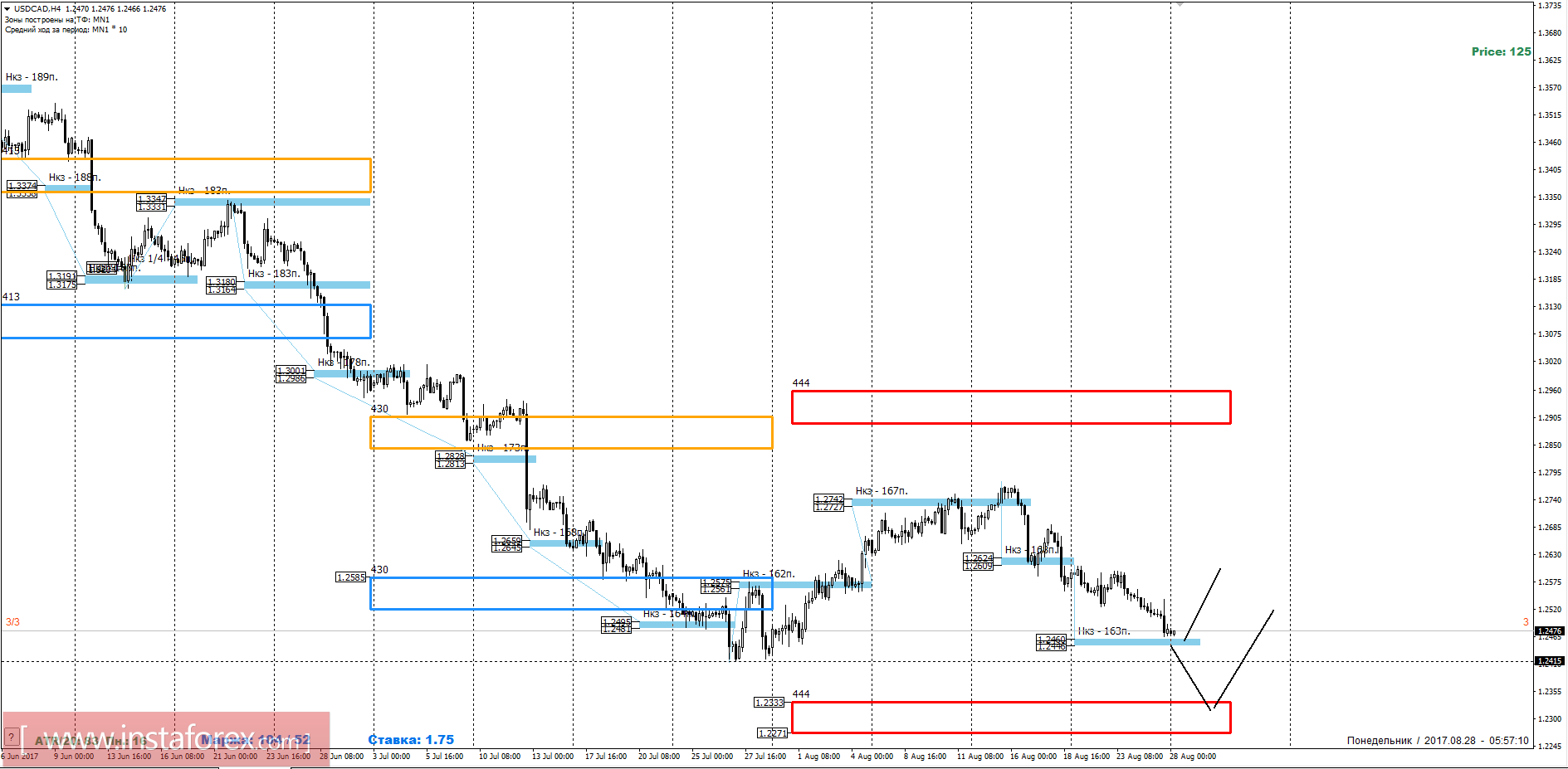
For the formation of an alternative model, the emergence of strong demand from current grades will require the formation of a medium-term accumulation zone within the limits of the extremes of the current month.
Intraday plan.
The nearest support is within the limits of the NCP 1/2 1.2452-1.2444, which indicates the need to fix a short position, opened last week. Within the limits of the day's turn, the determining resistance of the NCP 1/2 is 1.2547-1.2539. While the pair is trading below these levels, the downward movement will continue and the probability of updating the annual minimum is 70%. The test of the above control zone will allow you to get favorable prices for the sale of the instrument.
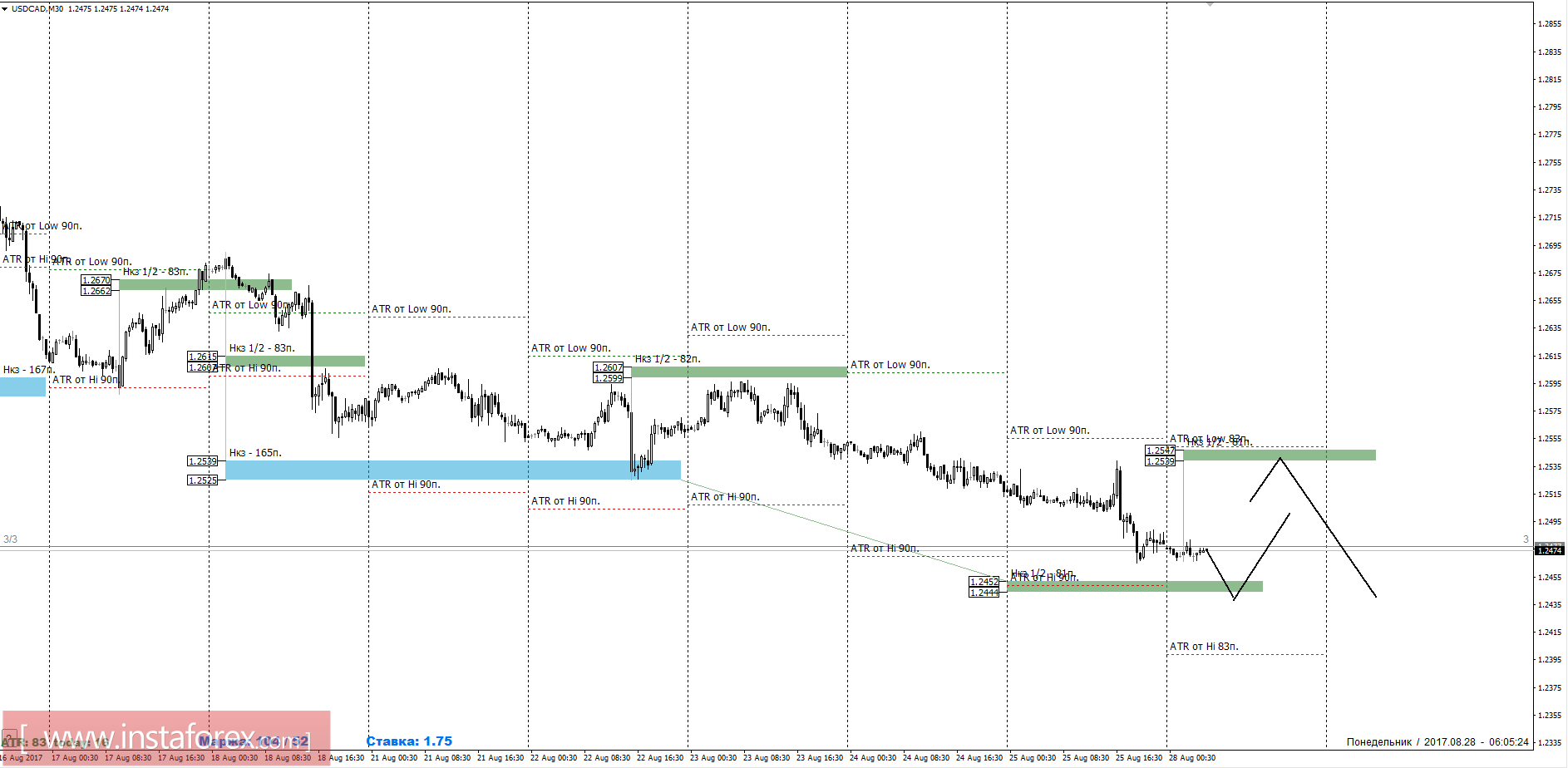
The daytime short-term fault is the daytime control zone. The zone formed by important data from the futures market, which change several times a year.
The weekly short-term fault is the weekly control zone. The zone formed by important futures market marks, which change several times a year.
The monthly short-term fault is the monthly control zone. The zone, which is a reflection of the average volatility over the past year.


