


















Last week, the pair formed a correction model but a week-long short-term strike of 143.47-143.09 was not achieved. This speaks in favor of continuing the upward movement at the beginning of this week.
Medium-term plan.
Last week, the main goal of the growth was the weekly short-term fault of 143.47-143.09, which indicates the continuation of the upward movement. The test of this zone will allow us to consider two models. The appearance of a large proposal will indicate the resumption of the downward impulse model, where the target will once again be the monthly short-term fault of 140.00-139.25. Closure of one of the American sessions above the level of 143.47 will open the way for further growth and point to the impulsive nature of the upward medium-term movement.
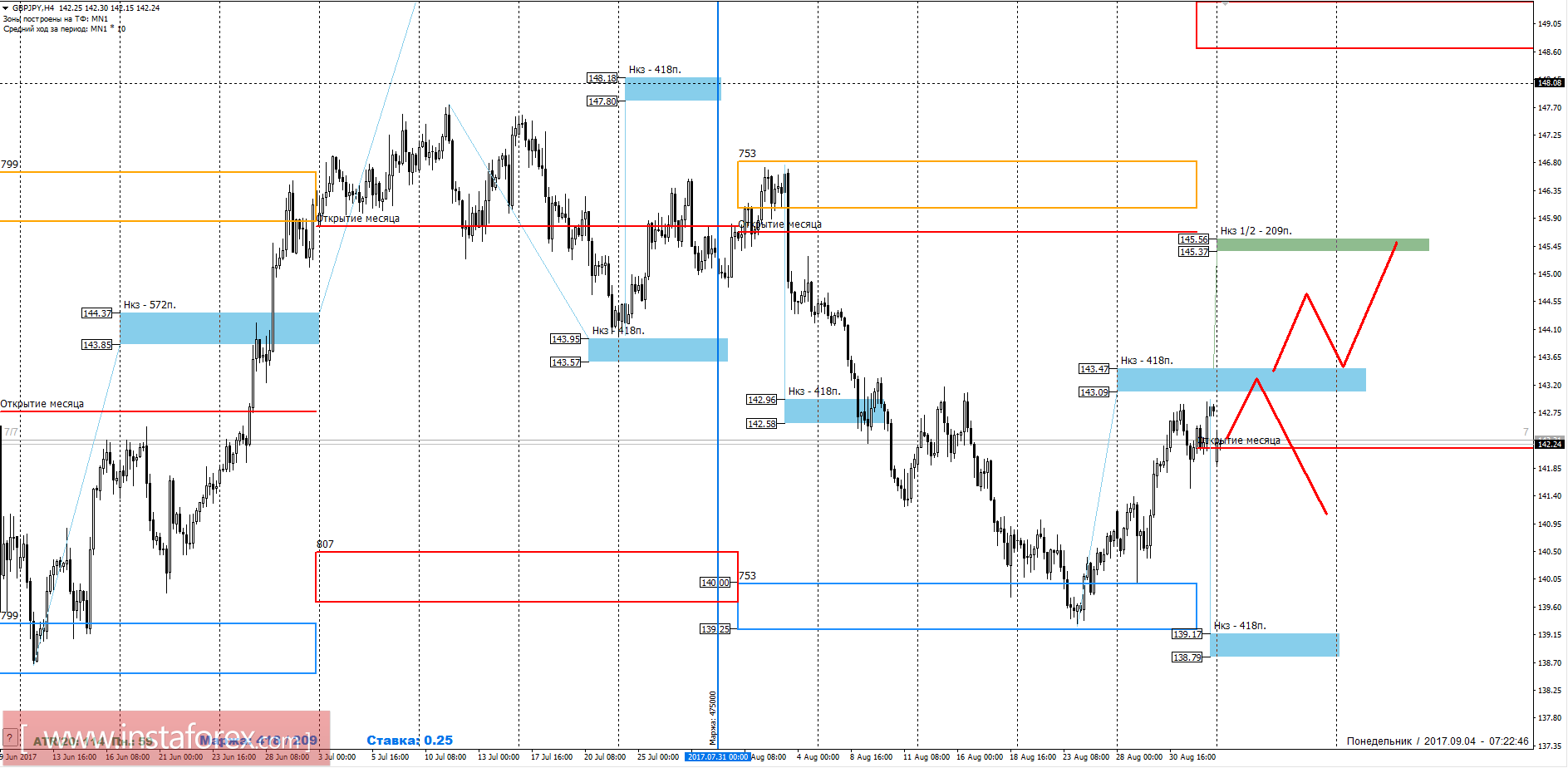
An alternative model will develop if the pair continues to decline from current marks. This will get more favorable prices for the purchase of the instrument in the near future.
Intraday plan.
Today, the pair tested the first support zone for the NCP 1/4 142.02-141.93, which indicates a possible continuation of the growth to the week-long short-term fault of 143.47-143.09. The defining support is the NCP 1/2 141.07-140.88. While the pair is trading above this zone, the upward movement will remain intraday impulse. For the formation of a deeper correction, the consolidation is required below the level of 141.93 at today's American session.
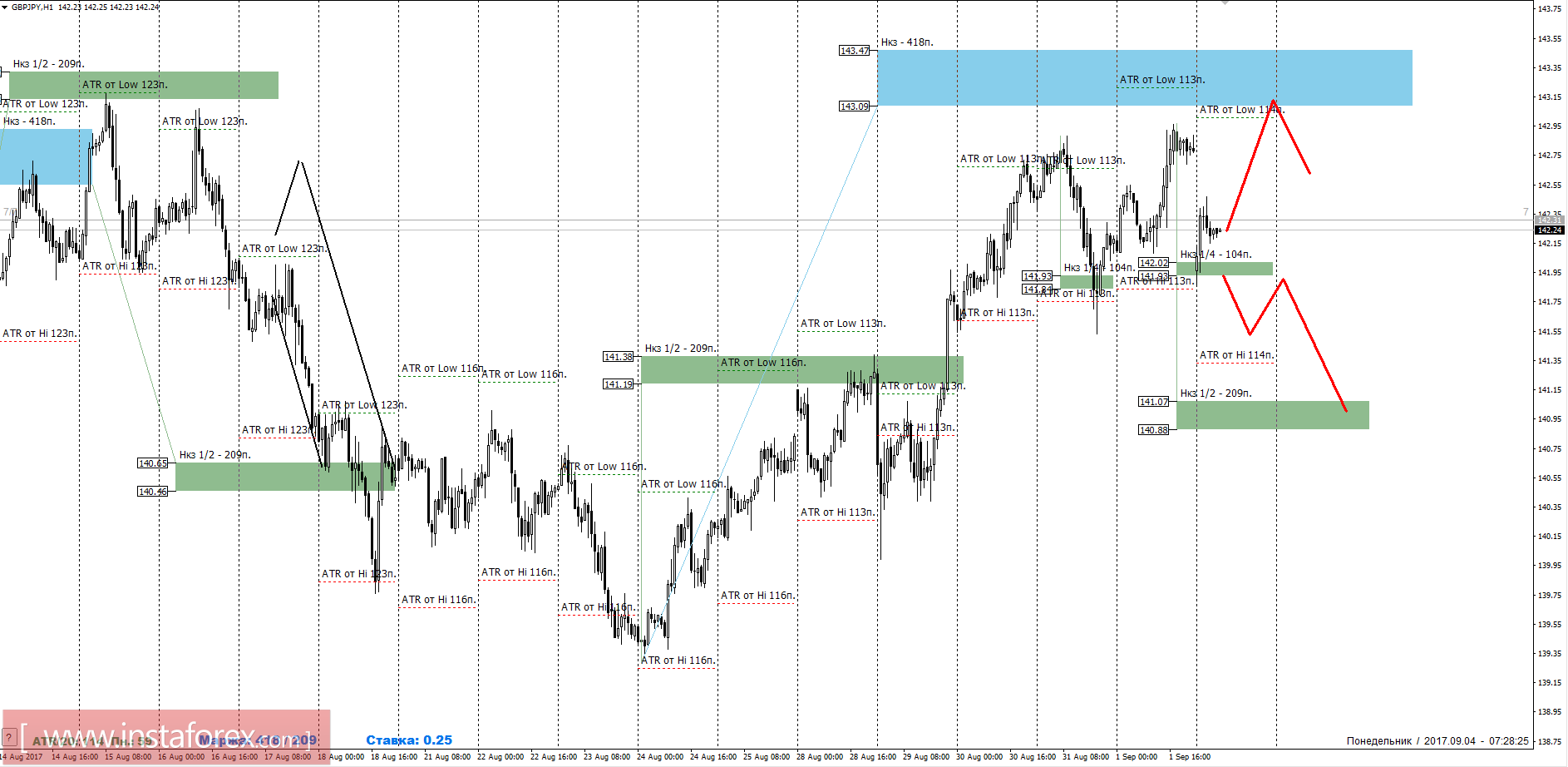
The daytime short-term fault is the daytime control zone. The zone formed by important data from the futures market, which change several times a year.
The weekly short-term fault is the weekly control zone. The zone formed by important futures market marks, which change several times a year.
The monthly short-term fault is the monthly control zone. The zone, which is a reflection of the average volatility over the past year.


