


















Good data on the economy of the eurozone, as well as expectations of the ECB's statement on the reduction of the easing program, fueled the demand for the European currency, which paired with the US dollar to its weekly highs.
Some economists predict that the European Central Bank may postpone a decision on this topic, but judging by the latest economic indicators, it will be difficult.
According to the report of the statistical agency, the economy of the eurozone in the second quarter of this year compared with the same period last year grew faster than expected. Comparing eurozone's GDP in the 2nd quarter with the same period last year, the euro area's GDP grew by 2.3%, while on an annualized basis, the euro zone's economy grew by 2.6%.
The main growth was provided by exports, as well as by an increase in investment spending, which strongly increased in the second quarter of this year.
The whole problem is that further strengthening of the euro can significantly affect the volume of exports, which will affect the economic performance of the eurozone in the third and fourth quarter of this year.
Today, data that showed that the negative balance of the current account of France's balance of payments in July this year has increased significantly was also released. This occurred against the backdrop of growing imports. The current account deficit of the balance of payments totaled to 4.2 billion euros against the 2.4 billion euros in June. The negative balance of France's trade balance in July rose to 6 billion euros.
Industrial production in Germany remained unchanged compared to the previous month, which clearly puzzled economists, who predicted further growth. This shows the beginning of the end of the pick up in the industry of Germany.
According to the report of the Federal Bureau of Statistics of Germany, industrial production in Germany in July this year remained unchanged from June. Economists projected an increase of 0.5%.
The euro slipped a bit after the European Central Bank left the refinancing rate unchanged, at 0.0%. The ECB said that rates will remain at current levels for a long period and significantly longer than the completion of the bond purchase program. Also, the ECB noted the fact that if the economic outlook becomes less favorable, the governing board is ready to increase the QE program.
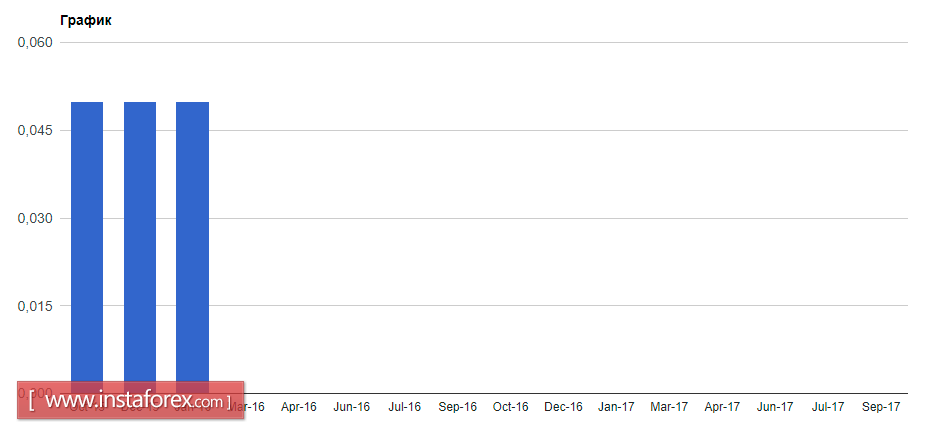
The European Central Bank also left the deposit rate at the level of -0.4%.
Other comments regarding the program of redemption of bonds and the timing of its completion were not received.
All attention will now be focused on the statements of ECB President Mario Draghi, who will determine the future direction of the European currency today.


