


















Today, during the Pacific trading session, several important events for the New Zealand dollar are expected. First, a report on the financial stability of the central bank of New Zealand will be published, followed by a speech by the head (so far with the prefix of the acting RBNZ Governor Grant Spencer). An important background to this is the speech of US Treasury Secretary Steven Mnuchin. The cumulative results of these fundamental events will determine the future fate of the NZDUSD pair: either the upward correction will develop, or the New Zealand dollar will again sink to the local lows, in the region of the 68th figure.
So, today the Reserve Bank of New Zealand will publish a report on the financial stability of the country. This document is published twice a year (in May and November), and it contains a detailed analysis of the state of the economy. The report has a strong enough influence on the New Zealand currency, primarily because of its forecast part - naturally, in the context of the prospects for monetary policy.
As we know, exactly one year ago the RBNZ reduced the rate to a record low level (1.75%), allowing further steps in this direction. At the same time, low interest rates are a rather controversial way of restoring the state's economy. In the least, it has a number of "side effects". Reducing mortgage rates and the risk of "overheating" the real estate market is the reverse side of super soft monetary policy. Therefore, the main intrigue of the report published today is how seriously the Central Bank officials assess the risks of a low interest rate.
In this context, it is necessary to consider the state of the real estate market. It is worth noting that the level of sales of residential property in New Zealand this year has increased significantly. However, in September there was a certain decline due to the uncertainty with the parliamentary elections in the country. But in general, the positive dynamics continues, affecting the price of housing. So, in autumn the average value of real estate grew by 2% and amounted to 930, 000 dollars. Almost two thirds of all transactions were concluded for more than 750, 000 dollars, while the cost of almost 40% of the properties sold for more than one million dollars.
However, such prices do not deter investors: the demand still exceeds supply significantly. According to experts, to meet the current demand in Wellington (the capital of New Zealand) about 40, 000 houses is not sufficient. The problem is that many foreign investors, especially Chinese, view the New Zealand housing market as a tool for increasing money, buying up houses and apartments for millions of dollars. The figures are impressive: to date, only 60% of the country's citizens are formal owners of their own housing, although in the early 90's there were more than 80% of them.
New Prime Minister of New Zealand, Jacinda Ardern, announced the government's intention to impose a ban on foreigners for the purchase of secondary real estate. However, these are just words, while the created parliamentary coalition does not yet demonstrate unity of views. In other words, the authorities have not yet taken any concrete actions to prevent the real estate market from "overheating".
In the report, the regulator is unlikely to bypass this issue. In turn, if it focuses on this aspect of its attention, the likelihood of further rate cuts will decrease as much as possible, and the probability of tightening monetary policy, on the contrary, will increase. And although it is a long-term prospect, any mention of the state of the real estate market in a logical connection with the monetary policy of the RBNZ will support the New Zealand dollar.
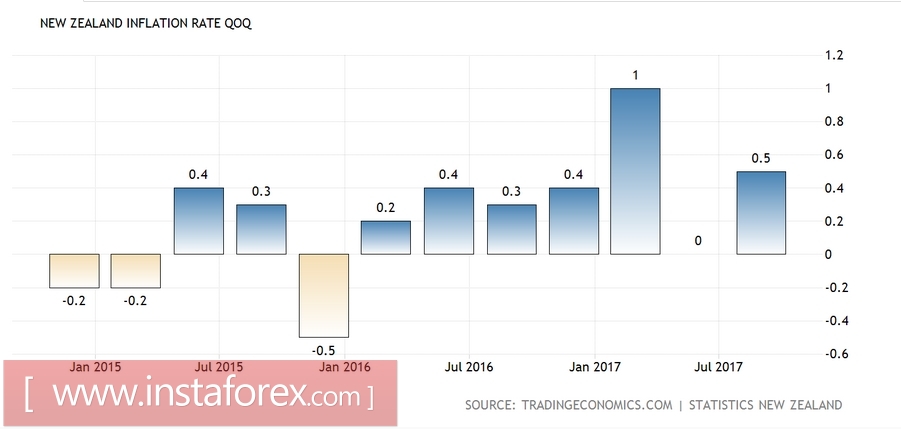
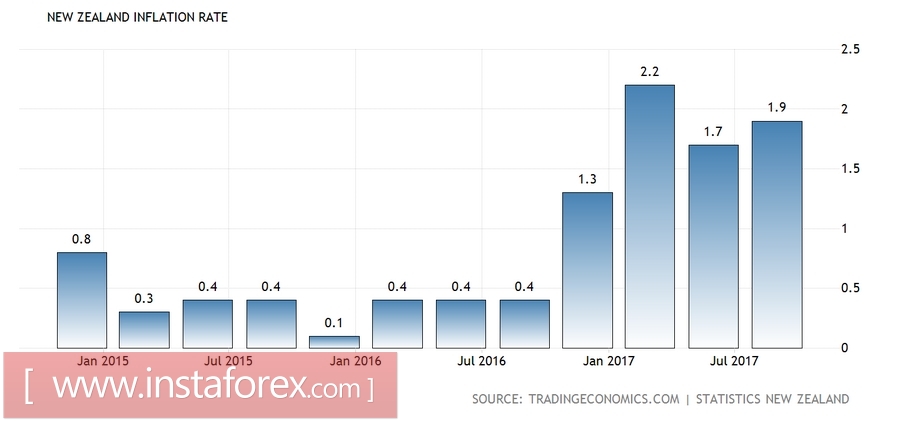
The acting head of the New Zealand central bank, Grant Spencer, may also raise the issue, although, most likely, he will focus on inflation trends. In early November, RBNZ slightly lowered inflation expectations, although the de facto consumer price index shows growth. According to the latest data, the CPI grew by 0.5% in monthly terms and by 1.9% in annual terms. Inflationary pressure increased, in part, due to the weakening of the national currency. Grant Spencer can interpret such dynamics as a completely logical result of the policy pursued.
Thus, if the members of the regulator focus on the housing market, and the head of the RBNZ does not scare the markets with its comments (which is unlikely given the latest trends), then the correctional movement of NZDUSD may have a continuation.
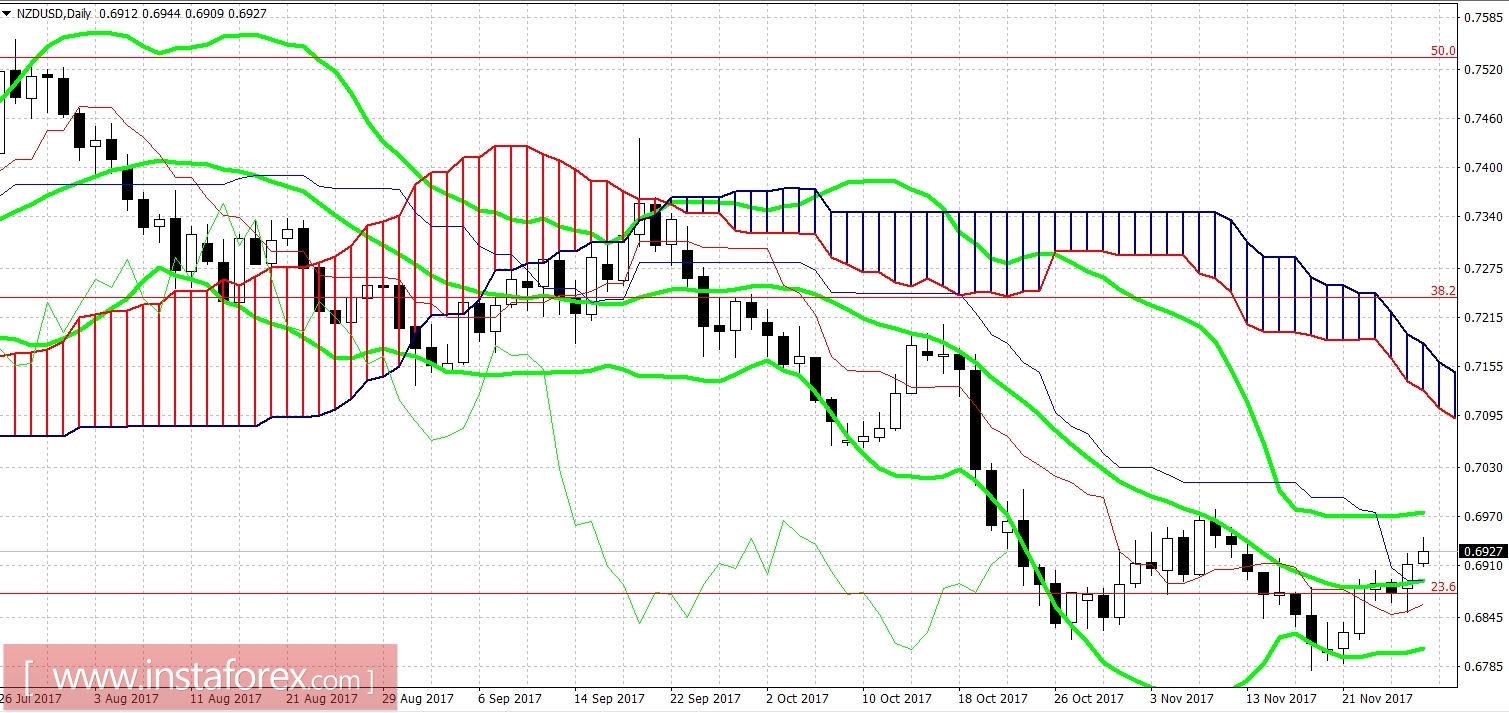
If price levels are to be discussed, then turn to the daily chart of the pair. At the moment, the price is traded between the lower and middle lines of the indicator Bollinger Bands, which indicates the downward trend. Therefore, the upper boundary of the corrective rollback is limited by the resistance level, which corresponds to the price of 0.6980. This marker can be used as the upward target. In turn, the level of support is the level of 0.6790 (the minimum price for November and the last quarter), which also coincides with the lower line of the indicator Bollinger Bands.
If the RBNZ report is pessimistic, we will again witness the testing of the 68th figure. But, in my opinion, the priority is still the correction.


