


















Currency market traders are trading in tight information schedule conditions. After a long day of calm, the economic calendar is full with important events. Tomorrow will be a kind of "jackpot": the central banks of Switzerland, Britain and the EU will hold their December meetings. In addition, tomorrow, US data on retail sales will be published, so the "parade of volatility" will not be limited to today.
Naturally, such events can not be ranked in terms of importance. Nevertheless, the decisions of the ECB and the Bank of England will overshadow the predictable actions of the SNB, especially in light of the growth of the Swiss economy. Thomas Jordan will probably repeat the words about the overvaluation of the franc (despite its weakening against the euro by more than a thousand points) and again promises to conduct currency interventions. It is very unlikely that the head of the SNB will go beyond this scenario against the backdrop of the exchange value of the Swiss currency. In general, tomorrow's meeting of the SNB can significantly affect the franc only if Jordan suddenly announces a softening of monetary conditions next year. But the probability of this is quite small: most likely, the meeting will pass in the expected channel.
But the statements of the members of the ECB and the Bank of England is much more difficult to forecast, so we will start from the forecast of most foreign currency analysts. In their opinion, the English regulator will not be able to ignore the growth of inflation indicators along with a decrease in the unemployment rate in the country. The indices of industrial production also turned out to be better than projected values, contrary to pessimistic analysts' estimates.
In addition, now the Bank of England has an important missing factor- certainty about Brexit. Of course, we are talking about rather shaky preliminary agreements, but compared with previous periods, the risk of Britain's withdrawal without a deal has now dropped significantly. This will allow members of the regulator to focus only on macroeconomic indicators, which (mostly) demonstrate strong dynamics.
However, there are exceptions. For example, the inflation component - the retail price index - lost its momentum and turned out to be worse than the estimated values. Also, analysts are concerned about the weak growth of the average wage in the country, while inflation has long exceeded the target level. The English regulator can also focus on these factors, expressing the view of John Cunliffe. The deputy head of the Bank of England did not vote in August for raising the rate and consistently defended his position. In his view, low wage growth rate is an alarming signal for the regulator and it is not worth ignoring this sing. His opinion is contrary to the position of Ben Broadbent, who is confident that it is necessary "with all seriousness" to relate to the inflationary pressure, which continues to gain momentum.
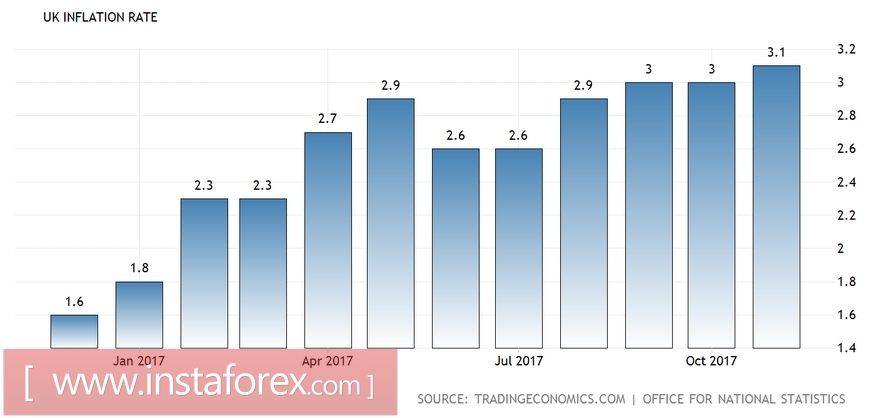
But Mark Carney recently linked interest rate prospects to Brexit. In November, he warned that "Brexit will require changes in monetary policy in one of the sides." The hint was more than transparent, although at the moment it is unclear whether his interim results of the negotiations have satisfied or Carney prefers to wait until final point.
In general, the English regulator, most likely, will try to maintain a balance. Noting the growth of inflation, it will focus on the weakness of wages and the persistent uncertainty around Brexit. This scenario of the December meeting will put considerable pressure on the pound. Less likely seems the option in which Carney announces an increase in the rate in the foreseeable future (that is, next year). After all, tomorrow's meeting will still be held until December 15 - that is, before the EU summit, where London and Brussels will move to the second, no less complex, stage of negotiations. In such circumstances, the head of the Bank of England will not make premature forecasts.
Now a few words about the upcoming meeting of the ECB. Some people call it "obviously boring and passing", others expect Mario Draghi to revel in the further steps of the regulator. The key question is to determine the end date of the stimulus program. Earlier, Draghi focused the market for September of the next year, however, due to the slowing of European inflation,there was a rumor among traders about the transfer of this date to the middle of 2019. In my opinion, the head of the ECB will follow his principle and will not say anything concrete. Yes, the "basic" term for completion of QE is the end of 2018, but if necessary, the regulator will extend the program's implementation. Draghi reiterated this view more than once, and today there are no grounds to believe that he will change his mind.
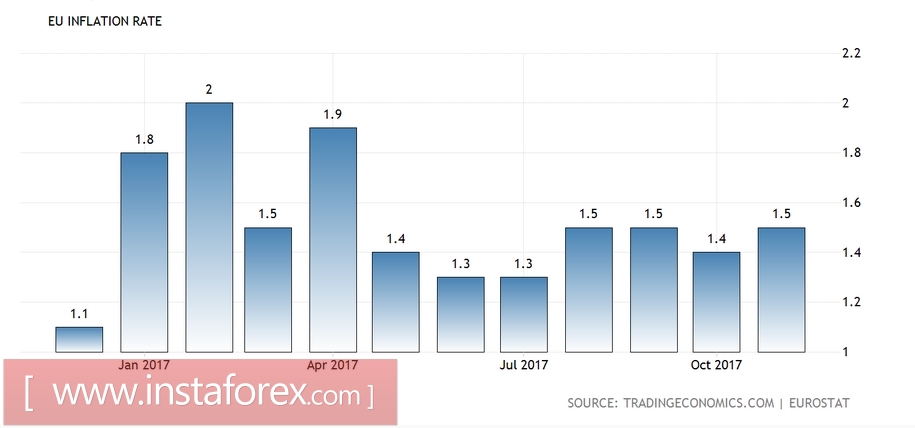
The inflation forecast will also be of interest. It should be noted that the oil prices, which indirectly affect inflation trends, remain in the region of $65. Other indicators (in particular, the level of wage growth and unemployment) also contribute to higher price pressures.
However, a positive outlook on inflation will support the European currency only if Draghi does discuss the probability of an extension of the QE program until 2019.


