


















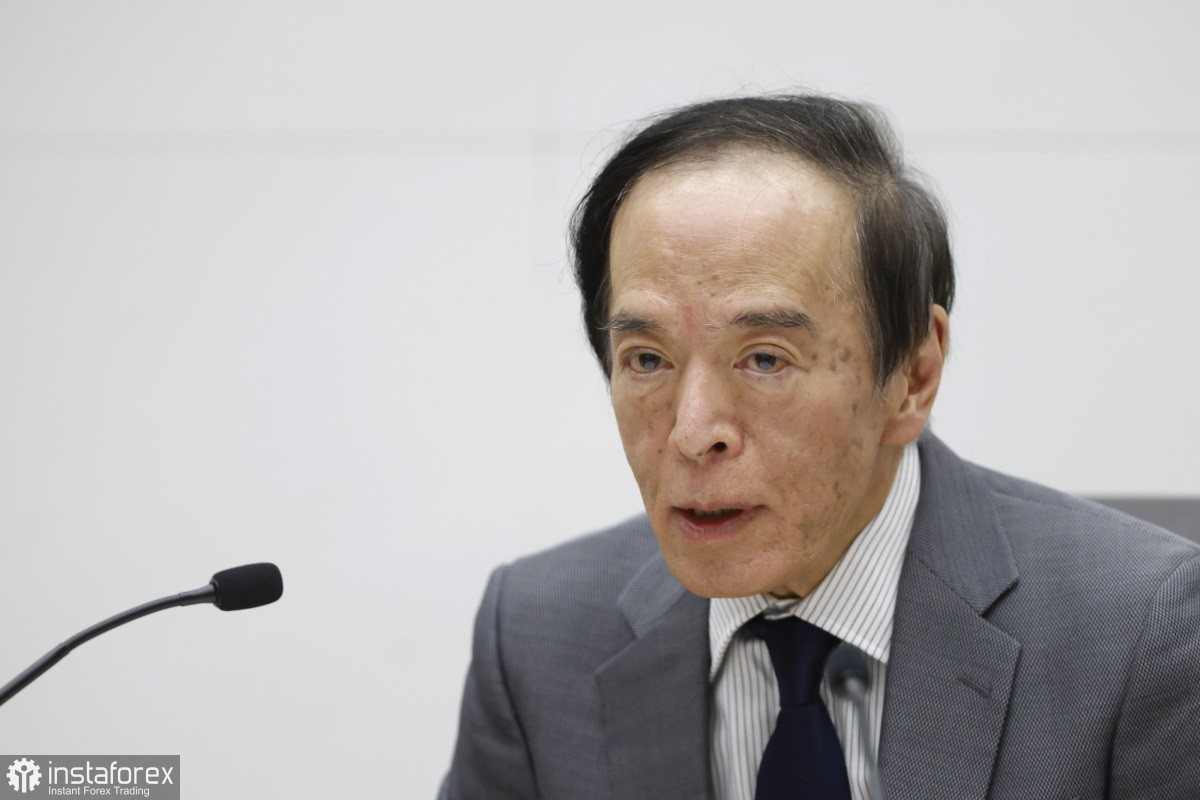
The Japanese yen rose sharply after Bank of Japan Governor Kazuo Ueda gave a clear hint today that his board may soon raise interest rates, emphasizing the possibility of such a decision being made at the Bank of Japan's December meeting.
Investors reacted instantly, beginning to actively buy the yen, which led to its strengthening against the US dollar and other major currencies. The market interpreted Ueda's comments as a signal that the ultra-loose monetary policy pursued by the Bank of Japan for many years is continuing to come to an end. All of this is happening against the backdrop of rising inflationary pressure in the country and concerns about further significant weakening of the yen, which negatively affects household purchasing power.
Ueda stressed that the board is closely monitoring price and wage dynamics, and if it becomes confident in the sustainability of inflation, it is ready to consider a change in monetary policy. He also noted that the December meeting will be a key moment for making a decision, as by that time the board will have more data to analyze.
"The central bank will consider all the pros and cons of raising the key interest rate and will make the appropriate decisions after analyzing the state of the economy, inflation, and financial markets at home and abroad," Ueda said on Monday while speaking to local business representatives in Nagoya. "Any increase would represent an adjustment to the level of easing, as the real interest rate remains at a very low level," he added.
A decision by the Bank of Japan to raise interest rates could have a major impact on global financial markets. Japan is one of the world's largest creditors, and higher rates could trigger capital outflows from other countries, especially those with lower rates. It could also affect the value of Japanese assets such as stocks and bonds. At the same time, raising rates may help stabilize the yen and reduce inflationary pressure in Japan. However, it could also slow economic growth, as higher rates increase borrowing costs for businesses and consumers. Given the policies of Japan's new prime minister, the Bank of Japan will have to find a balance between the need to fight inflation and supporting economic growth.
Some members of the ruling coalition and economic advisers to Prime Minister Sanae Takaichi believe that a January move by the Bank of Japan would be preferable to avoid sending mixed signals to the markets after the government last month introduced its largest new spending package since the easing of pandemic-related restrictions. A January move would also give Ueda more time to assess the initial momentum in the annual wage negotiations, which typically conclude in March. Nonetheless, persistently high inflation and a weak yen are factors supporting the need for an earlier policy shift.
As for the current technical picture of USD/JPY, buyers need to take the nearest resistance at 155.70. This will allow them to aim for 156.10, above which a breakout will be quite difficult. The furthest target is the 156.70 level. If the pair falls, the bears will try to regain control at 155.40. If they succeed, a breakout of this range will deal a serious blow to the bulls and push USD/JPY toward the 155.05 low, with the prospect of reaching 154.70.


