


















According to the OECD, the global economy is coping with Donald Trump's trade tariffs better than expected, as activity is supported by significant investment in artificial intelligence and by supportive fiscal and monetary policy.
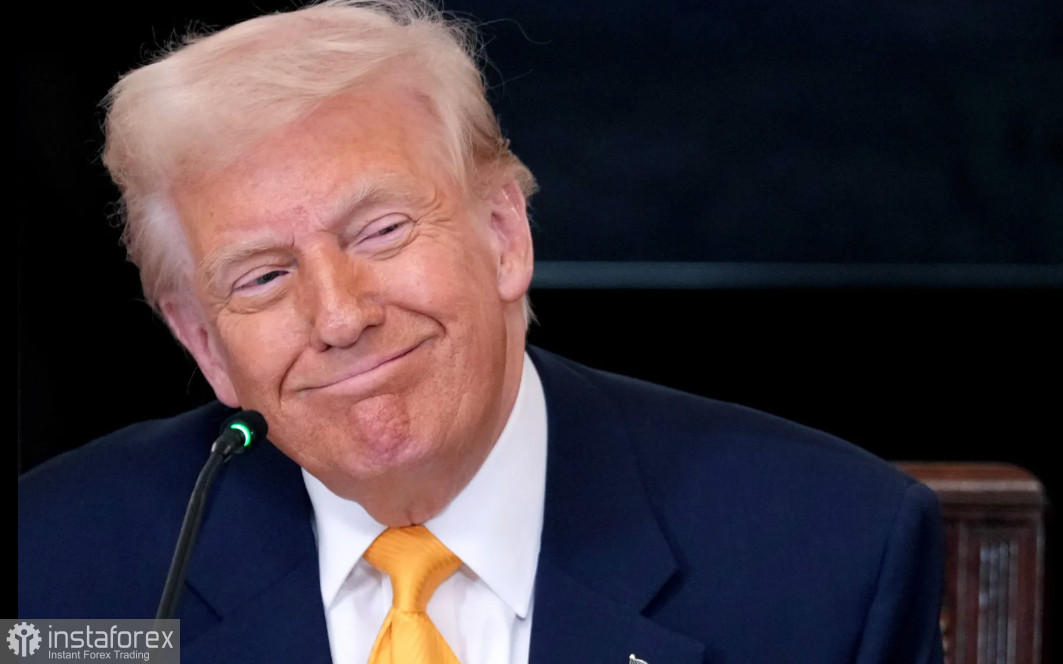
Although the trade restrictions introduced by the Trump administration have certainly had a negative impact on specific sectors and countries, global economic growth has proven more resilient than many economists had forecast. One of the key reasons for this resilience is technological progress, especially in the field of artificial intelligence. Large-scale AI investment—both from the private sector and from governments—has helped boost productivity and efficiency across various industries. The automation of processes, optimization of supply chains, and development of new AI-based products and services have softened some of the negative consequences of the trade wars.
In addition, governments in many countries have taken measures to stimulate their economies in response to trade tensions. Tax cuts, increased public spending, and low interest rates have helped maintain consumer demand and investment activity.
However, it is important to note that the resilience of the global economy does not mean that trade tariffs have no negative consequences. They still disrupt trade flows, raise prices for consumers, and create uncertainty for businesses, which can restrain long-term investment.
The Paris-based organization has raised its growth forecasts for the U.S. and the eurozone for this year and next, and has also made slight upward adjustments for other major economies in its latest outlook. Nevertheless, global growth is still projected to slow from 3.2% in 2025 to 2.9% in 2026, as the full impact of the tariffs on trade has yet to be felt.
"The global economy has shown resilience this year despite concerns about a sharp slowdown in growth due to rising trade barriers and significant uncertainty," said Secretary-General Mathias Cormann. "However, global trade growth slowed in the second quarter of this year, and we expect that the increase in tariffs will gradually lead to higher prices, which will reduce household consumption growth and business investment."
It is worth recalling that as recently as June, the OECD warned that U.S. economic growth would slow to 1.6% this year, but in September it raised this figure to 1.8%, and now it is forecasting 2%. However, combined with concerns about rapid changes in trade measures, the OECD said the outlook is fragile and its forecasts are subject to significant risks.
As for the current technical picture of EUR/USD, buyers now need to think about how to take the 1.1650 level. Only this will allow them to target a test of 1.1680. From there, it is possible to climb to 1.1715, but doing so without support from major players will be quite challenging. The most distant target would be the 1.1730 high. In the event of a decline in the instrument, I expect any serious action from major buyers only around 1.1625. If no one is there, it would be better to wait for a renewal of the 1.1590 low or to open long positions from 1.1560.
As for the current technical picture of GBP/USD, pound buyers need to take the nearest resistance at 1.3250. Only this will allow them to target 1.3270, above which breaking through will be rather difficult. The most distant target will be the 1.3300 level. In the event of a decline, the bears will attempt to take control at 1.3225. If they succeed, a breakout of this range will deal a serious blow to the bulls' positions and push GBP/USD down to the 1.3203 low, with the prospect of reaching 1.3170.


