


















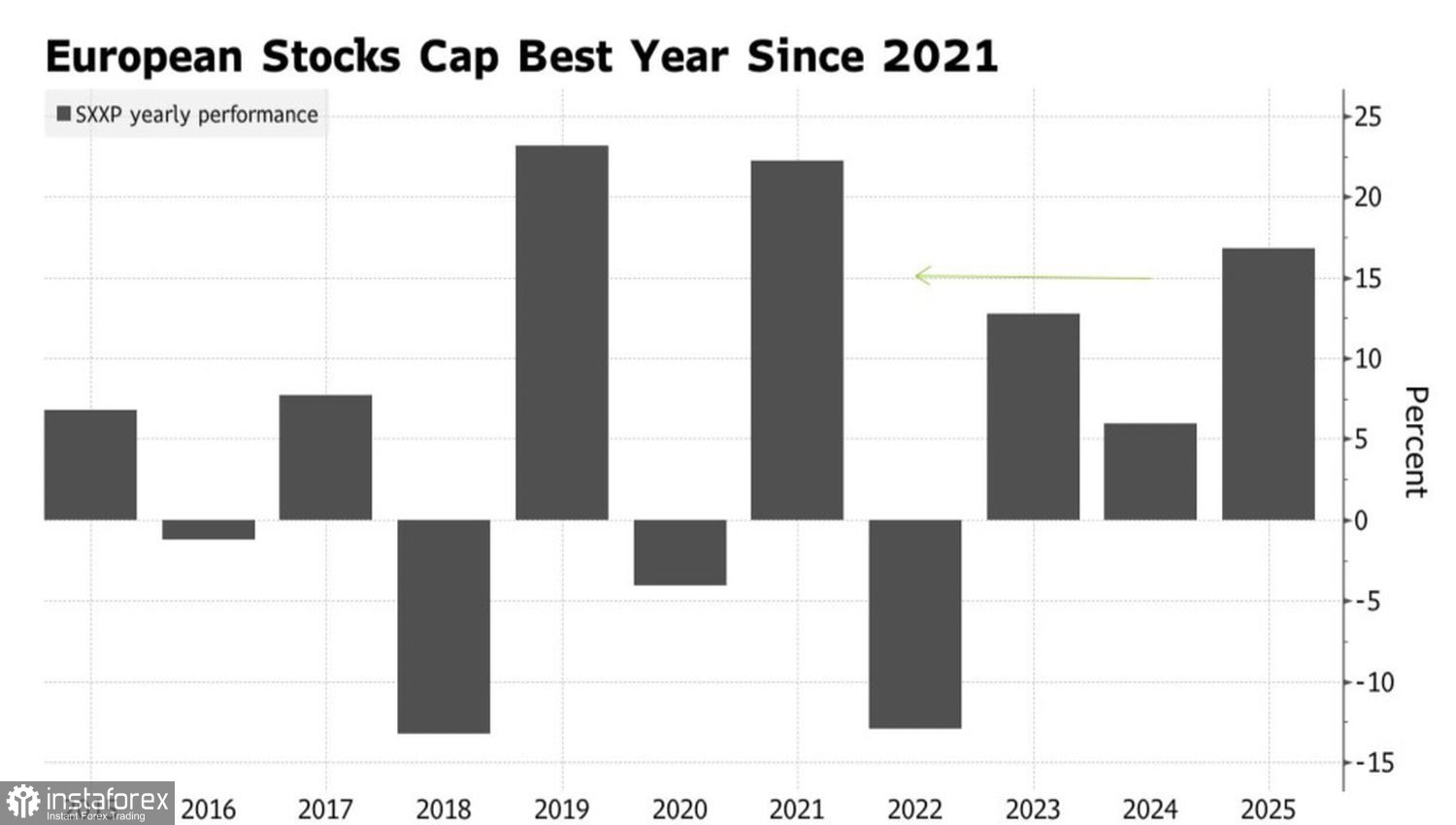
2025 turned out to be a spectacular year for the euro. The ECB managed to bring inflation under control, the eurozone economy adapted to U.S. tariffs much faster than expected, gas prices collapsed by 50% from their annual highs, and European stock indices posted their best performance since 2021. Capital inflows and a decline in geopolitical risk premiums became just as powerful drivers of the EUR/USD rally as the divergence in monetary policy and the narrowing economic gap between the currency bloc and the United States.
EuroStoxx 600 performance
The euro has gained more than 13% against the U.S. dollar since the start of the year—and not only because the Fed continues to cut rates while the ECB has put an end to its monetary expansion cycle.
Donald Trump's return to power resulted in a thaw in relations between the United States and Russia. This increased the likelihood of an end to the armed conflict in Ukraine and fueled demand for Eastern European currencies. Remarkably, seven of the eight best-performing currencies of 2025 among the three dozen tracked by Bloomberg came from the Old World: the Russian ruble, Hungarian forint, Swedish and Czech krona, euro, Polish zloty, and Swiss franc. The only outsider among them was the main winner of the trade wars—the Mexican peso.
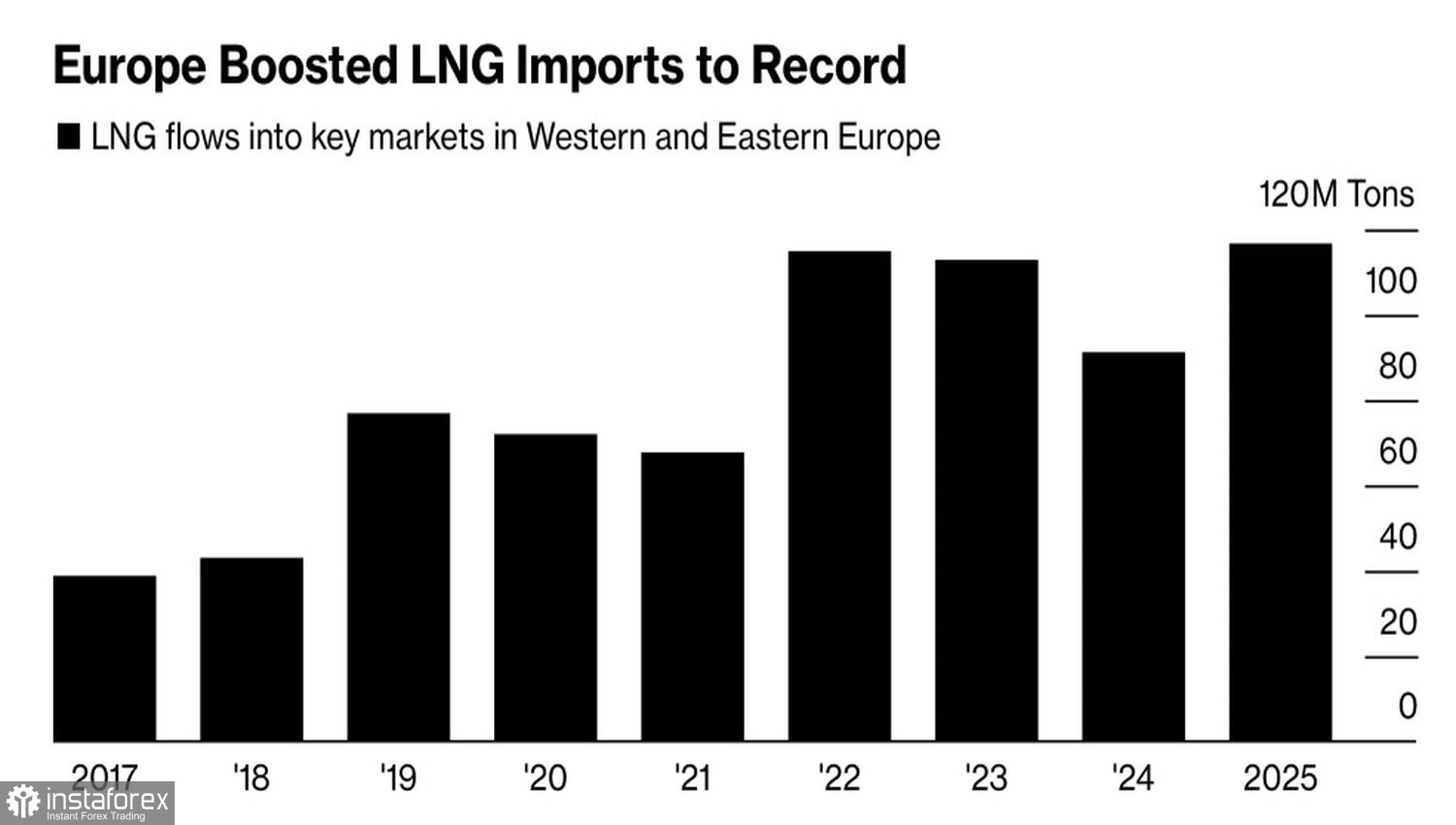
If in 2022–2023 Europe was groaning under the energy crisis, by 2025 it had adapted to the new conditions. Gas inventories remain low, but prices are falling on expectations of record-high LNG supplies to the Old World. Just as Russia managed to circumvent Western sanctions, Europe has adapted to a significant reduction in energy imports from the East.
Dynamics of LNG supplies to Europe
EUR/USD is also supported by the potential acceleration of the eurozone economy thanks to Germany's fiscal stimulus and increased EU defense spending. The relevant bills were passed back in the spring, but the effects of their implementation are expected in 2026. The fate of the major currency pair will depend on whether the U.S. economy can compete with Europe's.
I would not say that the United States is heading toward disaster because of cooling labor market conditions. While Germany was ramping up infrastructure investment, the U.S. was increasing capital spending on artificial intelligence technologies. According to the Atlanta Fed's leading indicator, U.S. GDP is expected to grow by 3% in the fourth quarter. The impressive dynamics of the indicator from April to September became a catalyst for the rebound of the USD index from its 3.5-year lows. Why couldn't American exceptionalism make a comeback? And that would be a completely different story for the dollar and the entire Forex market.
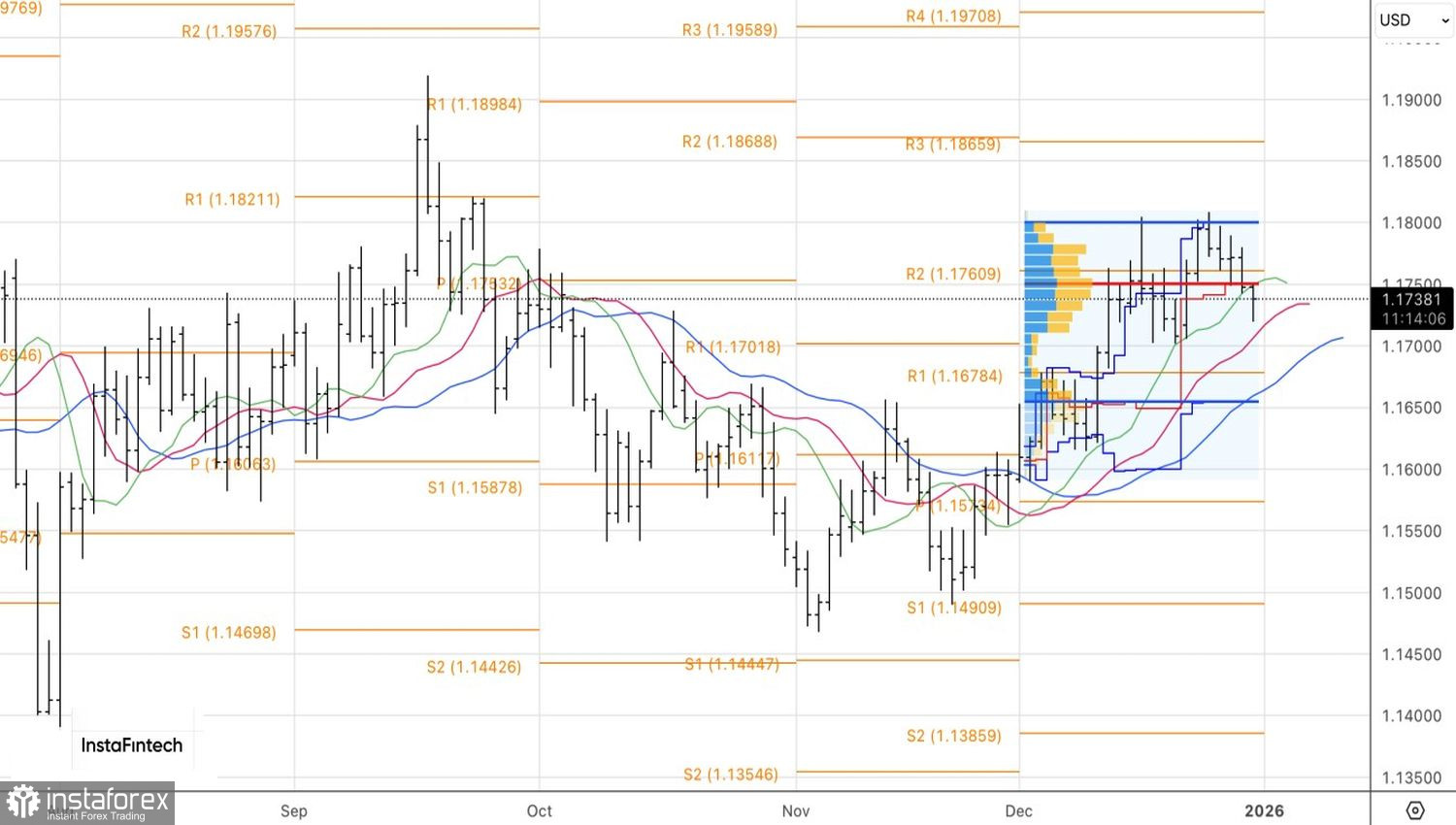
From a technical standpoint, on the daily chart EUR/USD has moved below fair value at 1.175. This level now acts as key resistance. Short positions opened from this level should be held and periodically increased.


