


















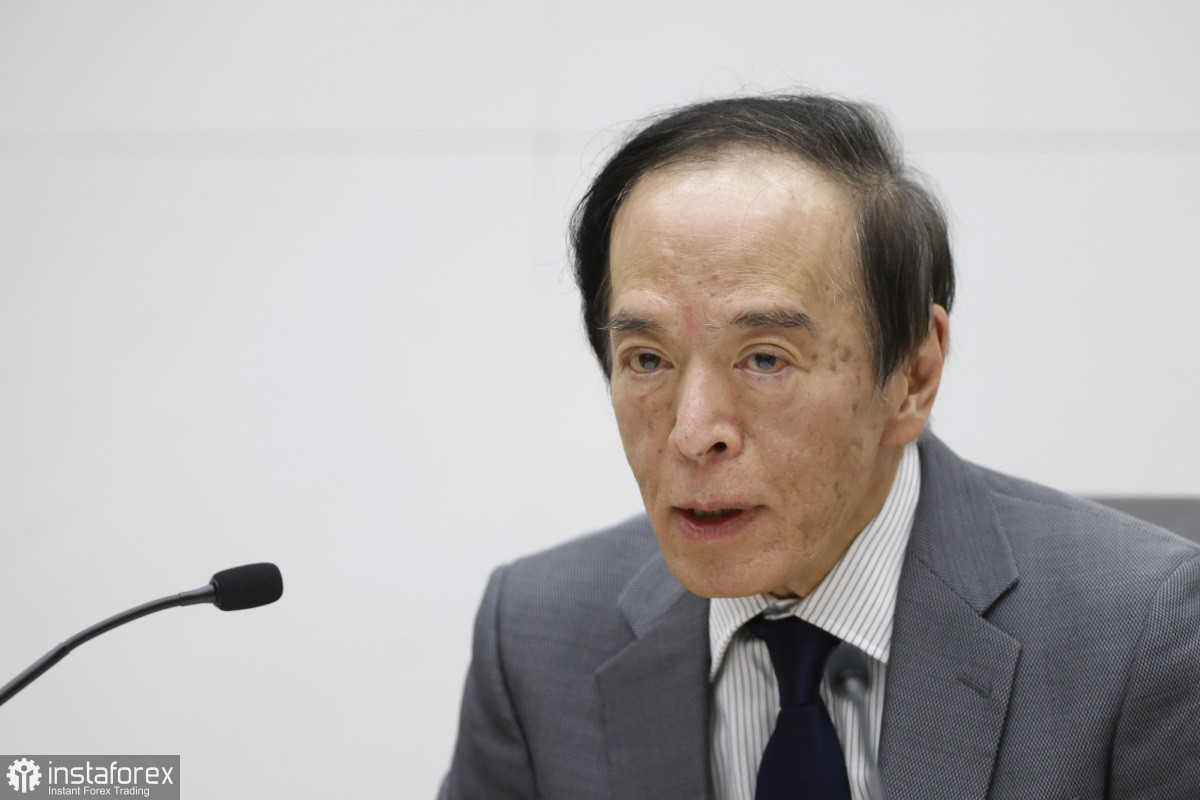
The yen barely reacted to a speech by Bank of Japan Governor Kazuo Ueda. In his first public appearance of the new year, Ueda emphasized his intention to continue raising the benchmark interest rate.
"We will continue to raise interest rates in line with improvements in economic conditions and a decline in inflation," Ueda said on Monday at a New Year conference organized by the Japanese Bankers Association. "Appropriate adjustments to monetary policy will lead to achieving a stable target level of inflation and long-term economic growth."
Despite the clear signal about the future trajectory of monetary policy, the yen remained largely unmoved. This may indicate that markets have already priced in expectations of further tightening by the Bank of Japan. Investors may be waiting for more concrete data on economic growth and inflation before reacting to verbal interventions from the regulator.
Ueda also noted that the Bank of Japan would closely monitor developments in the global economy, including geopolitical risks and changes in the monetary policies of other central banks. He emphasized that adaptability and flexibility would be key factors in the Bank of Japan's approach to managing monetary policy in a changing economic environment.
Overall, Ueda's remarks confirmed market expectations of further moderate tightening of monetary policy by the Bank of Japan. However, the lack of an immediate reaction from the yen suggests that investors need more concrete data and greater clarity before taking significant action.
The comments, made about two weeks after the most recent interest rate hike, clearly showed that Ueda has not finished unwinding accommodative monetary policy after raising the rate to its highest level since 1995. Shortly before his remarks, yields on benchmark 10-year Japanese government bonds continued their recent rise, reaching their highest level since 1999, partly due to market expectations of further rate hikes.
"The mechanism linking moderate wage growth and inflation is likely to persist," Ueda said. Recall that on December 19, the Bank of Japan raised its benchmark interest rate to 0.75%, the highest level in three decades. Most experts expect the next hike to occur around mid-year, although some believe it could happen sooner due to the weakness of the yen. A weak yen intensifies inflationary pressure through higher import prices, and many households are already weary of the prolonged cost-of-living crisis. Currently, Japan's core inflation measure has remained at or above the Bank of Japan's 2% target for more than three and a half years.
As for the current technical picture of USD/JPY, buyers need to take out the nearest resistance at 157.40. This would open the way toward 157.70, above which a breakout would be quite difficult. The furthest target would be the 157.95 level. In the event of a decline, bears will attempt to seize control at 156.90. If successful, a break of this range would deal a serious blow to bullish positions and push USD/JPY down toward the 156.60 low, with the prospect of a move to 155.99.


