



















The Japanese yen is showing a modest recovery after falling earlier on Monday to a nearly two-week low against a stronger U.S. dollar, although overall sentiment remains cautiously negative. The lack of clear plans for further interest-rate hikes by the Bank of Japan continues to weigh on the yen, while heightened geopolitical risks increase the appeal of the dollar as a safe-haven asset, further reinforcing its dominance.
In December, the Bank of Japan raised its key interest rate to a 30-year high of 0.75%, noting that future monetary policy steps would depend on economic conditions. According to sources, the Bank of Japan is likely to begin active discussions on additional rate hikes if spring negotiations on short-term measures confirm a noticeable rise in wages.
Nevertheless, investors remain cautious and express doubts about the pace of monetary tightening, believing that government energy subsidies, stable rice prices, and low fuel costs will help contain inflation at least through 2026. Against this backdrop, the yen continues to weaken.
The situation has been further complicated by reports that the U.S. Army's Delta Force carried out an operation in Venezuela, during which President Nicolas Maduro and his wife were detained. This comes amid a lack of progress in resolving the conflict between Russia and Ukraine, internal instability in Iran, and tensions in Gaza—factors that sustain geopolitical uncertainty and strengthen the dollar's position as a safe-haven currency.
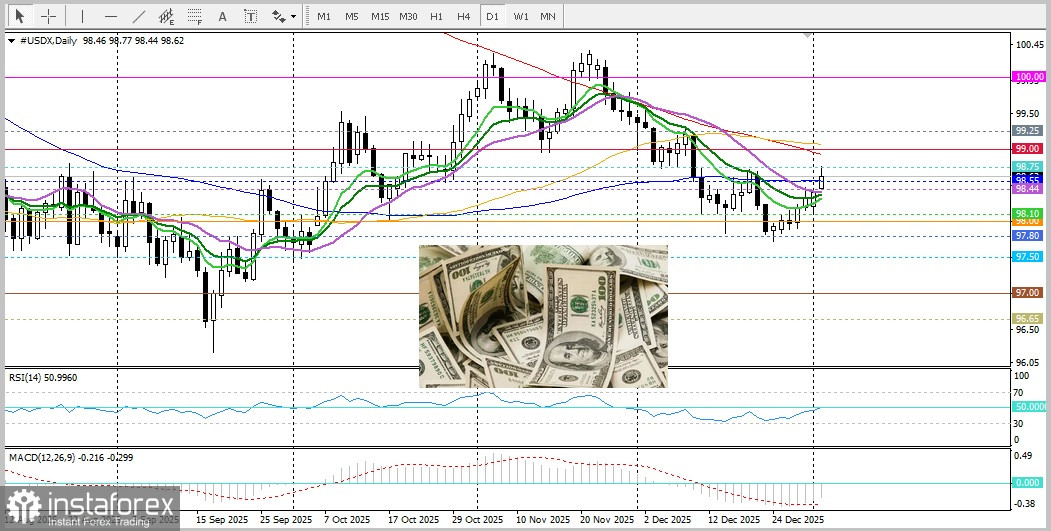
The U.S. currency has reached a two-week high, although its potential for further gains is limited by expectations of an imminent rate cut by the Federal Reserve—possibly as early as March, with another cut later this year.
An additional restraining factor for the dollar is concern over the Federal Reserve's independence under the Donald Trump administration, which could hinder further growth in the USD/JPY pair.
At the same time, dovish expectations regarding Fed policy contrast with forecasts of gradual monetary policy normalization by the Bank of Japan. Potential currency interventions may also limit yen losses, which calls for caution among traders targeting further gains in USD/JPY.
Today, to identify better trading opportunities, attention should be paid to U.S. data releases, which will shape expectations regarding Fed rate cuts. The coming week promises to be eventful: on Monday, the ISM Manufacturing PMI will be released, and on Friday, the key Nonfarm Payrolls report is due, which is expected to serve as a major reference point for market participants.
From a technical perspective, strong support has formed at the 156.30 level, where the 9-day EMA is located. A break below this level would make the round 156.00 level the main support. Resistance is now seen at the round 157.00 level, above which the pair would face the 157.30 level. As long as oscillators on the daily chart remain positive, bulls are not ready to give up.


