Today, Monday, although USD/JPY suffered noticeable losses during the Asian session, it managed to rebound from the round level of 154.00.
Global risk sentiment weakened after President Trump's decision to impose the new 15% tax following the Supreme Court's verdict against his sweeping tariffs. This has heightened concerns about retaliatory measures and potential economic losses stemming from disruptions in global supply chains. As a result, interest in riskier assets has declined, while demand has increased for traditional safe-haven assets such as the Japanese yen.
The weakening of the U.S. dollar has added further pressure on USD/JPY. Friday's release of the U.S. Personal Consumption Expenditures (PCE) index showed that core inflation exceeded forecasts in December, reinforcing expectations that the Federal Reserve will keep interest rates unchanged at its March meeting. However, traders are still pricing in the possibility of two 25-basis-point rate cuts this year following weak U.S. GDP data, which showed annual economic growth slowing to 1.4% in the fourth quarter.
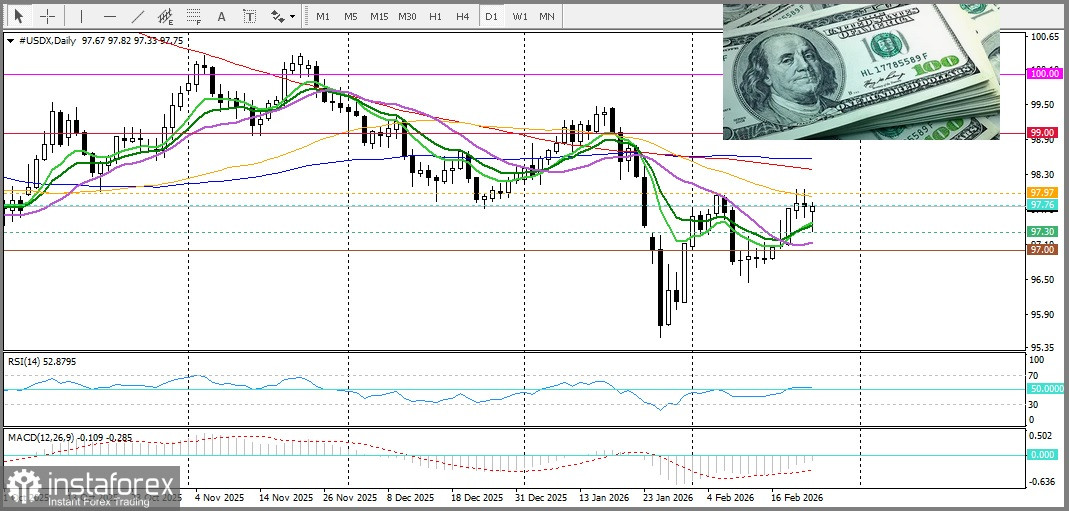
On the Japanese yen side, weak GDP growth in Japan for the fourth quarter has increased pressure on Prime Minister Sanae Takaichi to introduce additional economic stimulus measures. In addition, Friday's data showed that Japan's key inflation indicator fell to a two-year low, reducing the likelihood of imminent monetary policy tightening by the Bank of Japan. As a result, the yen's upside remains limited amid low trading volumes following bank holidays in Japan, creating a relatively favorable backdrop for USD/JPY growth and calling for caution before opening aggressive positions.
From a technical perspective, if bulls manage to break above and consolidate above the round level of 155.00, the next target will be yesterday's high around 155.65, followed by the 50-day simple moving average at the round level of 156.00. However, the bulls' chances of success will increase significantly after a break above the 157.00 level.
The pair has shown resilience below the 154.00 round level. If prices fail to hold there, they may head toward the February low.
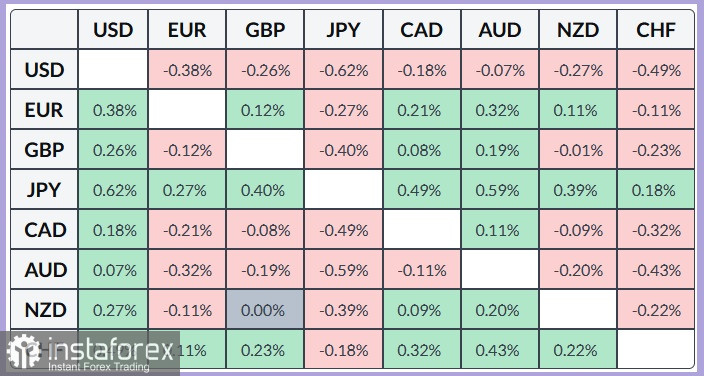
Oscillators on the daily chart remain negative, indicating weakness among buyers and strength among sellers. In the table below, the percentage performance of the U.S. dollar against a basket of major currencies is shown. The dollar demonstrated the strongest performance against the Australian dollar.