technical outlooktechnical outlook
Last Friday, stock indices closed sharply lower. The S&P 500 fell by 0.43%, while the Nasdaq 100 dropped by 0.93%. The Dow Jones Industrial Average lost 1.05%.

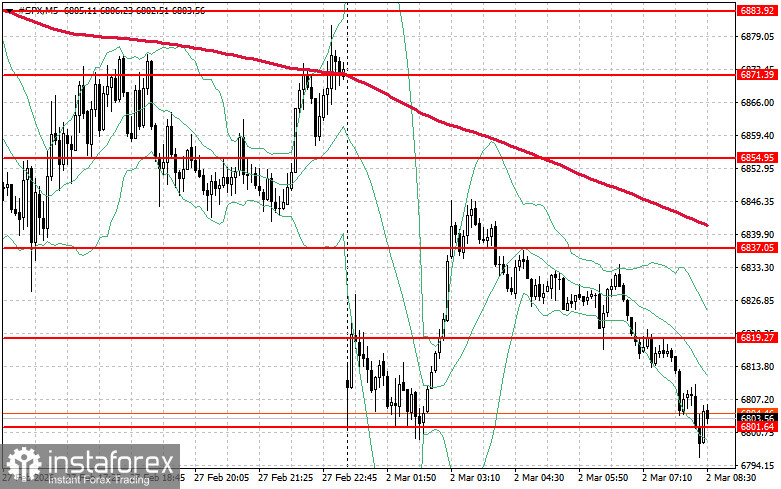
Today, stock indices continued their downward movement, reflecting a broader downtrend that has affected global financial markets. Meanwhile, oil prices surged sharply, driven by escalating geopolitical tensions in the Middle East. The start of US airstrikes in Iran became a significant trigger, causing a massive outflow of capital from riskier assets.
The ongoing conflict in the region, which is developing against the backdrop of declared objectives by the US and Israel, carries multiple potential risks. These could include retaliation from Iran, possible expansion of the conflict zone, and disruptions in energy supplies. The latter directly impacts oil prices, which have experienced rapid growth as a result.
This large-scale capital outflow from riskier assets, such as stocks, is a natural response from investors to heightened uncertainty. During periods of increased geopolitical tension, investors tend to favor safer havens, such as gold or government bonds. These Middle East developments will undoubtedly have long-term effects on the global economy, market behavior, and investment strategies.
Gold and the US dollar have both risen due to increased demand for them as safe-haven assets. Asian stocks fell by 1.6%, and US stock index futures dropped by more than 1%. European index futures declined by 1.7%, indicating a weak market open.
Oil prices surged by more than 7%, surpassing $78 per barrel, with traders continuing to focus on the situation in the Strait of Hormuz, which is effectively closed. This waterway is crucial for global oil supply.
As investors reduce risk, some defensive assets have seen increased demand. Gold rose by 1.8%, reaching about $5,375 per ounce, while the US dollar index climbed by 0.4%.
Other triggers for the decline in stock indices include renewed concerns about artificial intelligence, potential credit issues, and historically high valuations.