


















Trump's statements regarding Iran are no longer carrying the weight they once did, leading to increasing pressure on risk assets observed since the middle of this week. Against this backdrop, the dollar enjoys a significant advantage.
Today's economic calendar for the Eurozone, while not packed with major releases, includes data that could have a noticeable impact on markets if there are significant deviations from economists' forecasts. First and foremost, traders will focus on the release of Spain's consumer price index. This data, being one of the indicators of inflation trends in the region, could set the tone for subsequent comments from European Central Bank representatives and influence expectations regarding future monetary policy.
Simultaneously, the Eurogroup is set to meet, with an agenda covering two critically important issues: the escalation of tensions in the Middle East, provoked by actions from the US and Iran, and the consequent dynamics of energy prices. Geopolitical instability in this strategically important region continues to directly affect oil and gas prices, which, in turn, translate into inflationary pressure on the global economy, particularly affecting the Eurozone, which heavily relies on energy imports.
Regarding the British pound, the first half of the day is likely to be relatively calm, with few macroeconomic releases. However, traders will certainly be focused on events unfolding in the UK. The key event for the first half of the day will be the publication of data on retail sales volume. Two components of this indicator are of particular interest: retail sales including fuel costs and the same figure excluding fuel prices. The data, including fuel costs, provides a more comprehensive picture of consumer activity, reflecting both the quantity of goods purchased and the amount spent on them, including expensive fuel. On the other hand, the figure excluding fuel costs gives a purer measure of consumers' purchasing power—especially in the current context of sharply rising energy prices. However, it is fair to say that the February report will not capture such sharp changes compared to the expected values for March.
If the data aligns with economists' expectations, it is advisable to act on the Mean Reversion strategy. If the data deviates significantly above or below economists' expectations, the Momentum strategy is the best approach.
Momentum Strategy (Breakout):
For the EUR/USD Pair:
- Buy on a breakout above 1.1556, which may lead to an increase in the euro towards 1.1588 and 1.1628;
- Sell on a breakout below 1.1525, which may lead to a decrease in the euro towards 1.1485 and 1.1448;
For the GBP/USD Pair:
- Buy on a breakout above 1.3345, which may lead to an increase in the pound towards 1.3365 and 1.3394;
- Sell on a breakout below 1.3330, which may lead to a decrease in the pound towards 1.3300 and 1.3285;
For the USD/JPY Pair:
- Buy on a breakout above 159.74, which may lead to an increase in the dollar towards 159.94 and 160.21;
- Sell on a breakout below 159.53, which may lead to a drop in the dollar towards 159.29 and 159.09;
Mean Reversion Strategy (Retracement):
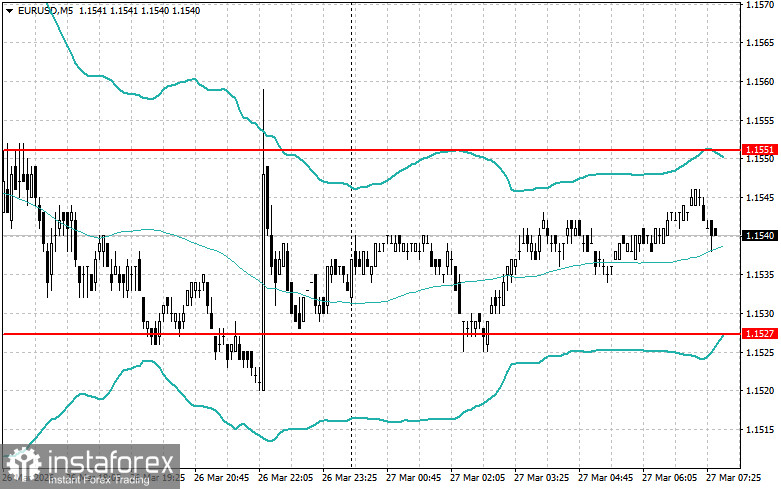
For the EUR/USD Pair:
- Look for short positions after an unsuccessful breakout above 1.1551 on a return below this level;
- Look for long positions after an unsuccessful breakout above 1.1527 on a return to this level;
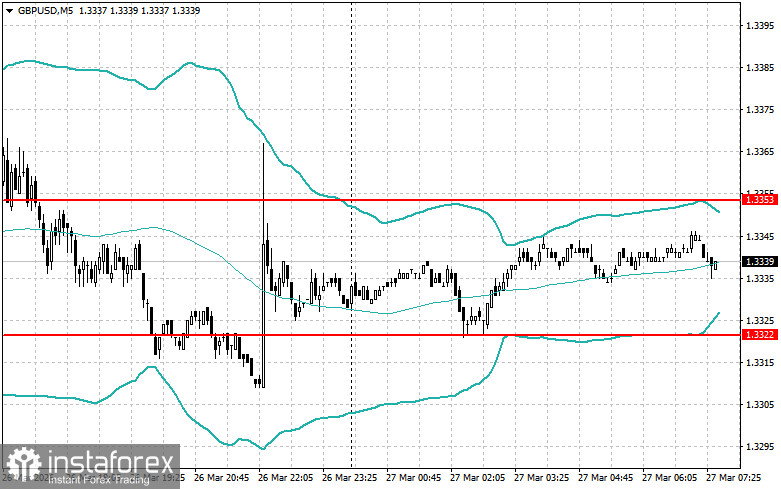
For the GBP/USD Pair:
- Look for shorts after an unsuccessful breakout above 1.3353 on a return below this level;
- Look for longs after an unsuccessful breakout above 1.3322 on a return to this level;
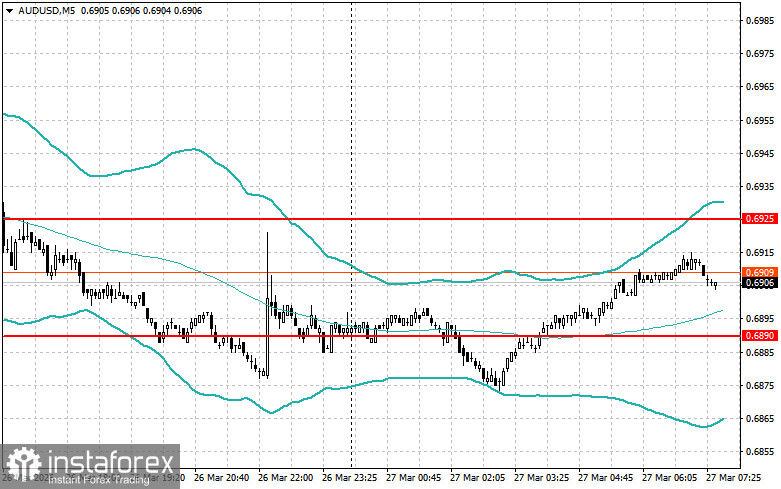
For the AUD/USD Pair:
- Look for shorts after an unsuccessful breakout above 0.6925 on a return below this level;
- Look for longs after an unsuccessful breakout above 0.6890 on a return to this level;
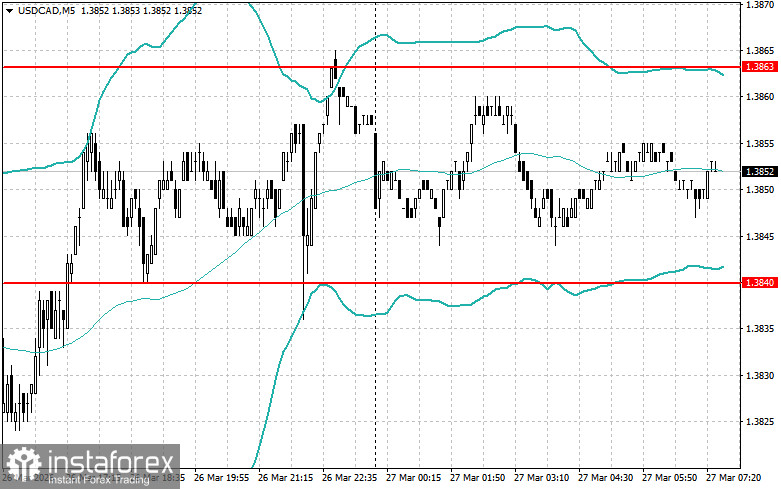
For the USD/CAD Pair:
- Look for shorts after an unsuccessful breakout above 1.3863 on a return below this level;
- Look for longs after an unsuccessful breakout above 1.3840 on a return to this level;