


















While the US dollar is extending its strength against a number of risk assets despite Trump's efforts, Federal Reserve Chair Jerome Powell outlined the difficult landscape facing the central bank, emphasizing the tension between two key goals: a full labor market and controlling inflation.
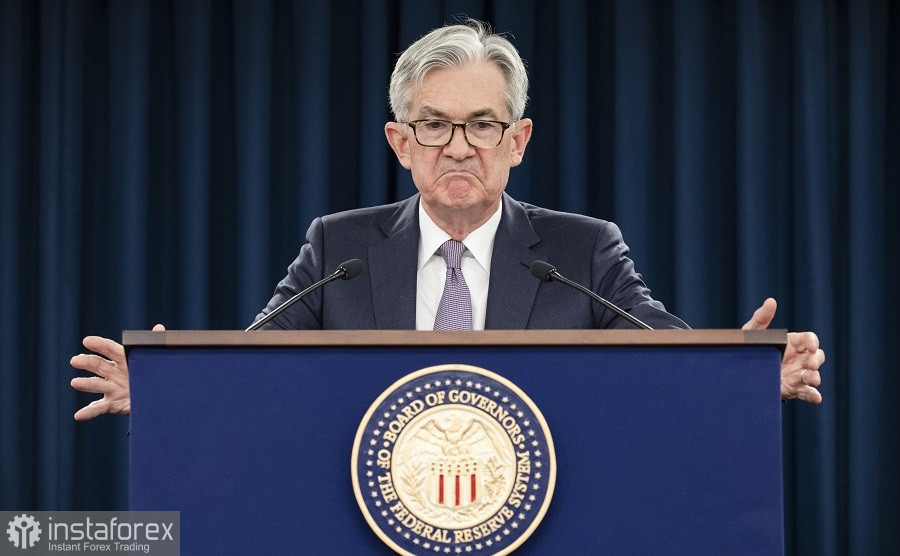
In his remarks yesterday, Powell clearly stated the Fed's determination to return inflation to a sustainable 2% — the regulator's core mandate. He also addressed concerns about potential inflationary effects from Fed balance-sheet expansion, saying that current risks are not as large as some economists predicted, allowing the central bank to remain calm on that front for now.
Powell analyzed the impact of external factors on inflation as well. He characterized the oil rally related to the US-Iran war as likely temporary, saying oil prices could add roughly 0.5–1.0 percentage points to overall inflation. Events in the Middle East are also having a noticeable effect on gasoline and gas prices, contributing to short-term inflationary spikes.
Given these circumstances, Powell stressed that the best strategy at present is to wait and see. "We should take some time to watch how this develops," he said, noting the need to assess the effect of current factors on the economy before making policy moves. The Fed's current set of monetary policy tools, he added, is well-positioned to permit such an assessment.
Powell also expressed confidence that long-term US inflation expectations remain anchored.
In closing, the Fed chair said policy is in a good place to allow for a period of observation and evaluation. This means the Fed does not intend to rush into policy changes but will carefully monitor incoming data — on inflation, employment and growth — before taking concrete action. This approach helps avoid premature tightening that could slow economic growth while preserving the flexibility to respond to downside risks.
That said, as noted above, currency markets reacted by buying the US dollar.
Technical outlook for EUR/USD
Buyers now need to reclaim 1.1485. Only that will allow a test of 1.1520. From there, the currency pair could reach 1.1552, but doing so without support from major players will be difficult. The more distant upside target is 1.1588. On the downside, I expect significant buyer interest only around 1.1450. If there is no buying there, it would be prudent to wait for a new low at 1.1415 or to open long positions from 1.1380.
Technical outlook for GBP/USD
Pound buyers should take the nearest resistance at 1.3225. Only that would allow targeting 1.3255, above which a further breakout will be difficult. The more distant upside target is around 1.3280. On the downside, bears will try to seize control at 1.3190. If they succeed, a break of that range would deal a heavy blow to bulls and could push GBP/USD down to 1.3160 with a potential extension to 1.3131.


