


















On the hourly chart, the GBP/USD pair reversed in favor of the pound on Tuesday and consolidated above the 1.3199–1.3214 level. Thus, the upward movement may continue toward the resistance level of 1.3341–1.3352. A rebound of quotes from this level will favor the U.S. dollar and lead to some decline toward the 1.3214 level. Consolidation of the pair above this level will increase the chances of continued growth toward the next resistance level of 1.3437–1.3465.
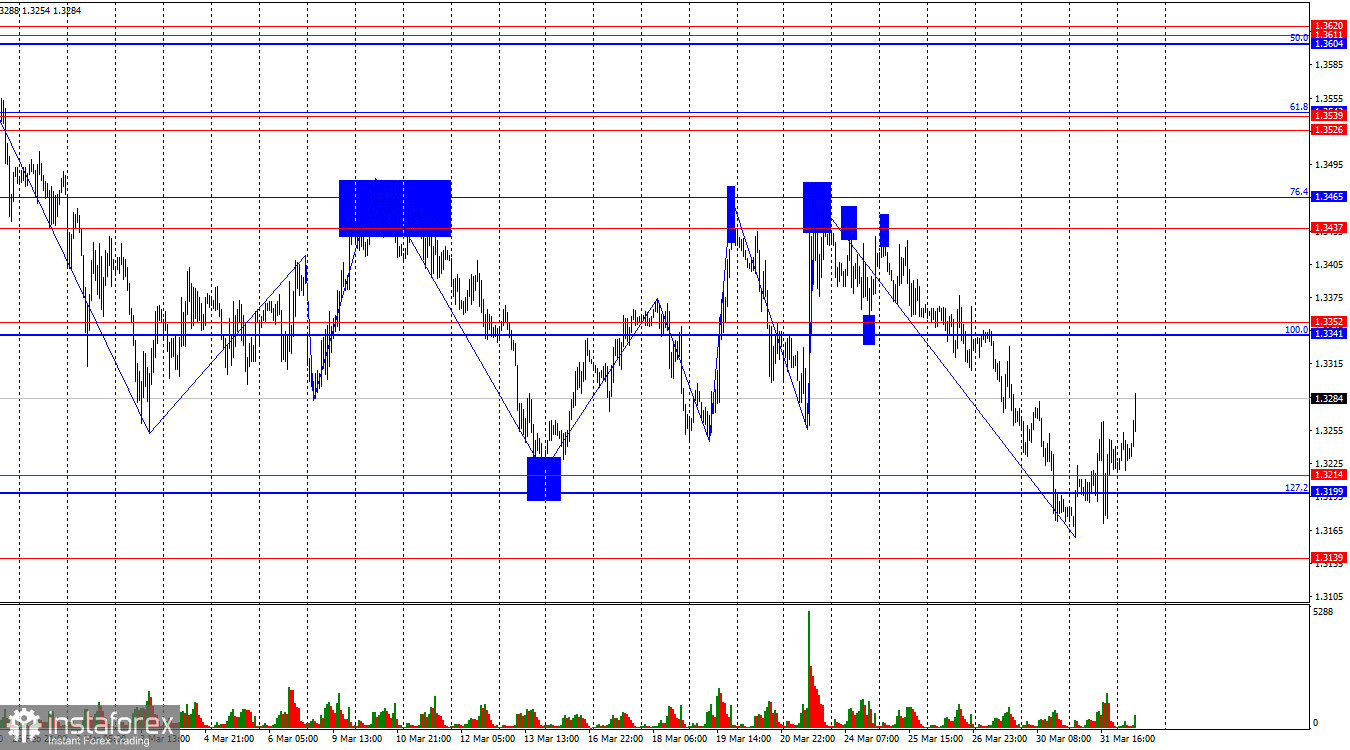
The wave situation has once again turned "bearish." The last completed upward wave exceeded the previous peak by only a few points, while the new downward wave confidently broke the previous low. The news background remains weak for the pound, and geopolitics gives bears an almost complete advantage in the market. The war in Iran remains the main reason for the strengthening of the U.S. currency in recent months. Bulls can only hope for the end of the war in the Middle East, a drop in oil prices, and a ceasefire by all parties involved in the conflict.
The news background on Tuesday was present both in the UK and the US. In the UK, the GDP report for the third quarter was released, which is unlikely to have impressed the bulls. In the US, the JOLTS report on job openings for February was released, which disappointed the bears. However, the key events of Tuesday and Wednesday were not economic reports. First, Donald Trump showed unwillingness to continue the war in Iran for several more months. Then the same Trump mentioned that he is not very concerned about the issue of the Strait of Hormuz, and that the countries interested in it should resolve the problem of its blockade. Finally, Jerome Powell assured traders that the FOMC committee does not intend to tighten monetary policy in the near future. Thanks to emerging chances of ending hostilities in the Middle East, the Fed's refusal to raise rates, and weak US statistics, the bulls have nevertheless gone on the offensive. However, their potential is limited by geopolitics.
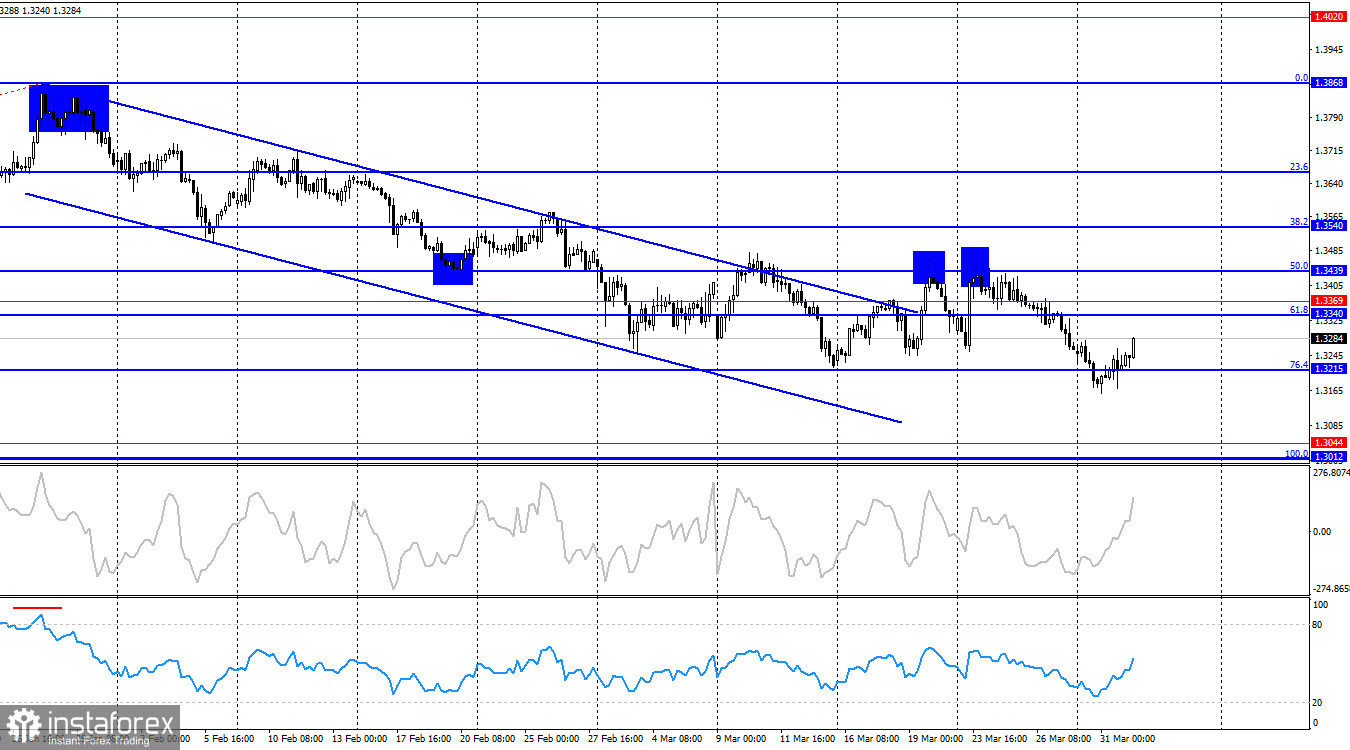
On the 4-hour chart, the pair consolidated above a descending trend channel, which gave the bulls absolutely nothing. At the moment, I would recommend focusing on the hourly chart, since the graphical picture on the 4-hour chart is not the most clear. No emerging divergences are observed today on any indicator.
Commitments of Traders (COT) report:
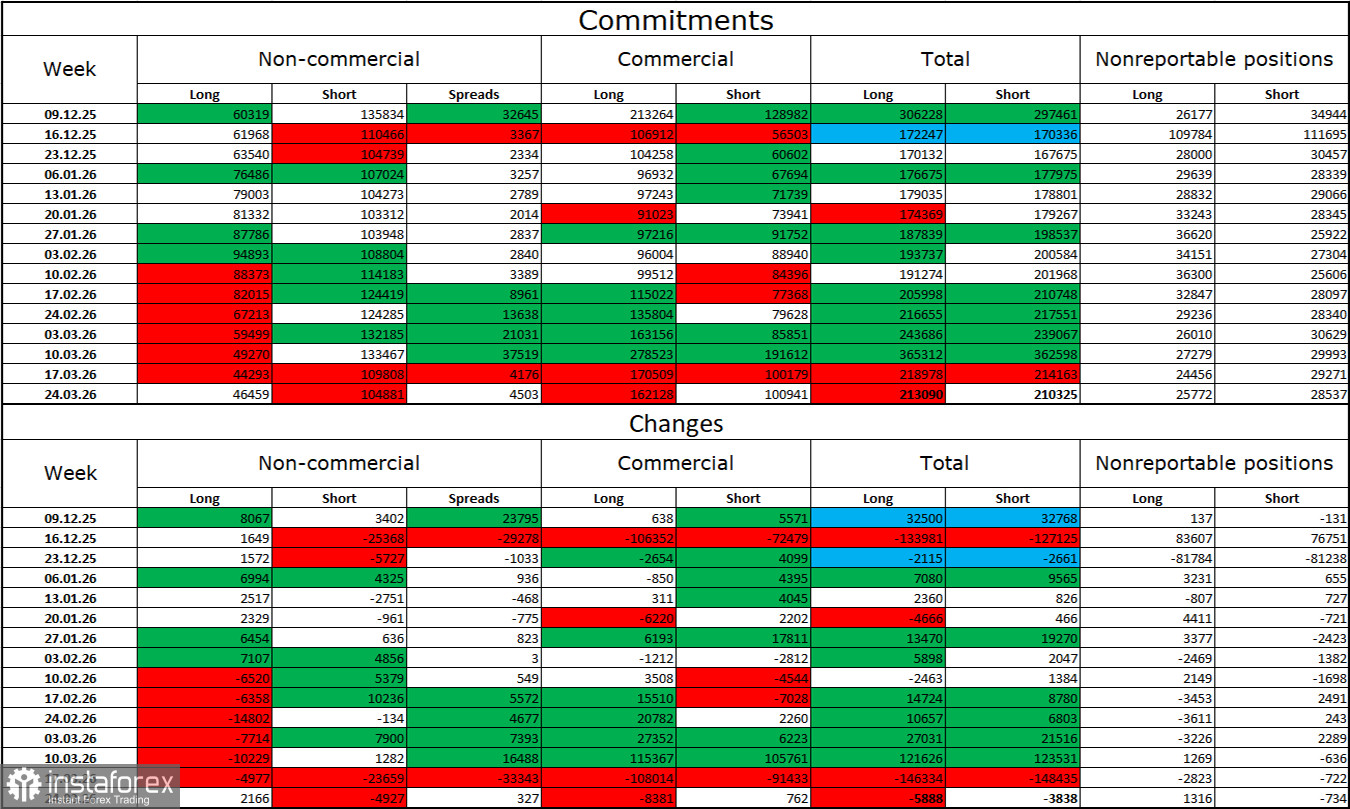
The sentiment of the "Non-commercial" category of traders became even more bearish over the last reporting week. For seven consecutive weeks, non-commercial traders have been actively increasing sales and reducing purchases. The number of long positions held by speculators increased by 2,166, while the number of short positions decreased by 4,927. The gap between long and short positions is now effectively: 46,000 versus 105,000. In recent weeks, bears have dominated, which raises no questions given the geopolitical situation. I still do not believe in a bearish trend for the pound, but now everything depends not on economic indicators, Trump's trade policy, or central bank monetary policy, but on the duration, scale, and consequences of the war in the Middle East.
Over the past year, the pound looked like a safer currency compared to the dollar—more stable and with a clearer economic future. However, in recent months, a correction began while maintaining the bullish trend, and then the conflict in the Middle East started escalating almost daily. Geopolitics remains the only reason for the strengthening of the U.S. dollar.
News calendar for the US and the UK:
- US – ADP Employment Change (12:15 UTC)
- US – Retail Sales Change (12:30 UTC)
- US – ISM Manufacturing PMI (14:00 UTC)
On April 1, the economic calendar contains three entries, each interesting to some extent. The impact of the news background on market sentiment on Wednesday may be moderate in the second half of the day.
GBP/USD forecast and trader advice:
Selling the pair is possible if there is a rebound on the hourly chart from the 1.3341–1.3352 level, with a target of 1.3199–1.3214. Buying was possible upon consolidation above the 1.3199–1.3214 level, with a target of 1.3341–1.3352. These trades can be kept open today.
Fibonacci levels are built from 1.3341–1.3866 on the hourly chart and from 1.3012–1.3868 on the 4-hour chart.


