



















Gold (XAU/USD) has paused its downward movement, remaining within the range of the previous session and lacking strong momentum for growth. Prospects for an urgent agreement between the US and Iran are fading in light of President Donald Trump's ultimatum, which expires Tuesday evening regarding the reopening of the Strait of Hormuz. This situation supports the US dollar, weakening the position of the precious metal.
In addition, expectations of global monetary tightening may serve as an additional bearish catalyst for gold. Market participants increasingly believe that the military-driven surge in energy prices could trigger a resurgence of inflation, forcing major central banks, including the US Federal Reserve, to adopt a more hawkish stance.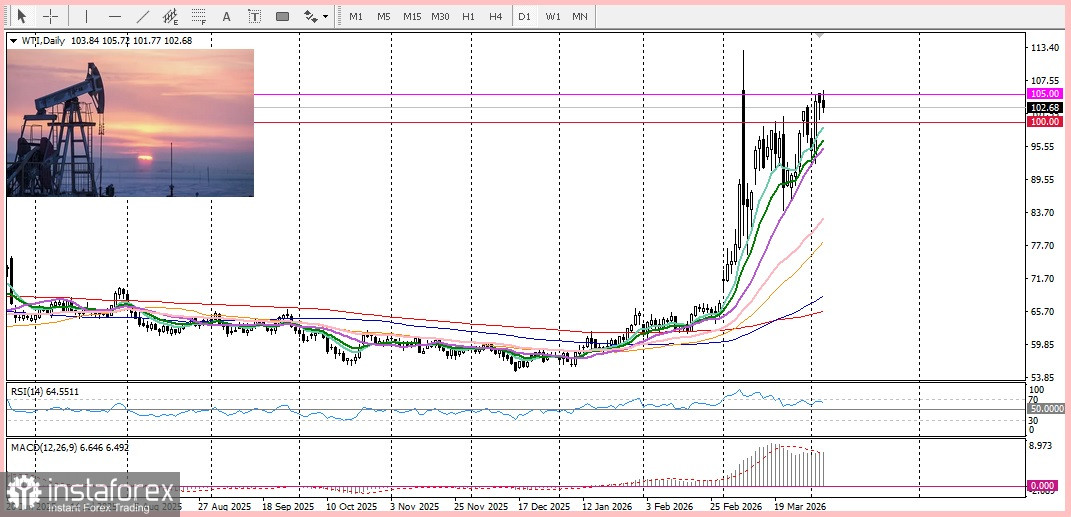 In particular, oil prices surged to a four-week high after Trump toughened his rhetoric toward Iran, threatening strikes on civilian infrastructure if no agreement is reached on time. In response, an adviser to the speaker of Iran's parliament, Mohammad Bagher Ghalibaf, stated that there is no intention to concede, noting that Trump has about 20 hours left to "capitulate," otherwise his allies would be pushed "into the Stone Age." Such statements increase the likelihood of escalation in the Middle East and sustain the risk premium in oil prices.
At the same time, data from the Institute for Supply Management (ISM) released on Monday showed a disappointing Services PMI, which fell to 54 in March from 56.1 a month earlier, signaling a slowdown in growth momentum. Meanwhile, inflation indicators strengthened: the prices-paid index jumped to 70.7 from 63. This backdrop is complemented by last Friday's strong US Nonfarm Payrolls (NFP) report, which highlighted the resilience of the labor market and reinforced expectations that the Federal Reserve will keep interest rates elevated for longer to contain inflation.
As a result, the current environment favors bullish sentiment for the US dollar and points to a downward trajectory as the path of least resistance for gold prices. Fresh US macroeconomic data could act as a catalyst for further movement.
From a technical perspective, gold bulls need to break above the 20-day simple moving average (SMA) to gain a chance for confident growth. However, with oscillators still negative, bulls currently lack sufficient strength.


