


















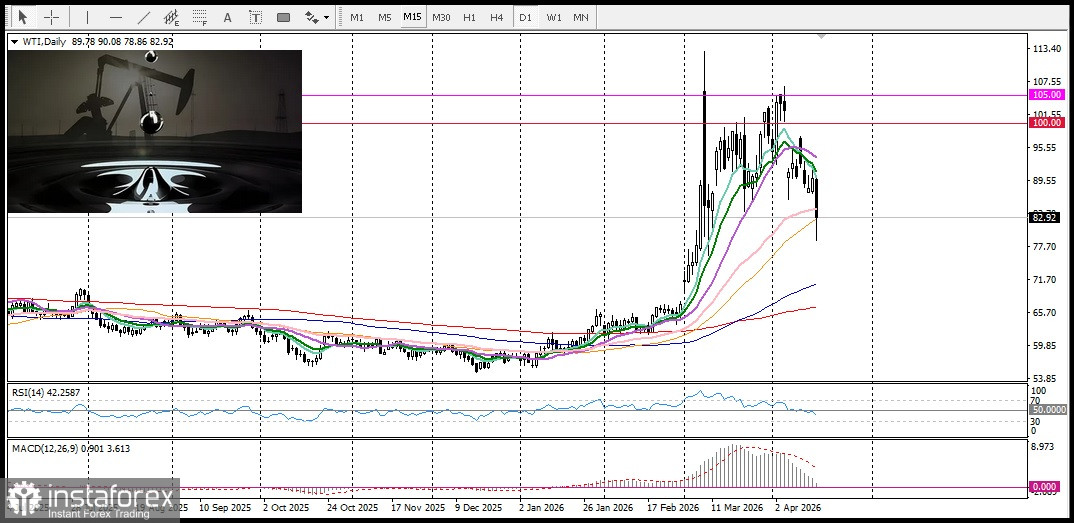
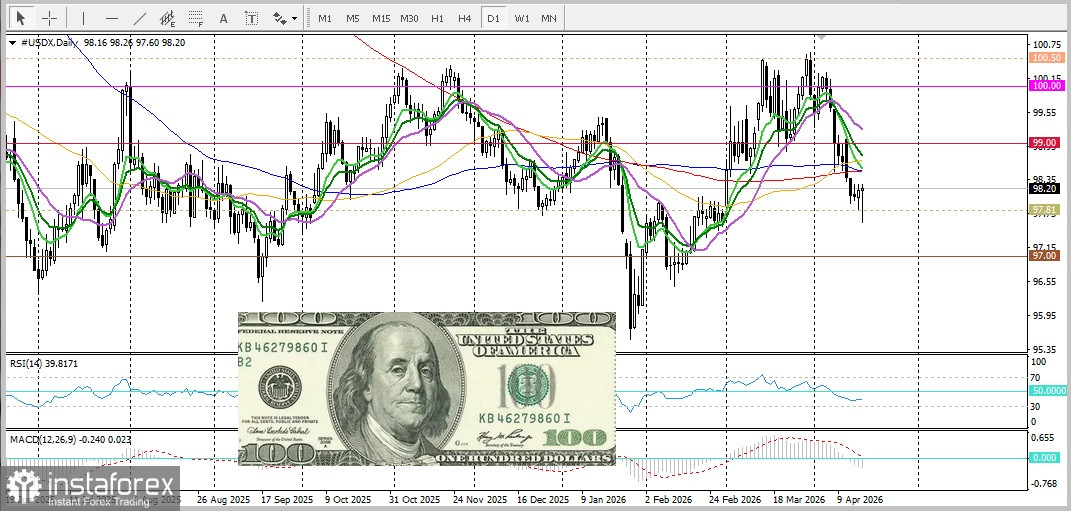
On Friday, ahead of the weekend, the price of gold (XAU/USD) rose, surpassing $4,890 and gaining over 1.50%, approaching the 50-day SMA. The market was supported by signs of de-escalation in tensions between the U.S. and Iran following the reopening of the Strait of Hormuz, which reduced global inflationary pressure. Concurrently, the energy sector came under pressure: WTI crude oil prices fell by more than 9%, and the U.S. dollar hit a new six-week low.
The dollar's weakness intensified following statements from Iran, coinciding with rising expectations of a resolution to geopolitical tensions. The yield on 10-year U.S. Treasury bonds also decreased, reaching its lowest values since mid-March—down 7 basis points to 4.246%.
The decline in oil prices is strengthening gold, enhancing expectations of a potential Fed easing in 2026.
The situation in the Middle East remains a key driver for market participants, who react actively to any signals of a possible resolution of the conflict. A news catalyst was the statement from Iranian Foreign Minister Abbas Araghchi, published on X, indicating that the Strait of Hormuz is open to commercial shipping for the remainder of the ten-day ceasefire between Israel and Lebanon, as reported by Reuters. Following this, Donald Trump stated, "Iran just announced that the Iranian Strait is fully open and ready for passage."
Nevertheless, despite the positive signals, a senior Iranian official told Reuters that serious disagreements between Tehran and Washington persist, including over the nuclear program. He emphasized that the continued operation of the Strait of Hormuz directly depends on the conditions of a potential ceasefire between Iran and the U.S.
Against this backdrop, WTI crude oil continued to fall. The decrease in energy prices led market participants to price in about 14 basis points of Fed easing by the end of the year, according to LSEG Workspace data.
Federal Reserve representatives are showing differing approaches. Christopher Waller maintains a more hawkish position, stating that if inflation and the labor market situation worsen, rates should remain at current levels. Conversely, San Francisco Fed President Mary Daly expressed a more dovish view, stating that current policy is "slightly restrictive," and the neutral rate is near 3%. She allowed for maintaining current levels but noted that rising inflation may require tightening, while a rapid resolution of the conflict with Iran would create conditions to discuss lowering rates.
From a technical perspective, gold has failed to break the $4,900 level or the 50-day SMA and remains in the previous range. Oscillators are mixed, with the Relative Strength Index (RSI) moving into positive territory, indicating that bulls now dominate the market. To target the round level of $5,000, bulls need to break through resistance at $4,900 or the 50-day SMA. In the event of a decline, gold will find support at the round level of $4,800, then at the 14-day EMA around $4,075, with the last demand zones being the 100-day SMA and the 20-day SMA. After that, bears will take control of the market.


