


















The oil crisis is not as alarming as its consequences, and these are already being felt, judging by the dynamics of purchasing managers' indices. The situation is worse in the eurozone, where business activity in April fell below the critical 50 mark. This signals a slowdown in economic growth. The services sector struggled the most, while the manufacturing sector battled on. A similar situation was observed in Germany. The EUR/USD declined, but a collapse is still far off.
Dynamics of European Business Activity
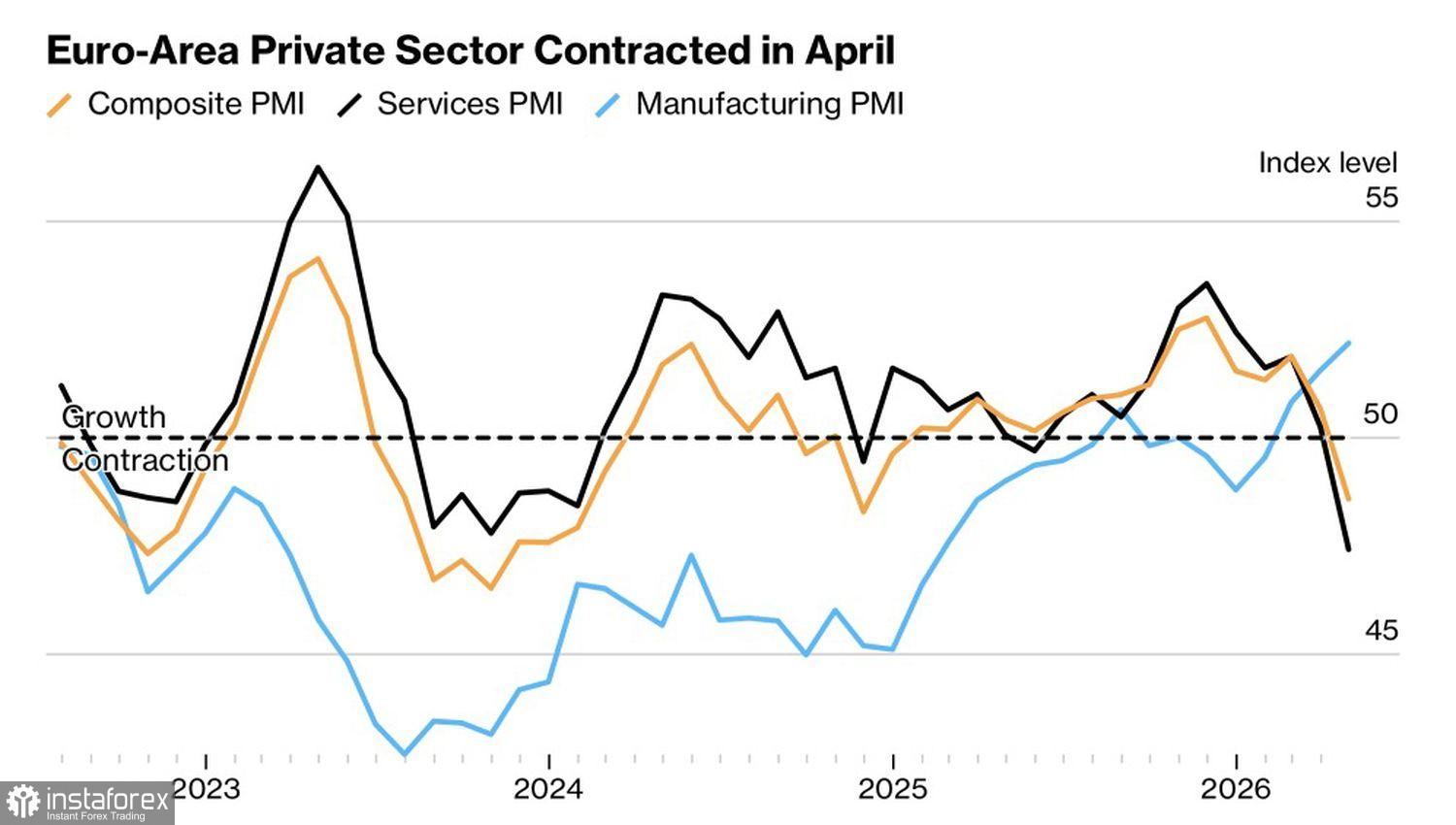
The main blow from the Strait of Hormuz blockade has fallen on Europe. Meanwhile, companies from Japan to Australia feel more resilient. According to DZ Bank, the economic damage to the currency bloc has already been significant. It remains to be seen how much worse it will get. The answer to this question will depend on the duration of the blockade of this key global oil artery.
Currently, there are no grounds for a full resumption of traffic. The US has decided to establish an indefinite ceasefire and is awaiting proposals from Iran on conflict resolution. Iran continues to terrorize foreign tankers and expresses outrage when Americans do the same to Tehran's vessels. Such aggression between the two could ultimately lead to an escalation and increased demand for the dollar as a safe-haven asset.
However, markets continue to remain optimistic. No one is bombing Iran anymore. Oil prices are far from record highs, and there is no scent of recession in the global economy. Everything is fine, a wonderful marquise? Why sell EUR/USD if the peak of escalation in the geopolitical conflict in the Middle East has passed?
Whether this is true or not, opponents will try to answer. The White House is waiting for proposals from Tehran, but they are not forthcoming. Attempts by Americans to deprive Iran of income from oil and gas seem, to put it mildly, naive. It's a long process that takes time. Donald Trump has decided that he has that time.
In reality, the longer the Strait of Hormuz remains blocked, the higher the oil prices climb. The worse the situation becomes for the eurozone and the euro. Ultimately, the principle of fundamental analysis—"a strong economy equals a strong currency"—is still valid. The eurozone appears decidedly weak, whereas the US is benefiting from exporting oil and petroleum products at record levels.
In such conditions, the theme of American exceptionalism, which dominated in 2022-2023, may return to the financial markets. When both the stock market and the U.S. economy are ahead of the rest of the world. The rest can only lament and imitate. And this typically ends poorly.
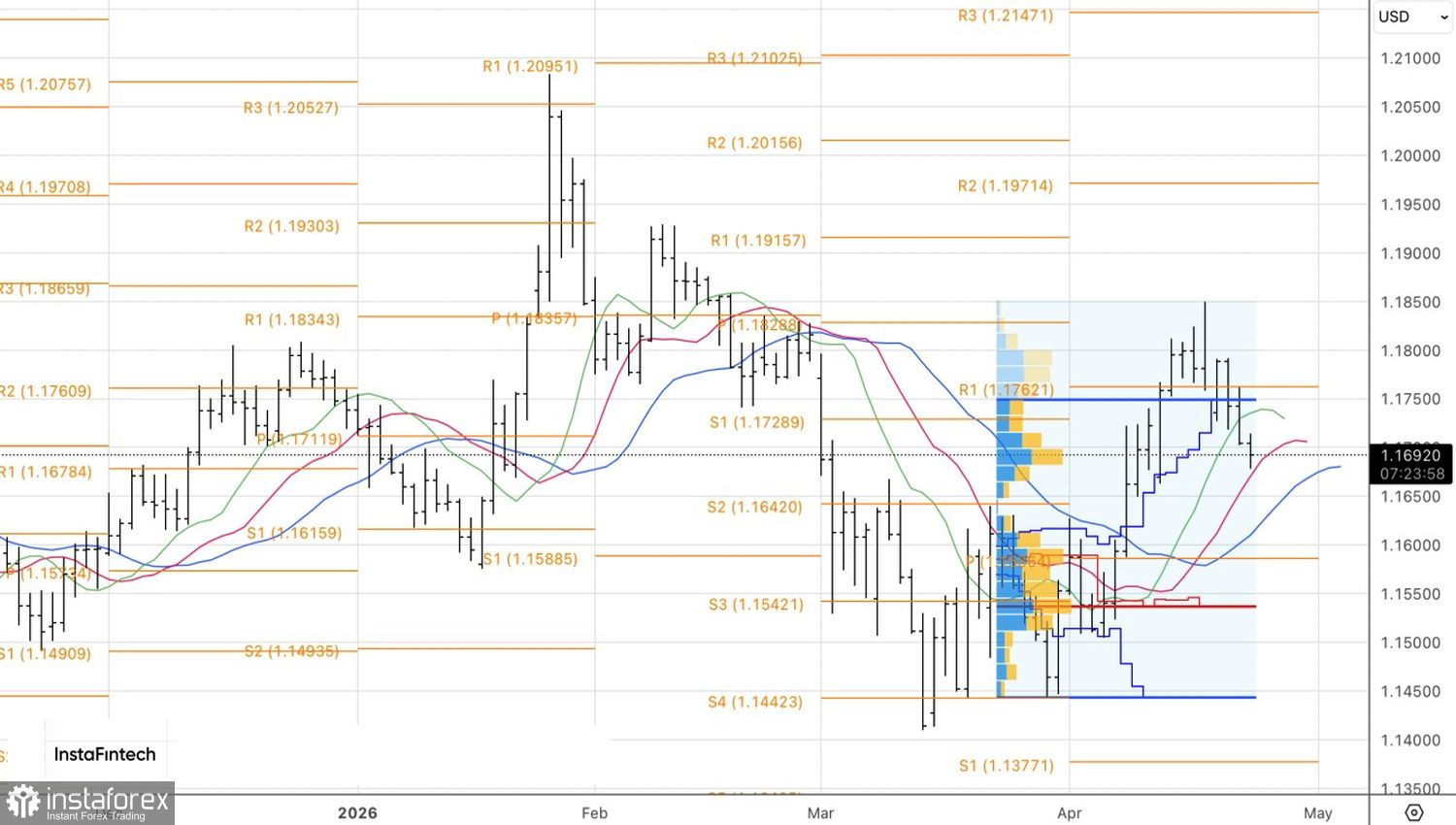
Technically, the EUR/USD daily chart shows a continuation of the pullback toward the upward trend, in line with fair value at 1.1535. If the "bears" find the strength to reach that level, then a trend change can be considered. For now, opportunities should be sought to increase short positions on the euro against the U.S. dollar that were established at 1.1760.


