


















The EUR/USD pair continued its gradual decline on Wednesday and, as of Wednesday morning, tested the 38.2% Fibonacci retracement level at 1.1666. A consolidation below this level would increase the likelihood of further decline toward the next Fibonacci level at 23.6% – 1.1568. A rebound from 1.1666 would allow traders to expect a reversal in favor of the euro and some growth toward the 50.0% retracement level at 1.1745.
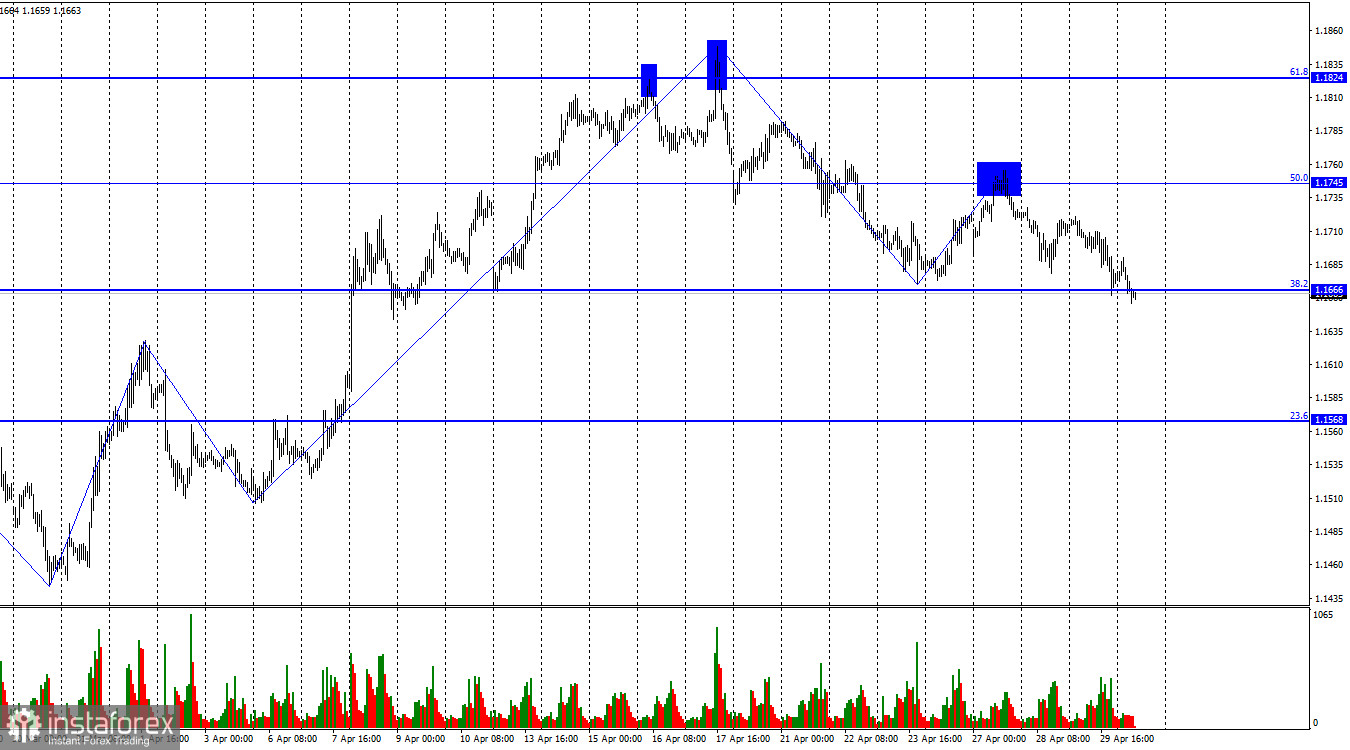
The wave situation on the hourly chart currently raises no concerns. The last completed upward wave failed to break the previous peak, while the new downward wave has broken the last low. A temporary truce between Iran and the U.S. supported the bulls, allowing them to form a strong upward wave. However, three weeks later, it can be said that geopolitics is once again moving in an unfavorable direction. According to some reports, Donald Trump is prepared for a prolonged blockade of the Strait of Hormuz, effectively ending hopes for negotiations and peace between Iran and the U.S. Bears are regaining confidence.
There were plenty of economic releases on Wednesday, but none had any noticeable impact on the pair's movement. This brings us to the key event of the day, which also had no effect on currency trading. The FOMC predictably kept interest rates unchanged, and the most notable comment from Jerome Powell was his intention to remain within the monetary policy committee for an indefinite period. In other words, Powell will hand over leadership to Kevin Warsh on May 15 but will remain an influential figure within the Federal Reserve. Since Powell is not leaving the FOMC, Donald Trump will be unable to appoint a replacement who could increase the number of "doves" on the committee. Bears continue to press their advantage as the Fed's policy may remain more hawkish in the coming years, geopolitics is worsening again, prospects for peace and reopening the Strait of Hormuz are slim, and oil prices have reached a four-year high. In a few hours, the results of the European Central Bank meeting will be announced, but it seems unlikely to draw strong trader interest.
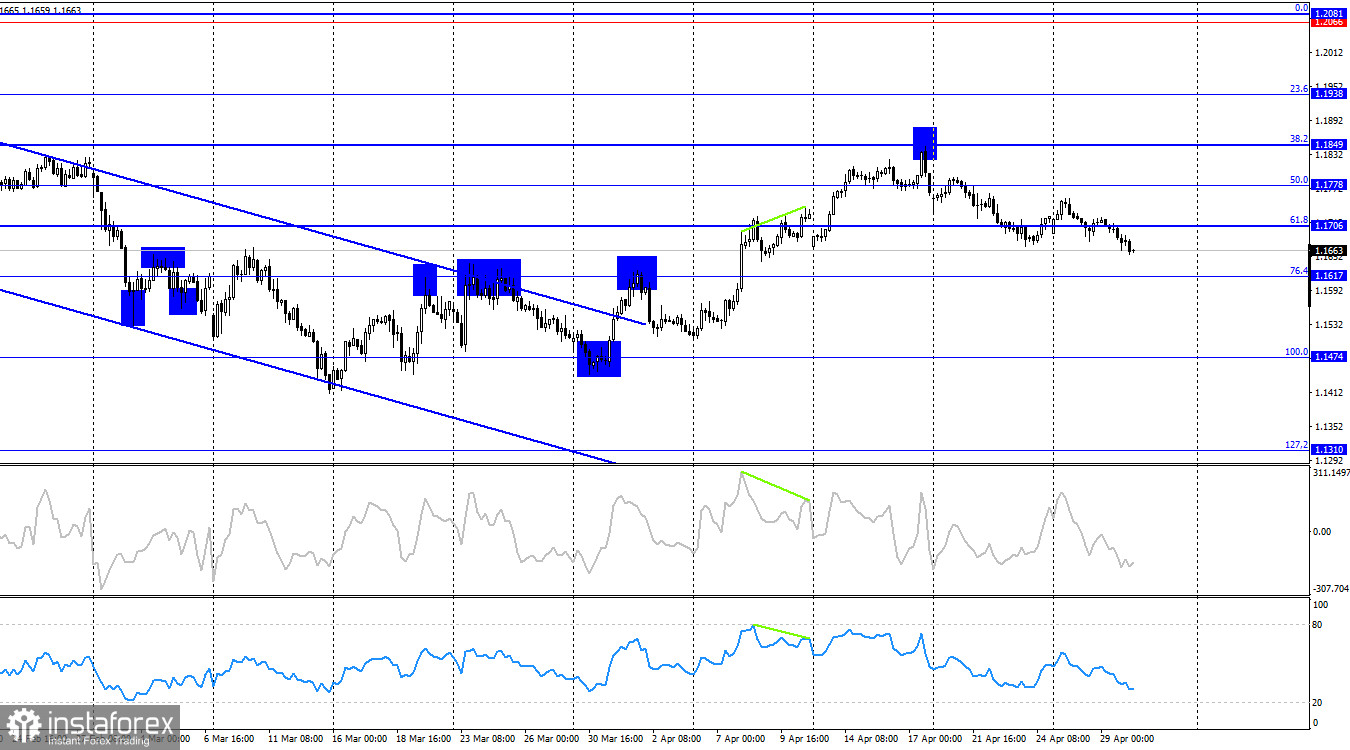
On the 4-hour chart, the pair reversed in favor of the U.S. dollar and consolidated below the 61.8% Fibonacci level at 1.1706. Thus, the downward movement may continue toward the next retracement level at 76.4% – 1.1617. Bears have regained the initiative, which is clearly visible on the hourly chart. No emerging divergences are currently observed in any indicators.
Commitments of Traders (COT) Report:
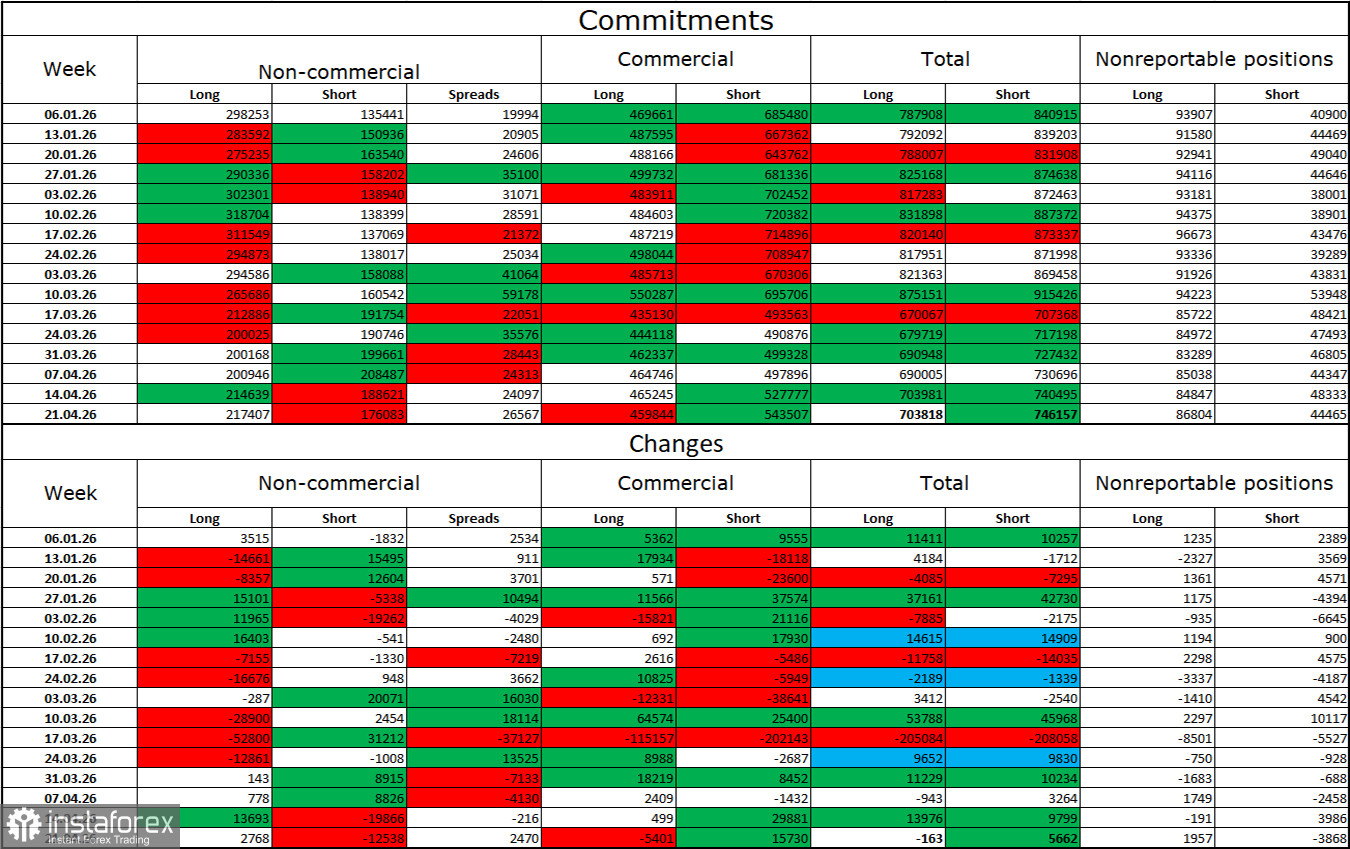
During the last reporting week, professional traders opened 2,768 long positions and closed 12,538 short positions. Over seven weeks, the bulls' overall advantage disappeared, but the past two weeks indicate that bulls have resumed their advance. The total number of long positions held by speculators now stands at 217,000, compared to 176,000 short positions. The gap is once again widening in favor of the euro.
Overall, in the long term, large market participants continue to show strong interest in the euro. However, global developments—of which there has been no shortage in recent years—continue to influence investor sentiment. In particular, market attention remains focused on the Middle East, where the war has only been paused, not ended. Therefore, in the near term, the euro and dollar exchange rates will depend less on Fed or ECB monetary policy and economic data, and more on developments in Iran.
Economic Calendar for the U.S. and the Eurozone:
- Germany – Retail sales change (06:00 UTC)
- Germany – Unemployment rate (07:55 UTC)
- Germany – Q1 GDP change (08:00 UTC)
- Eurozone – Q1 GDP change (09:00 UTC)
- Eurozone – Consumer Price Index (09:00 UTC)
- Eurozone – Unemployment rate (09:00 UTC)
- Eurozone – ECB interest rate decision (12:15 UTC)
- United States – Core PCE index (12:30 UTC)
- United States – Q1 GDP change (12:30 UTC)
- United States – Personal income and spending (12:30 UTC)
- Eurozone – ECB press conference (12:45 UTC)
- Eurozone – Speech by ECB President Christine Lagarde (15:15 UTC)
On April 30, the economic calendar includes twelve important events. The impact of the news flow on market sentiment may persist throughout the day.
EUR/USD Forecast and Trading Tips:
Selling positions were possible after a rebound from the 1.1745 level on the hourly chart, targeting 1.1666. These trades can be held today with a target of 1.1568 if the pair closes below 1.1666. Buying positions are recommended on a rebound from 1.1666, targeting 1.1745.
Fibonacci levels are drawn from 1.2082–1.1410 on the hourly chart and from 1.1474–1.2082 on the 4-hour chart.


