


















Returning to the FOMC meeting, I can say that the level of uncertainty pertains only to the U.S. economy. The situation in the Middle East is relatively clear at the moment. How the U.S. economy will react after the first shock month remains a significant question. Let me remind you that inflation jumped from 2.4% to 3.3% in March, GDP growth in the first quarter was 2%, and the labor market has shown signs of remission, but it is still far from a full recovery. However, the Federal Reserve clearly set its priorities during the March meeting—taming inflation is the top priority. The consumer price index alone rose nearly 1% in March.
It is also important to note that Jerome Powell intends to remain on the FOMC after his term as chairman ends. Legislation allows him to do so at least until January 2028. Thus, the most terrifying nightmares of Donald Trump are coming true. Let me remind you that just last week, the U.S. Department of Justice closed its investigation into Powell regarding overspending related to the reconstruction of Fed buildings. Consequently, the U.S. president has failed to oust the Fed's president, who vigorously adheres to the central bank's two main mandates and does not wish to blindly follow directives from the White House.
Trump needs lower interest rates to see historical growth rates in the U.S. economy. Powell and most of the FOMC members have maintained a measured approach aimed at maximum employment and price stability. Now, Kevin Warsh will become the new head of the central bank, but in effect, Powell will remain the president. This is certainly a bold statement, but Powell's influence on the FOMC members will remain significant. Simply put, Powell will monitor how diligently the other members fulfill their mandates after his departure.
Based on all of the above, there should be no expectation of a rate cut in 2026. This is good news for the U.S. dollar, but I hasten to remind you that, according to the CME FedWatch tool, the market did not expect any rounds of monetary easing even before the April Fed meeting. Now, the balance of expectations has shifted slightly towards tightening, albeit minimally. However, the notion that "the Fed might raise rates once before the end of the year" is too weak a growth factor for the American currency. As a result, the market reacted very little to the FOMC meeting outcomes.
Wave Pattern for EUR/USD:
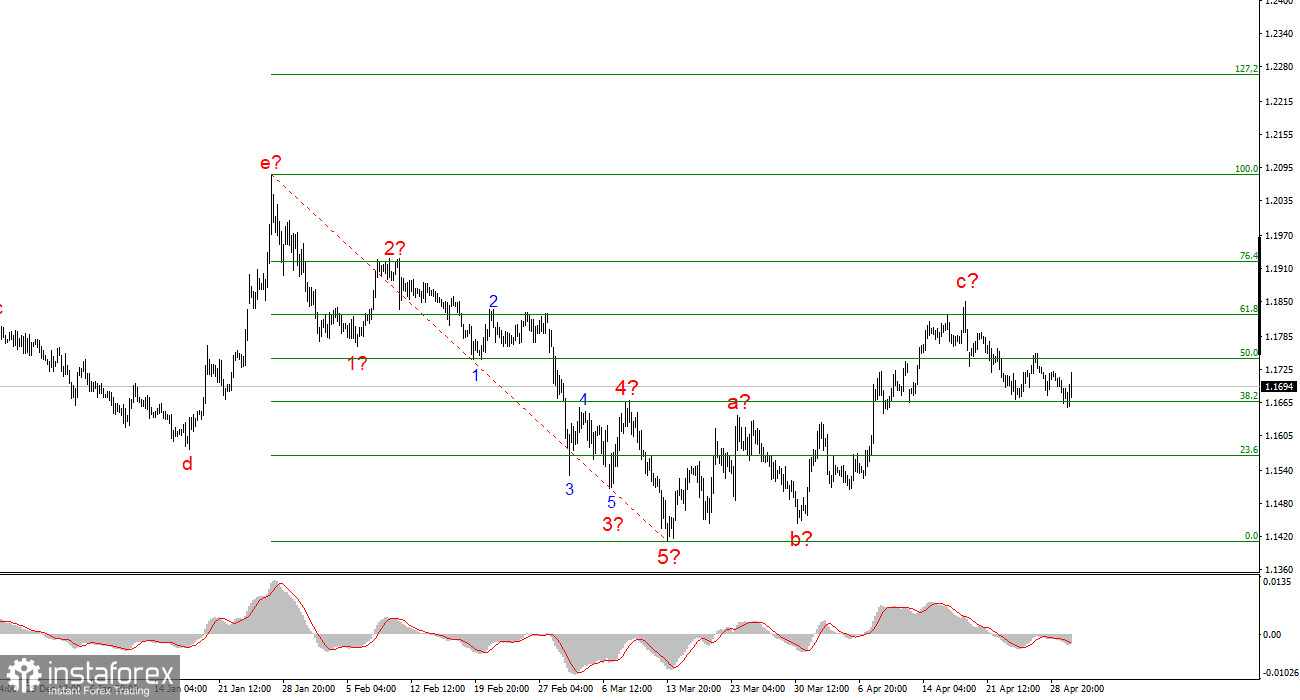
Based on the analysis of EUR/USD, I conclude that the instrument remains within an upward section of the trend (bottom picture) and, in the short term, is within a corrective structure. The corrective wave set appears to be complete and may take on a more complex, extended form only if the geopolitical background in the Middle East improves. Otherwise, from current positions, a new downward wave set may begin to form. We have observed the corrective wave; further developments will depend on market belief in a favorable outcome of negotiations.
Wave Pattern for GBP/USD:
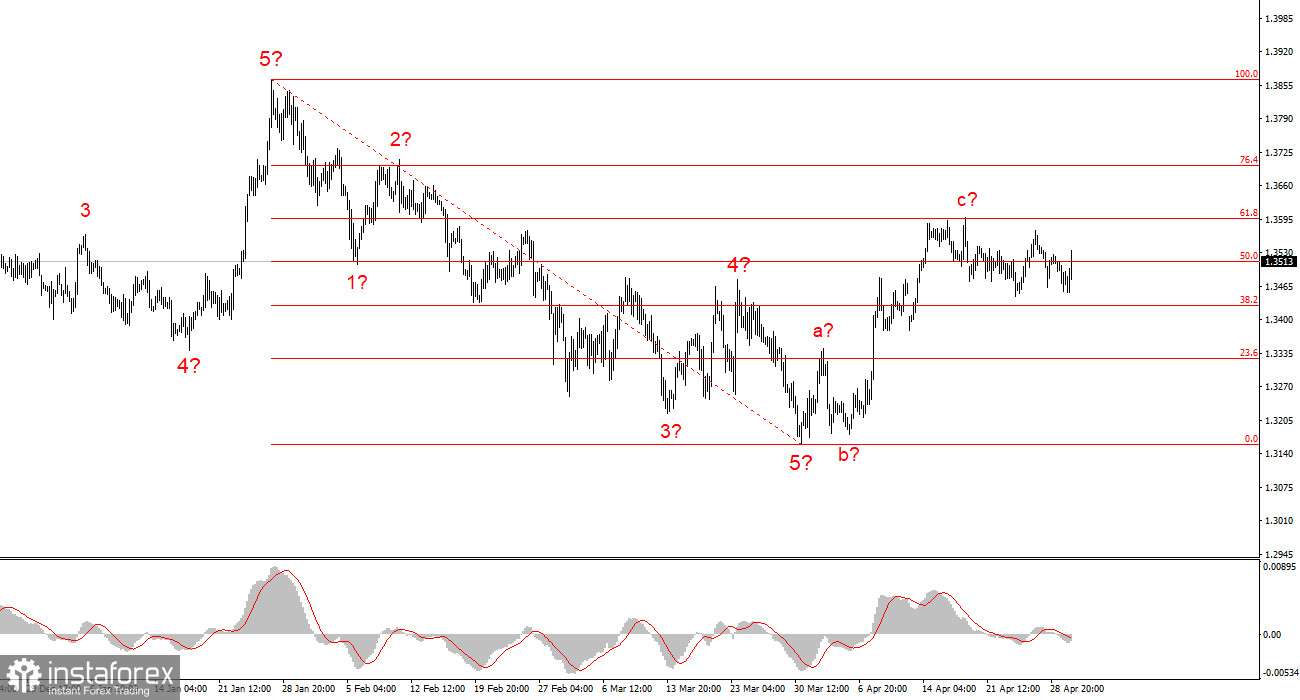
The wave pattern for GBP/USD has, over time, become clearer, as I anticipated. Now we see a clear three-wave upward structure on the charts, which may already be complete. If this is indeed the case, we can expect the formation of at least one downward wave (presumably d). The upward segment of the trend could take on a five-wave form, but for that to happen, the conflict in the Middle East must subside rather than reignite. Therefore, the baseline scenario for the coming days is a decline towards the 34 figure or slightly lower. Again, everything will depend on geopolitical factors.
Key Principles of My Analysis:
- Wave structures should be simple and clear. Complex structures are difficult to trade and often entail changes.
- If there is no confidence in what is happening in the market, it is better not to enter.
- There can never be 100% certainty in the direction of movement. Remember to use protective Stop Loss orders.
- Wave analysis can be combined with other types of analysis and trading strategies.


