



















Gold prices have increased for the third consecutive session, reaching a two-week high. This uptick is occurring amid easing inflation concerns stemming from signs of a possible peace agreement between the US and Iran, along with a weaker dollar.
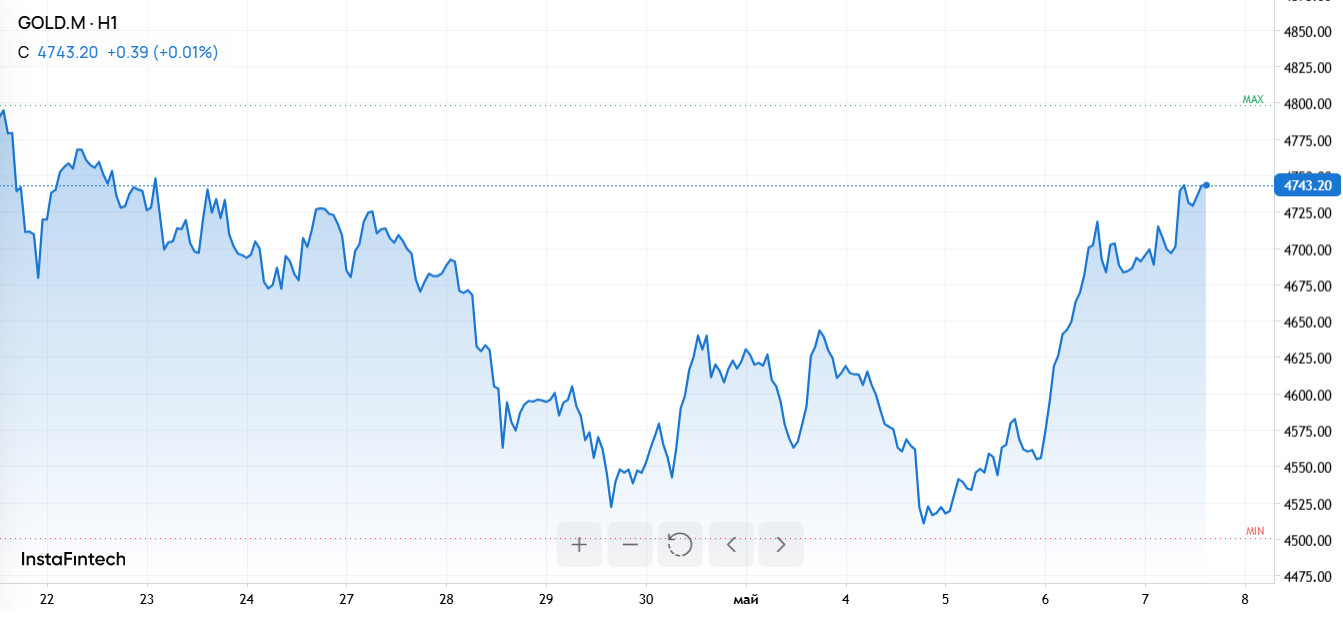
On Thursday, spot gold prices rose by 0.9% to $4,734.28 per ounce as of 11:18 London time. June futures for gold increased by 1.0% to $4,742.90 per ounce. On Wednesday, the "yellow metal" gained more than 3% (the largest daily increase since the end of March) amid a sharp decline in oil prices as expectations of easing tensions in the Middle East grew.
The key driver of Thursday's rally is optimism regarding a diplomatic resolution between Washington and Tehran. "The market is pausing as traders await further clarity on the diplomatic path between the US and Iran, while Tehran is considering a new proposal that could pave the way for the reopening of the Strait of Hormuz," stated Neil Welch, head of the metals department at Britannia Global Markets.
Reports indicate that Iran is contemplating a new US proposal to end its more than two-month-long conflict, despite President Donald Trump's lingering threat to resume attacks if the deal is not implemented. Washington and Tehran, according to The Wall Street Journal, are working with intermediaries on a 14-point framework agreement to resume negotiations for a lasting peace deal.
These discussions are anticipated to begin next week in Pakistan. The publication added that the month-long process will then focus on resolving disputes over Iran's nuclear ambitions and lifting sanctions, although key disagreements remain over issues such as uranium enrichment and inspections.
President Trump stated on Wednesday afternoon that the US has "won" the war and that negotiations with Tehran have been "very good" over the past 24 hours. According to CNN, Iran is expected to provide intermediaries with their response to the US proposal by Thursday.
The earlier sharp decline in oil prices has also heightened interest in gold. The energy shock caused by the closure of the Strait of Hormuz raised inflationary concerns.
Such concerns heightened expectations of stricter monetary policy from central banks, including the Federal Reserve, which traditionally puts pressure on low-yielding assets like gold. However, the decline in energy prices partially alleviates these inflation risks. "Potential declines in energy prices give the Fed more room to cut rates, which is positive for gold," noted analysts at ING.
The drop in US Treasury yields and the weakening dollar have also made gold more attractive to foreign buyers. The dollar, which had recently served as a relative safe haven amid the conflict with Iran, lost ground amid signs of de-escalation, prompting investors to return to risk assets and bolstering demand for the precious metal.
What is Important for Traders:
- Spot gold: $4,734.28 per ounce (up 0.9% as of 11:18 London time).
- June futures: $4,742.90 per ounce (up 1.0%).
- Mid-term driver – developments in negotiations between the US and Iran (14-point framework proposal; discussions expected next week in Pakistan).
- The decline in energy prices reduces inflationary pressures and softens expectations for Fed tightening.
- Slowing inflation, declining yields, and increased attractiveness of gold.
- Markets await Friday's Nonfarm Payrolls report for further signals on the Fed's interest rate trajectory.
Thus, gold is receiving support from a combination of diplomatic news, falling oil prices, and a weak dollar. Traders should monitor further developments in negotiations between the US and Iran, oil price dynamics, yield movements, and US employment data. All of these factors will influence gold's short-term price trajectory in the coming days.


