


















Meanwhile, as the US dollar picks up strength, yesterday the head of the Boston Fed rebelled, joining the ranks of the more hawkish policymakers
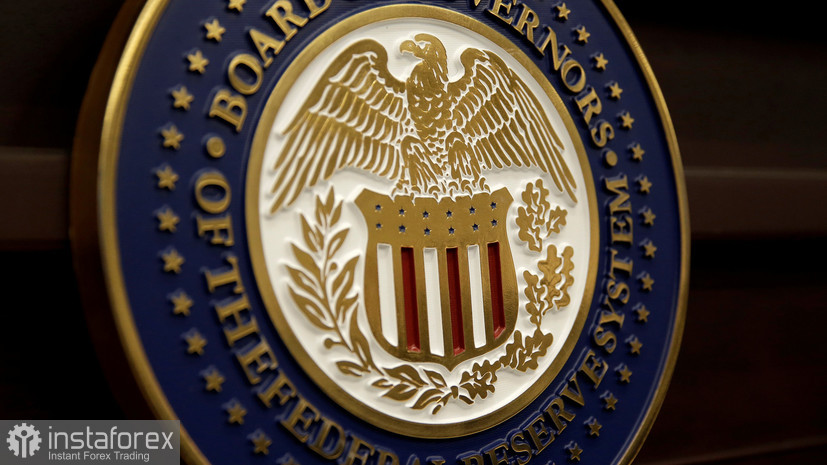
It is becoming increasingly clear that a split is widening inside the Federal Reserve System. Boston Fed President Susan Collins openly backed colleagues who last week voiced disagreement with the FOMC statement that implied the central bank's next step would be rate cuts.
She said that they should not pretend they knew where they were going, added that she fully supported the decision to leave rates unchanged but would have reworded the statement, and stressed that it should not be so tightly linked to the assumption that the next step would be a rate cut.
Collins prefers a more restrictive approach to the future policy path. In her view, the energy shock from the Middle East conflict pushes back the date at which the 2% inflation target will be achieved. She said that rates would likely remain unchanged for a long time, but that, if necessary, the Fed might have to consider hikes.
As I mentioned above, Collins joined three other regional Fed presidents who formally expressed dissent at the 29 April meeting against the bias toward easing. They include Lori Logan (Dallas Fed), Beth Hammack (Cleveland Fed) and Neel Kashkari (Minneapolis Fed). Hammack said in a Thursday interview that the FOMC statement is somewhat misleading, given current economic conditions.
Collins has no vote on the FOMC this year, but her public stance is a symptom of a broader shift. An increasing number of officials want the Fed to make clear that the next step could be either a cut or a hike.
This internal dynamic creates serious challenges for Kevin Warsh — President Trump's nominee for Fed chair. He must be confirmed by the Senate in the coming weeks, and the first meeting under his chairmanship is scheduled for 16–17 June. However, it is obvious he will inherit a Fed that is clearly not positioned to cut rates in the near term.
Inflation remains the Fed's main headache: 3.5% versus the 2% target, and the energy shock will only make the situation worse.
Technical picture, EUR/USD
Regarding the current technical picture for EUR/USD, buyers should now consider how to take the 1.1755 level. Only this will allow a test of 1.1795. From there, a move to 1.1825 would be possible, but achieving that without support from major players will be rather difficult. The most distant target is the high at 1.1850. In the event of a decline only to around 1.1725, I expect some serious action from large buyers. If there is nobody there, it would be prudent to wait for a refresh of the low at 1.1700 or to open long positions from 1.1675.
Technical picture, GBP/USD
As for the current technical picture for GBP/USD, pound buyers need to take the nearest resistance at 1.3600. Only this will allow a target of 1.3655, above which a break will be rather difficult. The most distant target is the 1.3685 area. In the event of a fall, bears will try to seize control at 1.3570. If they succeed, a break of the range will deal a serious blow to bulls' positions and push GBP/USD toward the low at 1.3520, with the prospect of reaching 1.3500.


