


















Troubles do not come alone. Using the US's weaknesses, such as the Supreme Court's ruling that tariffs are illegal and setbacks in the Middle East, China has confronted the issue of Taiwan head-on. Xi Jinping expressed discontent with US arms sales to the island and urged Donald Trump to renounce recognition of Taipei's independence. Otherwise, a large-scale conflict between superpowers is possible.
The occupant of the White House has found himself in a difficult position. If he tries to obstruct the arms deal with Taiwan, he will face problems with Congress and voters who are already unhappy with the conflict in the Middle East. If he does not take this stance, he will incur Beijing's wrath. The global economy risks a third geopolitical flashpoint, which would increase demand for the US dollar as a safe haven and push EUR/USD below 1.17.
Dynamics of European PMI and Inflation
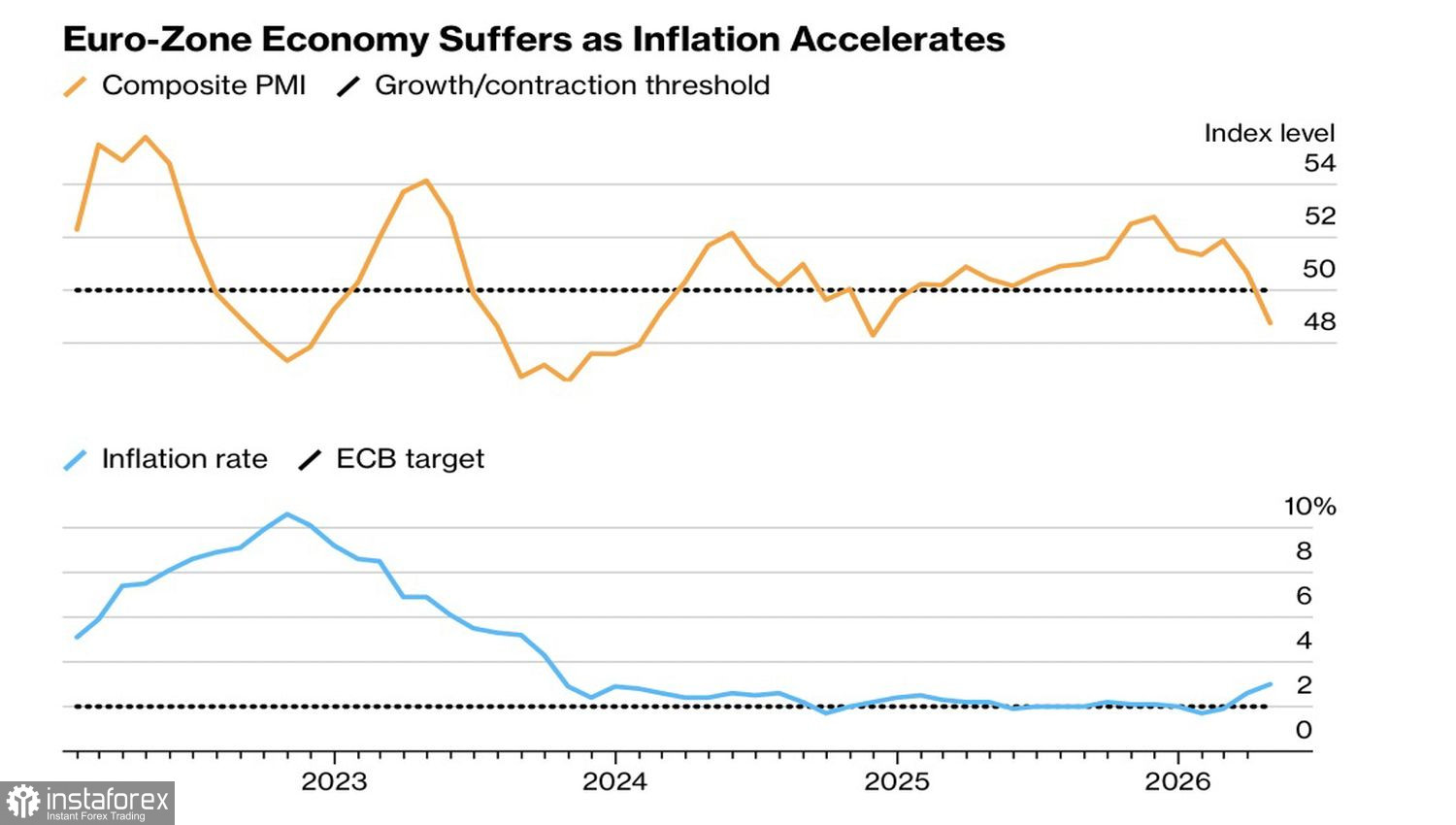
Investors are increasingly concerned about a possible European Central Bank rate hike in June. At the press conference following the last Governing Council meeting, Christine Lagarde expressed confidence in the need to tighten monetary policy. After this, the futures market began to forecast two to three acts of monetary tightening in 2026, with Bloomberg experts settling on two.
However, oil prices are not rising despite the ongoing conflict in the Middle East. This means that inflation in the Eurozone is unlikely to increase as rapidly as the ECB feared. Against the backdrop of deteriorating business activity, the risks of a stagflation shock, warned of by Governing Council member Olli Rehn, are rising. Chief economist Philip Lane mentioned that a deterioration in domestic demand would significantly complicate adjustments to monetary policy.
Thus, the markets may have gotten ahead of themselves by signaling potential tightening of monetary policy, which initially supported EUR/USD. However, a rollback of such forecasts will likely cause the main currency pair to retreat. Moreover, macroeconomic data for the United States are providing increasingly compelling arguments in favor of a rate hike in the federal funds rate.
Dynamics of US Producer Prices
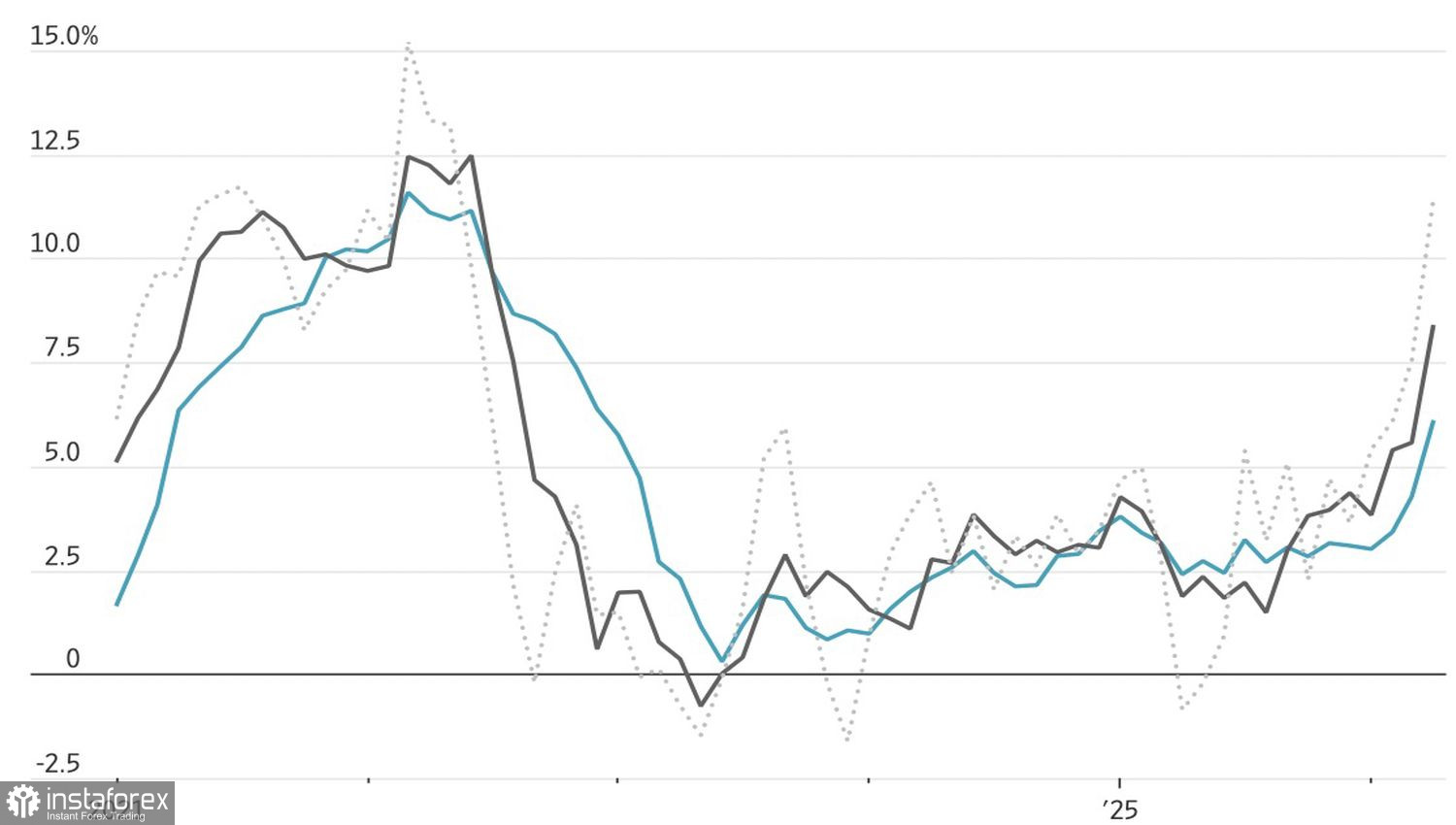
Following an impressive increase in non-farm employment in the US by 115,000 and the acceleration of consumer prices to 3.8%, producer prices have also delivered good news. In April, they rose by 6%, marking the highest level since 2022.
When the labor market is strong and inflation is accelerating, it is an appropriate time to consider tightening monetary policy to prevent overheating in the economy. The more members of the FOMC lean towards this idea, the better the US dollar will perform.
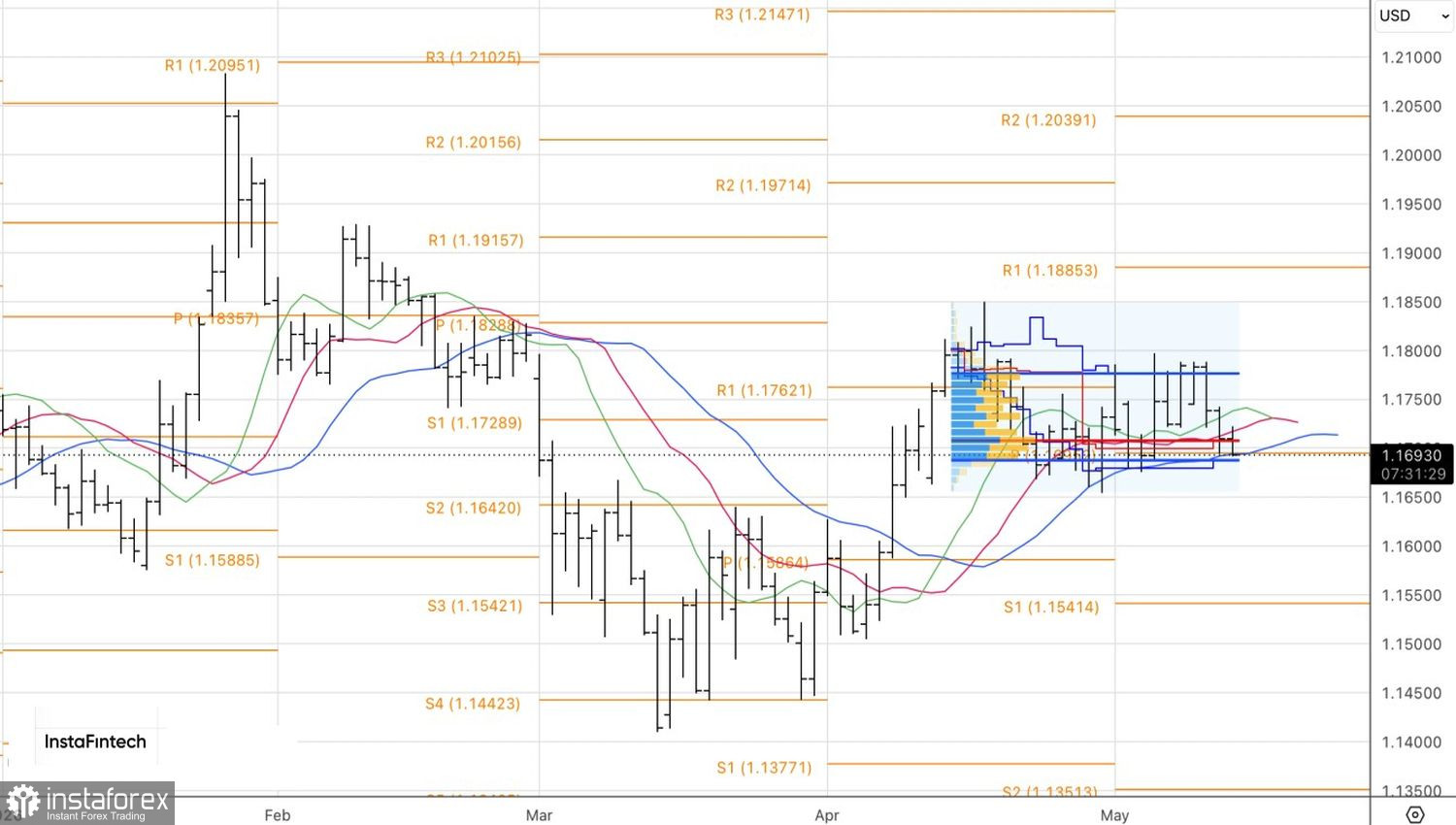
Technically, on the daily chart, the EUR/USD pair is testing the lower boundary of the fair value range at 1.1685-1.1775. If successful, the risks of further declines in the euro towards $1.159 and $1.154 will increase, providing traders with an opportunity to sell.


