


















Yesterday, the euro lost all its gains, while the pound and other risk assets demonstrated more resilience against the U.S. dollar.
Given that the situation in the Middle East has not changed significantly, traders decided not to rush. Against this backdrop, the euro came under pressure, hitting a weekly low.
Today promises to be eventful with important economic announcements that could significantly impact the currency market. In the first half of the day, key data on price pressures in the Eurozone is expected—the consumer price index (CPI) and the corresponding figure for the region's largest economy, Germany, in the form of the producer price index (PPI).
These macroeconomic indicators are of critical importance for shaping the future policy of the European Central Bank. If the Eurozone CPI and the German PPI show growth that exceeds analysts' expectations, it may signal a recovery in the euro's position against the U.S. dollar. An increase in inflationary pressures typically raises the likelihood of the ECB tightening monetary policy, which historically supports the euro.
As for the pound, the UK's economic calendar also includes the release of data today that could significantly impact its dynamics. Traders and analysts will mainly be anticipating the publication of the consumer price index data. This indicator is the primary measure of inflation and directly influences the Bank of England's monetary policy decisions. In addition to the CPI, retail price indices and producer price indices will also be released. Retail prices provide insight into the inflation consumers face, while the producer price index reflects the cost of raw materials and goods used in production. Together, these indicators form a comprehensive picture of price pressures in the British economy, and any deviation from forecasts could trigger increased volatility in the currency market.
If the data aligns with economists' expectations, it is advisable to act based on the Mean Reversion strategy. Conversely, if the data significantly exceeds or falls short of expectations, the Momentum strategy would be the best approach.
Momentum Strategy (on Breakout):
For the EUR/USD Pair
Long positions on a breakout of level 1.1613 may lead to a rise in the euro to the area of 1.1635 and 1.1659;
Short positions on a breakout of level 1.1589 may lead to a drop in the euro to the area of 1.1569 and 1.1549;
For the GBP/USD Pair
Longs on a breakout of level 1.3415 may lead to a rise in the pound to the area of 1.3444 and 1.3473;
Shorts on a breakout of level 1.3375 may lead to a drop in the pound to the area of 1.3344 and 1.3302;
For the USD/JPY Pair
Longs on a breakout of level 159.15 may lead to a rise in the dollar to the area of 159.40 and 159.65;
Shorts on a breakout of level 158.85 may lead to a sell-off of the dollar to the area of 158.55 and 158.25;
Mean Reversion Strategy (on Return):
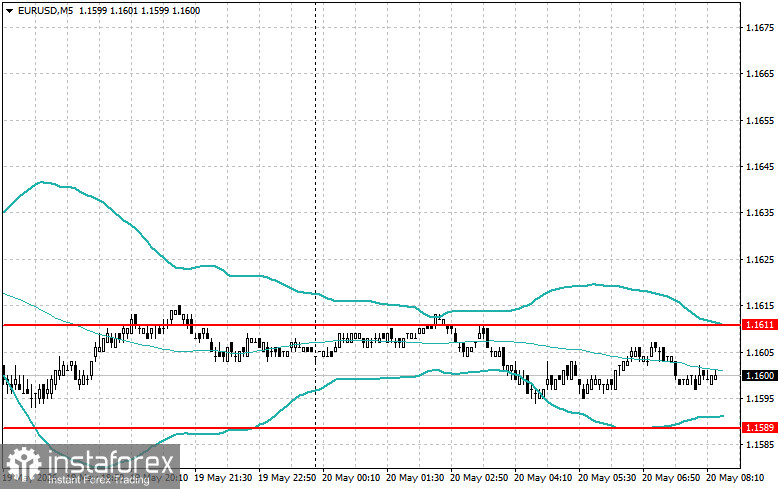
For the EUR/USD Pair
Shorts will be sought after a failed breakout beyond 1.1611 on a return below this level;
Longs will be sought after a failed breakout beyond 1.1589 on a return to this level;
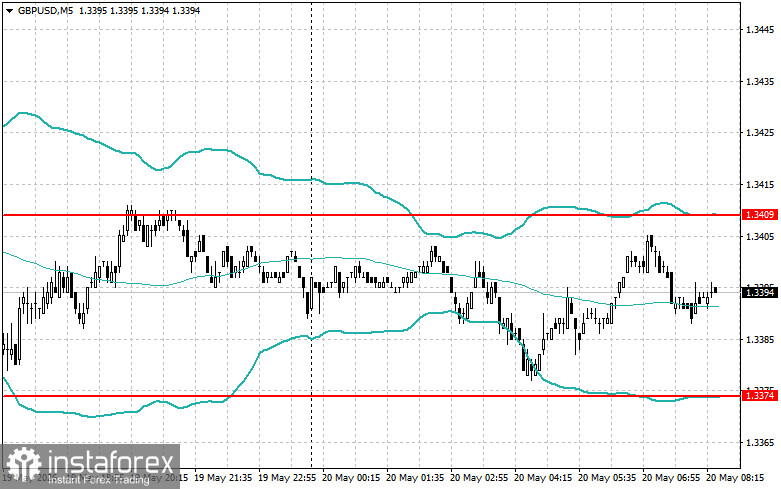
For the GBP/USD Pair
Shorts will be sought after a failed breakout beyond 1.3409 on a return below this level;
Longs will be sought after a failed breakout beyond 1.3374 on a return to this level;
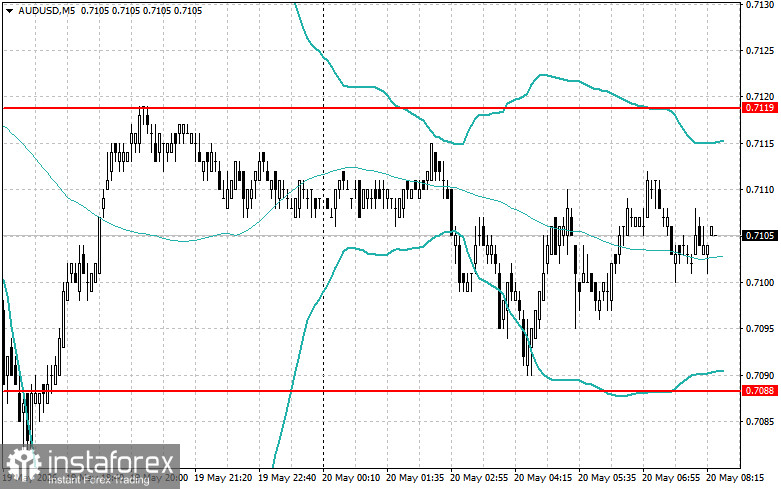
For the AUD/USD Pair
Shorts will be sought after a failed breakout beyond 0.7119 on a return below this level;
Longs will be sought after a failed breakout beyond 0.7088 on a return to this level;
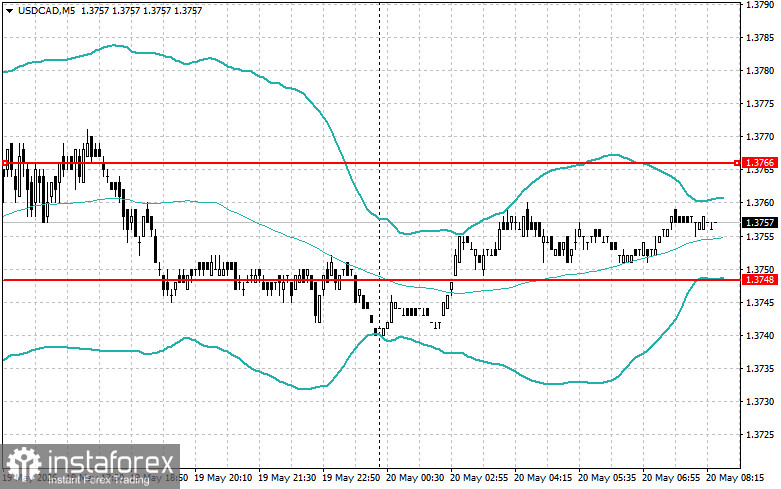
For the USD/CAD Pair
Shorts will be sought after a failed breakout beyond 1.3766 on a return below this level;
Longs will be sought after a failed breakout beyond 1.3748 on a return to this level;


