


















Trade Analysis and Tips for Trading the Euro
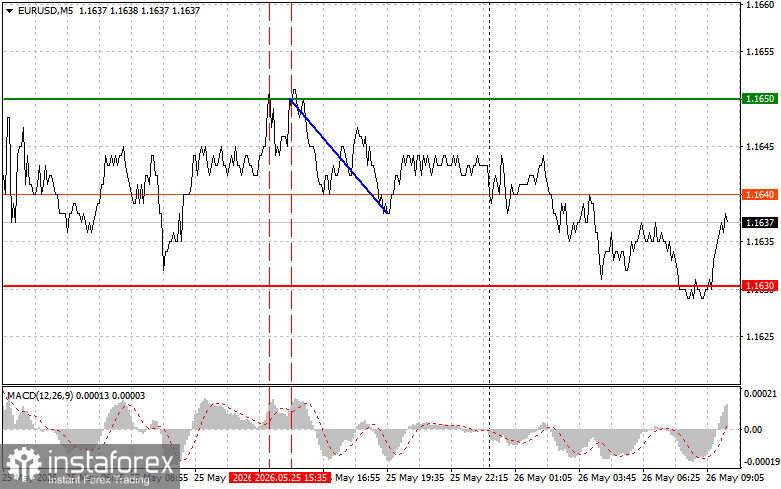
The test of 1.1650 coincided with the MACD indicator moving significantly above the zero mark, which limited the pair's upward potential. For this reason, I did not buy the euro. The second test of 1.1650 prompted the implementation of Scenario #2, which called for selling the euro, resulting in a 12-pip decline in the pair.
The euro spent yesterday moving within a sideways channel, as there were no significant fundamental or geopolitical reasons to break out of it. Today, there is no fundamental data from the Eurozone, so traders' attention will likely shift to the European Central Bank's financial stability report. In the case of weak forecasts, which are expected, pressure on the euro may increase. The expectations of a negative scenario are reinforced by the current economic situation in the region. High inflation remains a serious problem, and the tightening of monetary policy by the ECB, which is anticipated next month, carries recession risks. In such conditions, investors are likely to seek shelter in more reliable assets than the euro. As a result, any information from the ECB report that indicates a worsening of existing problems or the emergence of new ones could trigger a sell-off of the euro.
Regarding the intraday strategy, I will primarily focus on implementing Scenarios #1 and #2.
Buy Scenarios
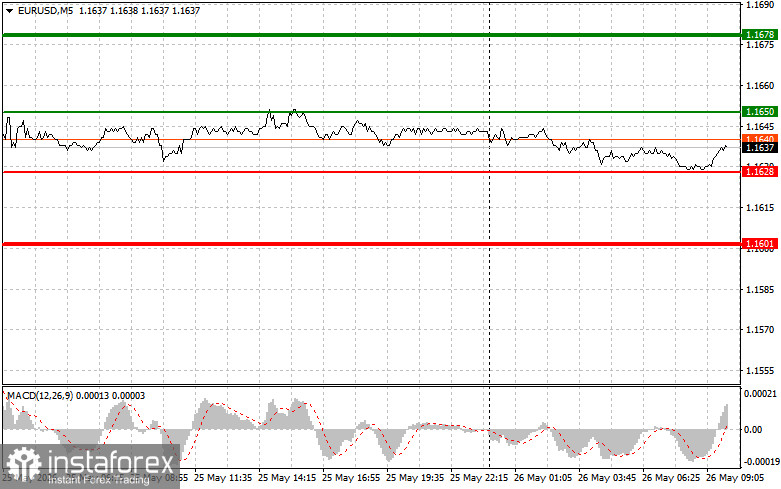
- Scenario #1: Today, I will buy euros upon reaching an entry point around 1.1650 (the green line on the chart), targeting a move to 1.1678. At 1.1678, I plan to exit the market and sell euros in the opposite direction, anticipating a movement of 30-35 pips from the entry point. Growth in the euro can only be expected after good news regarding the agreement. Important! Before buying, ensure that the MACD indicator is above the zero mark and just starting to rise from it.
- Scenario #2: I also plan to buy euros today if the price tests 1.1628 twice in a row while the MACD indicator is in the oversold zone. This will limit the pair's downward potential and lead to an upward market reversal. We can expect growth to the opposing levels of 1.1650 and 1.1678.
Sell Scenarios
- Scenario #1: I plan to sell euros once the price reaches 1.1628 (the red line on the chart). The target will be the level of 1.1601, where I plan to exit the market and buy immediately in the opposite direction, anticipating a movement of 20-25 pips in the opposite direction from the level. Pressure on the pair may return at any moment today. Important! Before selling, ensure that the MACD indicator is below the zero mark and just starting to decline from it.
- Scenario #2: I also plan to sell euros today in the event of two consecutive tests of the price at 1.1650 when the MACD indicator is in the overbought zone. This will limit the pair's upward potential and lead to a market reversal downward. We can anticipate a decline to the opposing levels of 1.1628 and 1.1601.
What the Chart Indicates:
- Thin Green Line: Entry price for buying the trading instrument;
- Thick Green Line: Estimated price where take profit can be set or profits can be locked in, as further growth above this level is unlikely;
- Thin Red Line: Entry price for selling the trading instrument;
- Thick Red Line: Estimated price where take profit can be set or profits can be locked in, as further decline below this level is unlikely;
- MACD Indicator: When entering the market, it's important to consider the overbought and oversold zones.
Important Note:
Novice Forex traders must be very cautious when making market entry decisions. It is best to stay out of the market before important fundamental reports are released to avoid sharp fluctuations. If you decide to trade during news releases, always set stop orders to minimize losses. Without placing stop orders, you can quickly lose your entire deposit, especially if you do not use money management and trade large volumes.
Remember that successful trading requires a clear trading plan, similar to the one presented above. Making spontaneous trading decisions based on the current market situation is inherently a losing strategy for intraday traders.