


















Oil has returned to an upward trajectory. Brent is nearing $97 per barrel, while WTI is trading around $95—both grades have gained over 7% in the first two trading sessions of the week. It is clear that the optimism surrounding negotiations, which had dragged oil prices down by 19%, is quickly dissipating.

There are ample reasons for the increase. Iran launched ballistic missiles at Kuwait and Bahrain—these were either intercepted or destroyed en route—while US forces struck back at a command center on Qeshm Island. Kuwait has suspended flights at its international airport after an Iranian drone damaged a passenger terminal. All of this occurs against the backdrop of Trump's statements expressing optimism about a soon-to-be-finalized agreement—alongside simultaneous reports from Iranian media about the suspension of negotiations due to hostilities in Lebanon. The market is receiving conflicting signals and responding to the most tangible—escalation.
A fundamentally significant detail emerged yesterday evening. According to ABC News, Trump is demanding that Iran put its nuclear concessions in writing as part of a preliminary agreement to cease hostilities. Prior to this, Tehran had only offered verbal assurances regarding various conditions. This requirement significantly complicates the negotiation process—obtaining written commitments regarding Iran's nuclear program is politically much more challenging than securing verbal assurances, which explains why an agreement that seemed imminent just a week ago has still not been signed.
It is also noteworthy that supply shortages continue to mount. According to the American oil industry, US crude oil inventories decreased by 6.8 million barrels last week. If the Department of Energy's official data confirms this figure, it will mark the sixth consecutive reduction. All of this indicates that normalization of flows is still far off, and risks are skewed toward rising prices—especially considering the approaching third quarter with its seasonally high demand for energy resources.
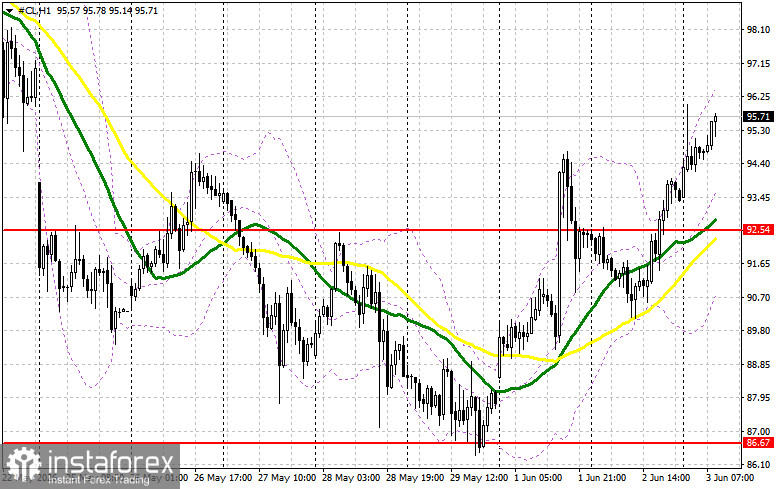
Regarding the current technical situation in the oil market, buyers need to reclaim the nearest resistance at $100.40. This will allow them to target $106.80, above which it will be quite challenging to break through. The furthest goal will be around $110.80. In the event of a decline, bears will attempt to take control at $92.54. If they succeed, breaching this range will deliver a serious blow to the bulls' positions, pushing oil down to a low of $86.50, with the prospect of a further decline to $81.40.


