


















The EUR/USD pair continued to decline throughout Tuesday and consolidated below the 100.0% Fibonacci retracement level of 1.1409. As a result, the decline may continue toward the next retracement level of 127.2% at 1.1291. A close above 1.1409 would favor the euro and support a moderate recovery toward the 76.4% Fibonacci level of 1.1514.
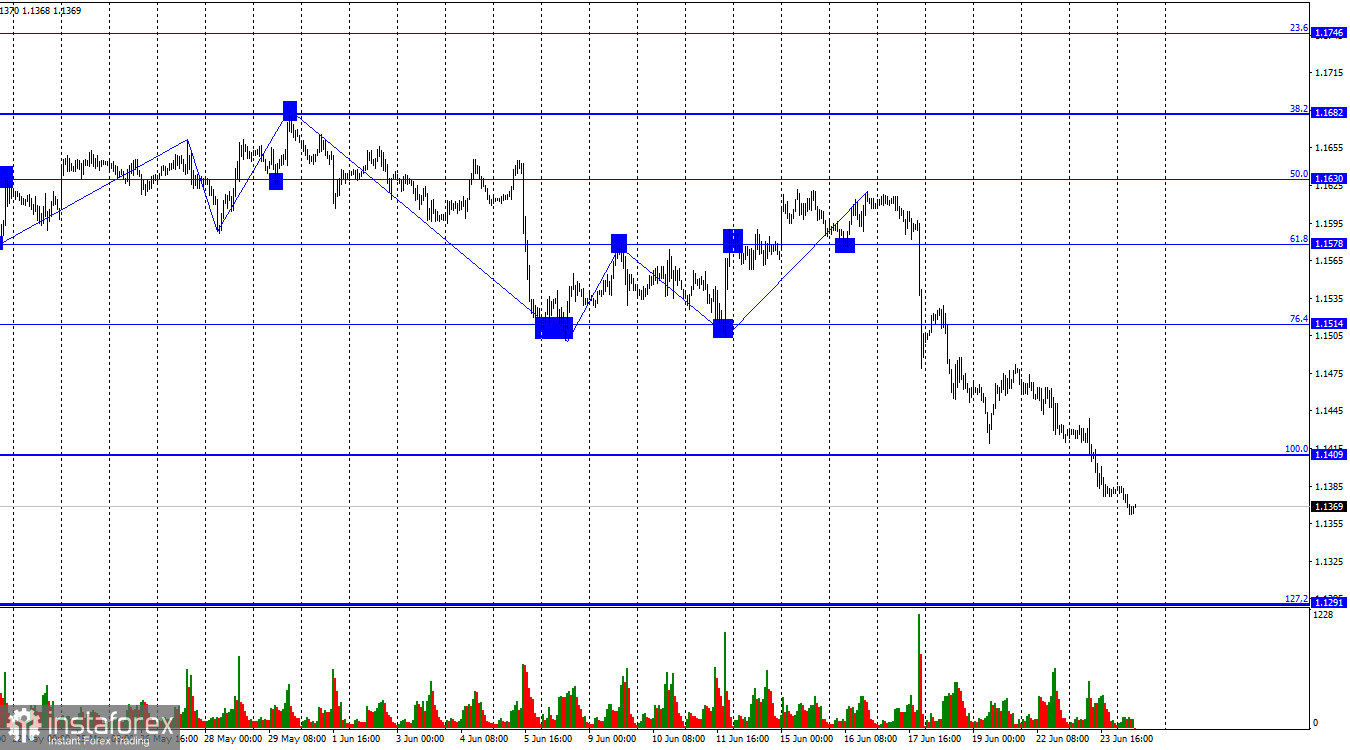
The wave structure on the hourly chart remains bearish. The latest completed upward wave broke above the previous peak, while the latest downward wave broke below the previous low and is still developing. Geopolitical conditions have improved significantly in recent weeks; however, the Federal Reserve triggered a fresh bearish attack that has yet to lose momentum. A full-scale bearish continuation would require additional catalysts, which I do not currently see, but the bulls are offering virtually no resistance.
On Tuesday, the euro remained under pressure. First, business activity indices for the services and manufacturing sectors in Germany and the Eurozone came in weaker than market expectations. Then, Christine Lagarde suggested that further monetary policy tightening should be viewed as a possibility rather than a commitment. Although I do not consider these developments significant enough to justify uninterrupted bearish pressure, it must be acknowledged that the euro currently requires very little negative news to move lower. The bears continue to dominate simply because the bulls are not putting up any resistance. We are not even seeing corrective pullbacks.
Therefore, even in the absence of news today, the decline in the euro may continue. Under current conditions, I see little reason to focus on geopolitical developments, as they no longer appear to influence the dollar's exchange rate. Last week, Iran and the United States began negotiations regarding Iran's nuclear status, signed a temporary agreement, reopened the Strait of Hormuz, and started easing sanctions and restrictions. Yet all of this information ended up supporting the dollar, which had previously been treated by the market as a safe-haven asset. I also do not consider the FOMC's stance sufficiently hawkish to justify the dollar's rally lasting for more than a week.
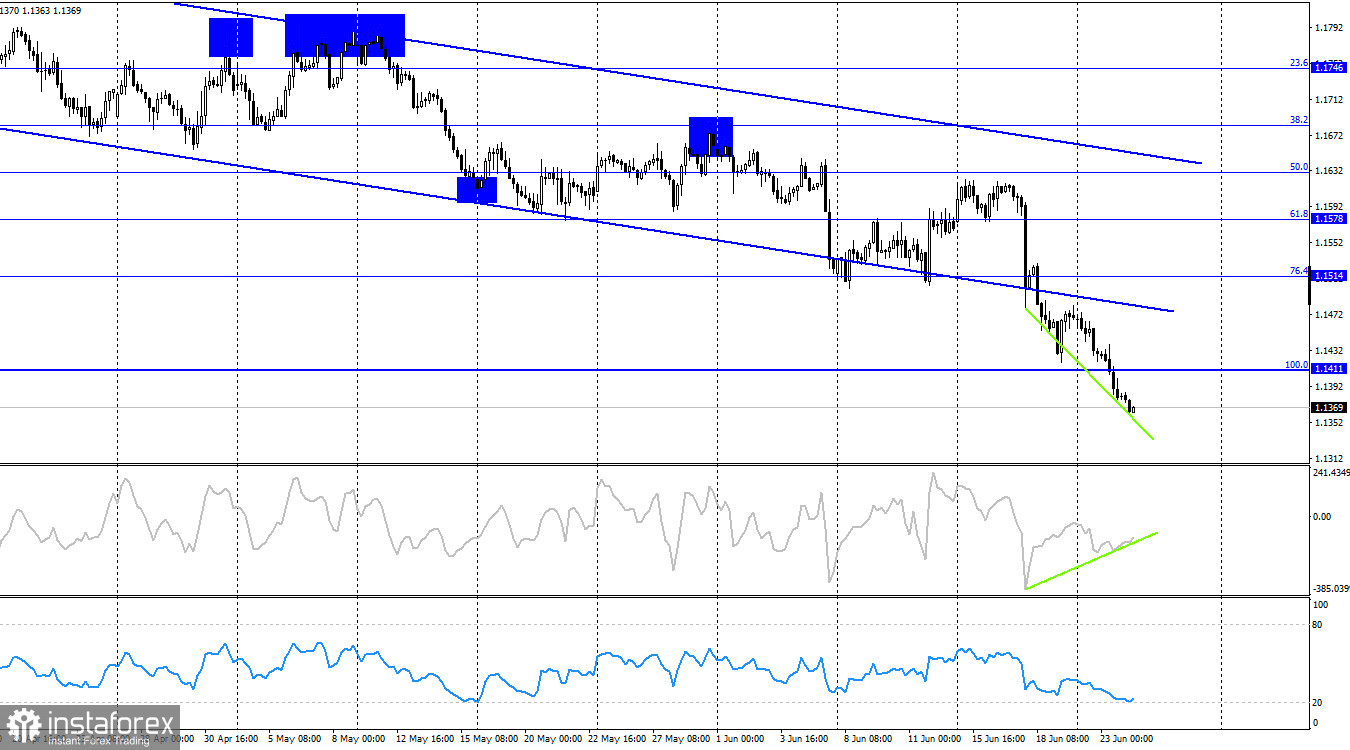
On the 4-hour chart, the pair consolidated below the 100.0% Fibonacci retracement level of 1.1411, allowing traders to expect a further decline in the euro. A bullish divergence is developing on the CCI indicator, which could halt the bears' advance, but for now it remains only a promising signal on the chart. The bears continue to ignore all counterarguments and maintain downward pressure.
Commitments of Traders (COT) Report:
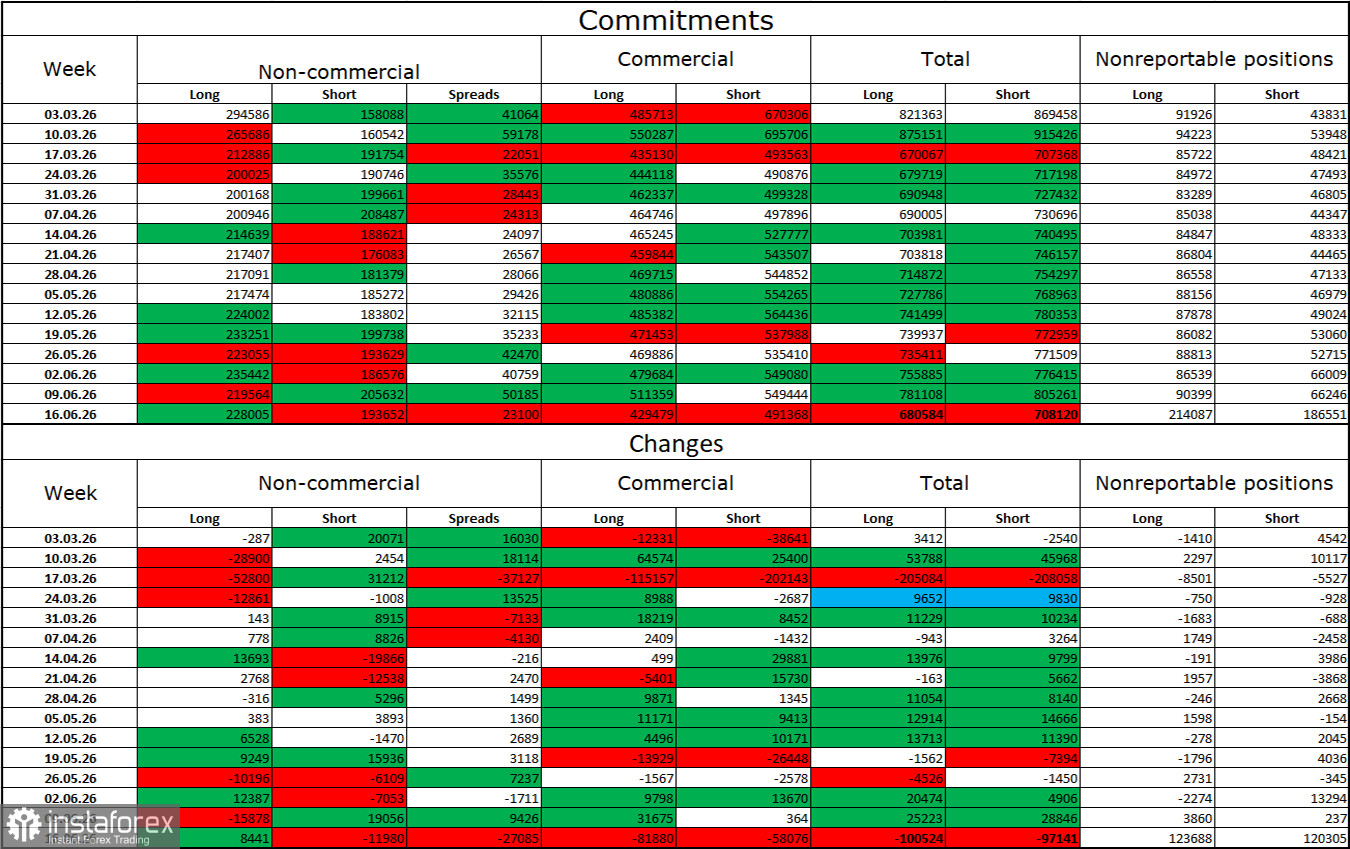
During the latest reporting week, professional traders opened 8,441 long positions and closed 11,980 short positions. Over the seven-week period in February and March, the bulls' overwhelming advantage disappeared due to the conflict involving Iran. Over the past twelve weeks, however, the situation has normalized amid the suspension of hostilities in the Middle East, and the bulls have regained dominance. The total number of long positions held by speculators now stands at 228,000, compared with 193,000 short positions.
Overall, major market participants continue to view the euro favorably from a long-term perspective. Naturally, various global developments—of which there has been no shortage in recent years—continue to influence investor sentiment. In particular, market attention remains focused on the Middle East, where hostilities have been paused and serious negotiations are underway that could eventually lead to peace. However, the market continues to ignore the improvement in geopolitical conditions, as well as many other factors that support the euro.
News Calendar for the United States and the Eurozone:
- Germany – Ifo Business Climate Index (08:00 UTC).
- United States – New Home Sales (14:00 UTC).
The economic calendar for June 24 contains two events, neither of which is considered highly important. Therefore, the economic backdrop is unlikely to have any meaningful impact on market sentiment on Wednesday.
EUR/USD Forecast and Trading Tips:
Long positions may be considered today if the pair closes above 1.1409 on the hourly chart, with a target of 1.1514. Short positions could previously be opened after a close below 1.1578 and again after a close below 1.1514, targeting 1.1411. That target has already been reached. New short positions could have been opened yesterday after a close below 1.1409, targeting 1.1291. Those positions may still be held today.
The Fibonacci grids are constructed from 1.1409 to 1.1850 on the hourly chart and from 1.1411 to 1.1850 on the 4-hour chart.


