

















Breakdown of macroeconomic reports:
No macroeconomic publications are scheduled for Friday. Today is Independence Day in the United States, which is why the Nonfarm Payrolls report and the unemployment rate were released yesterday instead of today. As a result, U.S. banks and stock exchanges will be closed today, and no important events are expected during the European session either. Therefore, traders will have no significant data to react to during the day.
Breakdown of fundamental events:
Among Friday's fundamental events, a speech by ECB President Christine Lagarde can be noted. However, speeches by Christine Lagarde, Kevin Warsh, and Andrew Bailey have already taken place this week, and no fundamentally new information was provided to the market. The Bank of England expects inflation to slow in 2027, the Federal Reserve aims to bring inflation back to 2%, but Kevin Warsh did not specify the methods, Christine Lagarde maintained a cautious stance, and inflation in the EU declined in June. As a result, under current conditions, only the Federal Reserve may be considering monetary tightening, but the market has already priced this factor in.
The geopolitical backdrop remains steadily "moderately positive." Iran and the United States have signed an agreement remotely, but many important issues remain unresolved, including the "nuclear issue," the war between Lebanon and Israel, and the status of the Strait of Hormuz. In theory, the market may still fear a renewed full-scale war, but this is clearly not enough for the dollar to continue attracting demand. After all, Tehran and Washington are still on a path toward peace, and negotiations are ongoing, even if no one expects them to be quick or easy.
General conclusions:
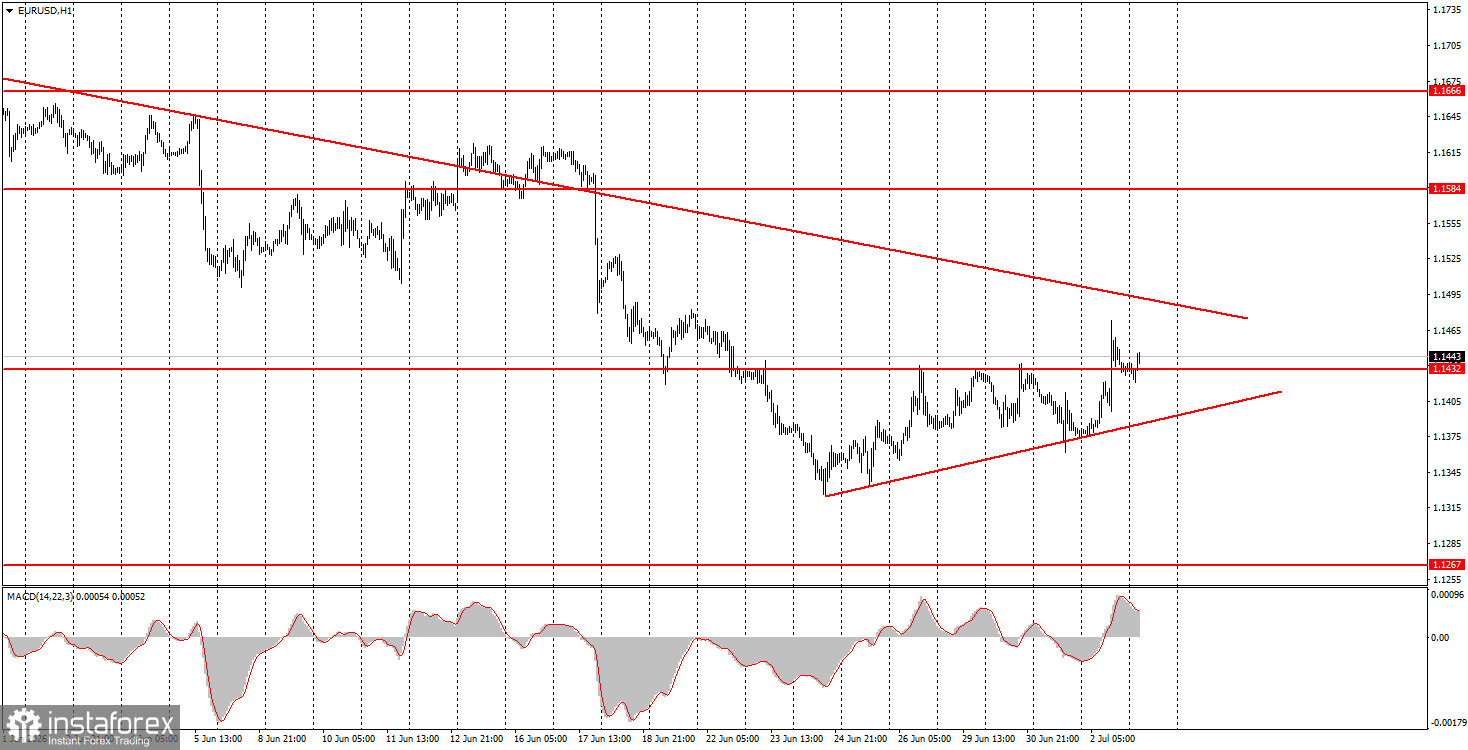
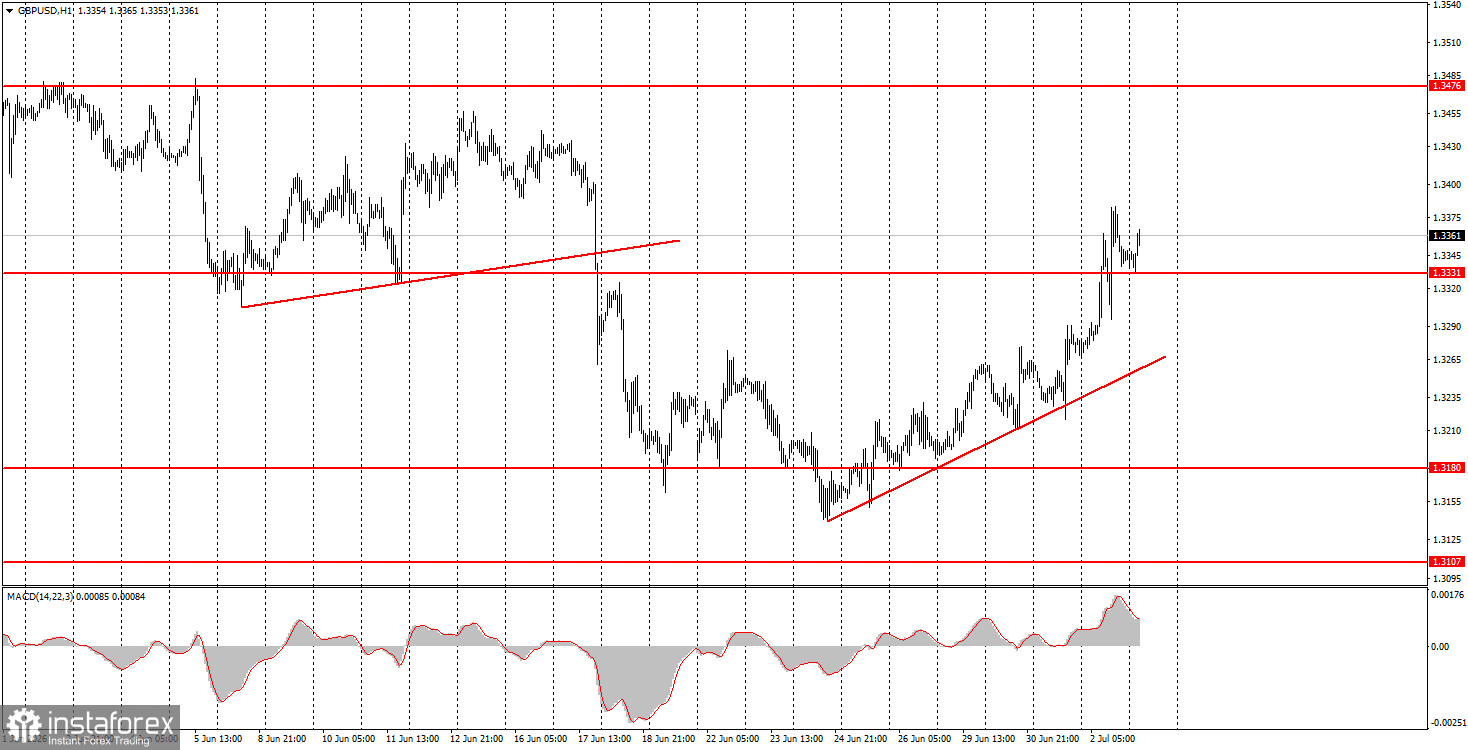
During the final trading day of the week, both currency pairs may take a pause and enter a relatively quiet session. The euro can be traded around the 1.1420–1.1432 level, while the British pound can be traded from the 1.3319–1.3331 and 1.3380–1.3386 levels. Strong movements and high volatility should not be expected today.
Key rules of the trading system:
- The strength of a signal is determined by the time required for it to form (bounce or breakout). The faster the formation, the stronger the signal.
- If two or more losing trades were previously opened around a level due to false signals, all further signals from that level should be ignored.
- In a flat market, any pair may generate many false signals or none at all. Technical levels may be disregarded.
- On the hourly timeframe, MACD signals should only be traded in the presence of strong volatility and a confirmed trend supported by a trend line or channel.
- If two levels are located very close to each other (5–20 points), they should be treated as a single support or resistance zone.
- After a move of 15 points in the expected direction, the Stop Loss should be moved to breakeven.
What is shown on the charts:
- Support and resistance price levels (zones) – levels used as targets for buy/sell trades or sources of signals.
- Red lines – channels or trend lines that show the current trend and the preferred trading direction.
- MACD indicator (14, 22, 3) – histogram and signal line, a supplementary indicator that can also be used as a signal source.
- Important speeches and reports (listed in the economic calendar) can strongly influence currency movements. Therefore, during their release, trading should be done with extreme caution or positions should be closed to avoid sharp reversals.
Beginner Forex traders should remember that not every trade can be profitable. Developing a clear strategy and proper money management are key to long-term trading success.