


















The final week of July promises to be informative and, accordingly, volatile. The economic calendar is filled with important releases and events for EUR/USD traders: on Monday, the IFO indexes will be published; on Tuesday, the consumer confidence index from the Conference Board; on Wednesday, we will learn the results of the July FOMC meeting; on Thursday, data on eurozone GDP and the core PCE index will be released; and finally, on Friday, key inflation growth data for the eurozone will be announced.
However, all these events and reports will remain overshadowed by the geopolitical agenda. Geopolitics will dictate the tone of trading, as further developments in the Middle Eastern conflict influence not only oil prices but also the inflation outlook of the largest economies, including the US. Accordingly, any changes in this direction will immediately reflect on expectations regarding further actions by the Federal Reserve and, consequently, on the dynamics of the dollar.
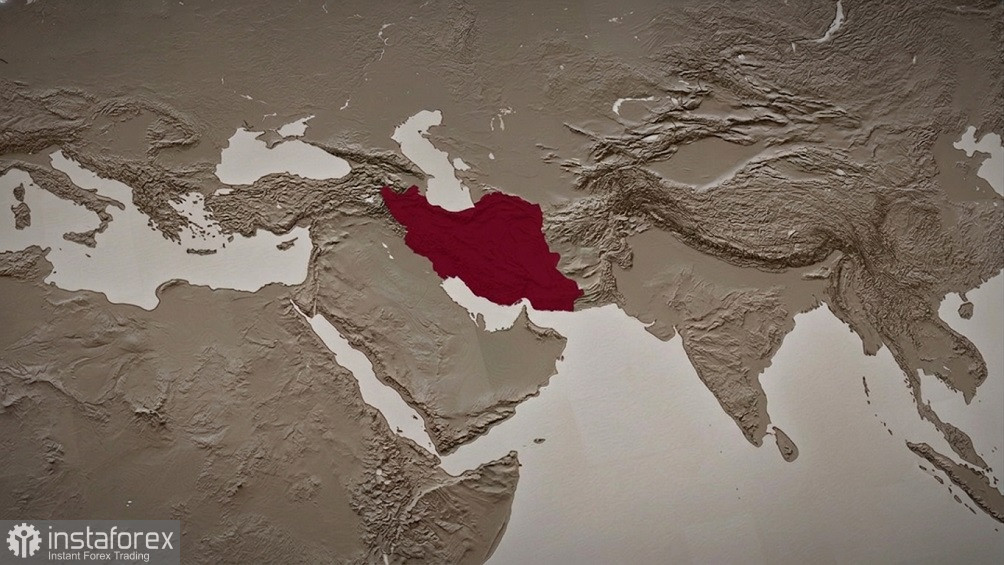
The progress in negotiations between Oman and Iran regarding the security of shipping in the Strait of Hormuz is also quite telling. According to available information, these negotiations are progressing satisfactorily, with the parties discussing a specific mechanism for restoring shipping that could be operational in the coming days. Additionally, statements from Iranian Foreign Minister Abbas Araghchi indicate Iran's willingness to act as a mediator between Saudi Arabia and the Houthis, who recently exchanged strikes. This step by the Iranians reflects Tehran's desire to reduce regional tensions.
The high cost of continuing confrontation further supports the diplomatic scenario: the increasing risks for the global oil market, shipping, and regional security are becoming more palpable for both Iran and the US. With neither side able to achieve a decisive strategic advantage, this traditionally raises the likelihood of seeking a political compromise in such conflicts.
In the current circumstances, the most realistic scenario appears to be a gradual de-escalation through limited agreements, primarily concerning the security of shipping in the Strait of Hormuz and a reduction in military activity. However, even the initial signs of de-escalation can have a significant impact on the markets. Essentially, last week's events may begin to unfold in the opposite direction: oil prices may come under pressure, anti-risk sentiments may weaken, demand for risk assets may rise, while the safe-haven dollar may lose its clear advantage. In this case, the EUR/USD pair is likely to return to the range of 1.1410 – 1.1470, which it traded within for the previous three weeks.
The geopolitical agenda will set the tone for trading, while all other fundamental events will take a back seat. Even the outcomes of the July FOMC meeting will be evaluated by the market through the lens of further developments in the Middle Eastern conflict. The dynamics of US-Iranian relations directly influence oil prices, which in turn affects the inflation outlook in the US and the Fed's willingness to move towards easing monetary policy. Signs of de-escalation will reduce the risks of new price pressures and may enhance expectations for a more "dovish" signal from the Fed. Conversely, a new wave of tension could provoke a rise in energy prices, amplify inflation concerns, and force the Fed to maintain a tougher stance (with an open option for rate hikes). Therefore, the market's reaction to the meeting's outcome will depend not only on the Fed's wording but also on what scenario of conflict development investors will incorporate into their forecasts.
The same applies to the key macroeconomic reports of the week. Despite the high significance of the upcoming publications, their influence on market dynamics will largely depend on the situation's development in the Middle East.
Thus, next week, the focus of the market will be on the negotiating track between Washington and Tehran: any signals regarding further movement towards de-escalation or conversely towards a new wave of confrontation will define the overall sentiment of traders and, consequently, the direction of the EUR/USD pair. Meanwhile, even the most significant macroeconomic reports and signals from the Fed will be viewed through the prism of geopolitical risks.
In conditions of persistent high uncertainty for the EUR/USD pair, it is advisable to adopt a wait-and-see approach. Moreover, sellers were unable to solidify below the support level of 1.1370 (the lower line of the Bollinger Bands indicator on the D1 timeframe) last week, which in turn preserves the potential for a recovery of the pair into the 1.1410 – 1.1470 range in the event of an improved geopolitical backdrop.


