


















The US dollar has partially lost its advantage gained at the end of last week.
The dollar declined against the euro and pound after the US halted nearly two weeks of strikes against Iran. Signs of de-escalation quickly changed market sentiment, as the threat of supply disruptions through the Strait of Hormuz had previously driven capital into safe-haven assets. Once tensions eased, the need for a safe haven partially subsided, and traders began to return to riskier instruments, undermining the dollar's recent strength. For the euro and pound, the easing of tensions provided noticeable support. The return of risk appetite and reduction of geopolitical premium in the dollar allowed both European currencies to strengthen. Both EUR/USD and GBP/USD retraced some losses amid the dollar's retreat, but the extent of their rise will depend on how sustainable the pause is.
Today, the first half of the day will be busy for the euro, starting with the IFO indicators from Germany—assessments of the business environment, current situation, and economic expectations. These indicators are based on surveys of German companies and reflect their sentiment regarding the current state of affairs and outlooks. Since Germany is the largest economy in the bloc, they serve as an important barometer for the entire eurozone. The picture will also be supplemented by data on private-sector lending and M3 money supply dynamics, showing how actively money is circulating in the economy and whether demand for borrowing is growing.
Strong figures will allow the euro to continue rising against the dollar in the first half of the day. Strong assessments of the business environment and a robust credit impulse will support expectations for a tighter European Central Bank policy and provide a boost to the euro. Weak data, on the other hand, may halt the upward momentum and revert the EUR/USD pair to conservative dynamics, so the outcome will largely depend on whether the numbers meet market optimism.
As for the pound, the direction in the first half of the day will be set by the retail sales data from the Confederation of British Industry. This indicator is based on surveys of retailers and reflects sales dynamics in the trading sector; since it is released before official data, the market treats it as an operational signal regarding the state of consumer demand. Strong retail sales indicate confidence among British consumers and indirectly support expectations for a tighter Bank of England policy, which plays in favor of the pound. Therefore, good figures may help the GBP/USD pair continue rising in the first half of the day. If the data exceeds expectations, the British currency may have a basis to extend its recent recovery against the dollar. Conversely, a weak result will cool this momentum and return the pound to conservative dynamics.
If the data aligns with economists' expectations, it is better to act based on a Mean Reversion strategy. If the data are significantly above or below economists' expectations, using a Momentum strategy would be best.
Momentum Strategy (Breakout):
For the EUR/USD Pair
- Buy on a breakout of the level 1.1422 to target growth to the levels of 1.1442 and 1.1459;
- Sell on a breakout of the level 1.1402 to target a decline to the levels of 1.1384 and 1.1366;
For the GBP/USD Pair
- Buy on a breakout of the level 1.3363 to target growth to the levels of 1.3388 and 1.3417;
- Sell on a breakout of the level 1.3336 to target a decline to the levels of 1.3316 and 1.3298;
For the USD/JPY Pair
- Buy on a breakout of the level 163.76 to target growth to the levels of 163.99 and 164.26;
- Sell on a breakout of the level 163.48 to target declines to the levels of 163.18 and 162.92;
Mean Reversion Strategy (Return):
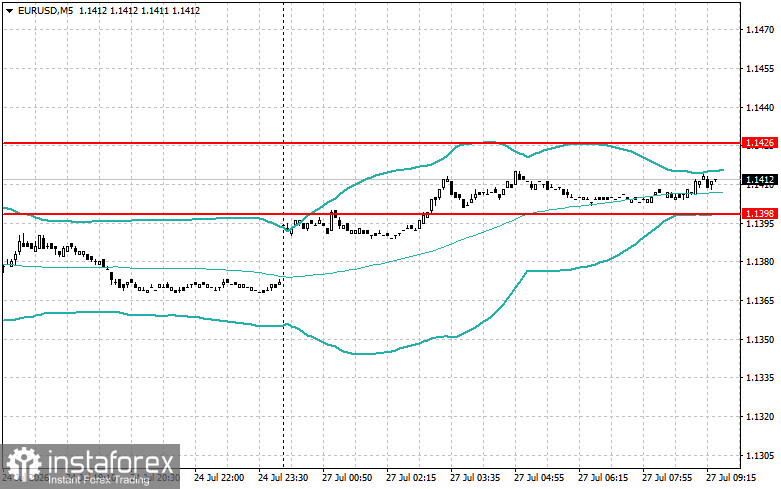
For the EUR/USD Pair
- Look for short positions after a failed breakout above 1.1426 upon returning below this level;
- Look for long positions after a failed breakout below 1.1398 upon returning to this level;
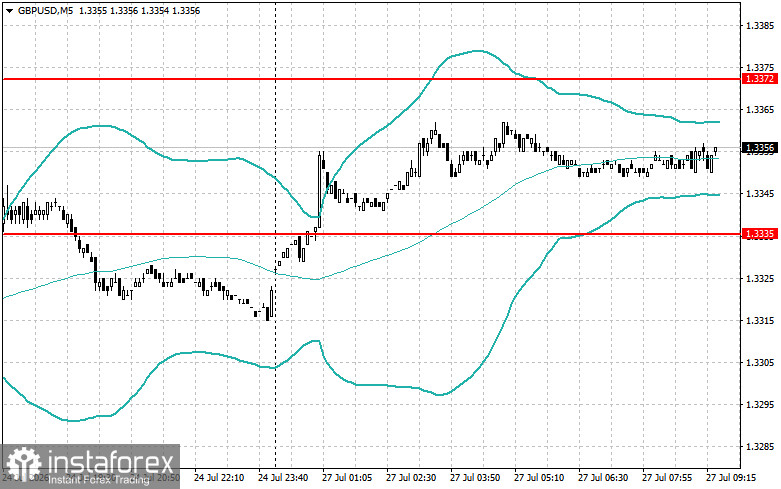
For the GBP/USD Pair
- Look for shorts after a failed breakout above 1.3372 upon returning below this level;
- Look for longs after a failed breakout below 1.3335 upon returning to this level;
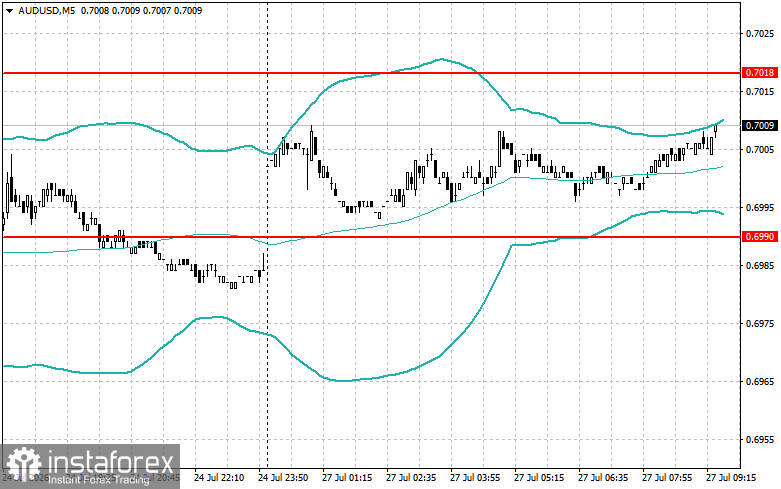
For the AUD/USD Pair
- Look for shorts after a failed breakout above 0.7018 upon returning below this level;
- Look for longs after a failed breakout below 0.6990 upon returning to this level;
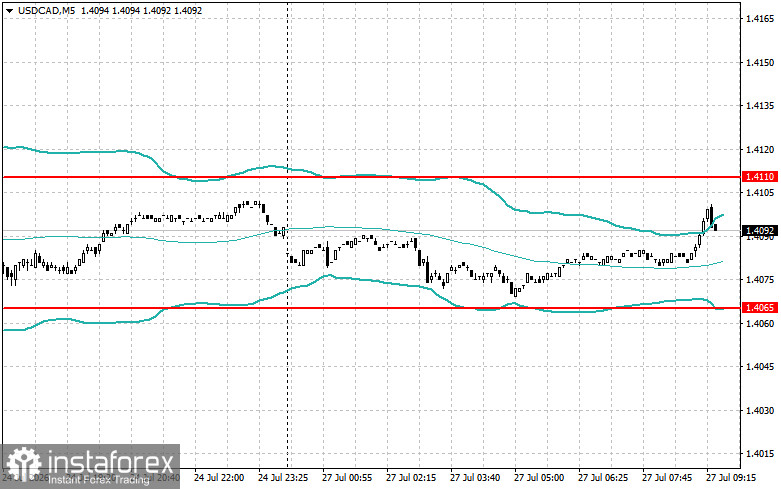
For the USD/CAD Pair
- Look for shorts after a failed breakout above 1.4110 upon returning below this level;
- Look for longs after a failed breakout below 1.4065 upon returning to this level.


