


















Analysis of Macroeconomic Reports:
No macroeconomic publications are scheduled for Wednesday, not even secondary ones. Thus, throughout the day, we are unlikely to see strong trending movements, even for the smallest timeframes. Traders will again have little to react to.
Analysis of Fundamental Events:
Among the fundamental events on Wednesday, the Federal Reserve meeting is certainly noteworthy. However, this event currently raises many controversies. Both the euro and the pound have declined over the past week and a half to two weeks. Therefore, it can be assumed that any hawkish decision from the Fed or rhetoric from Kevin Warsh has already been priced in. However, at the conclusion of today's meeting, the key rate is expected to remain unchanged, and it is unclear when monetary policy tightening will begin in the US, as it will depend solely on inflation figures and the state of the labor market. The US labor market is showing negative dynamics again, so the Fed may easily postpone the first rate hike, citing the weakness of the labor market as the reason. Inflation may also continue to slow, and in this case, a rate hike may simply not be necessary. Too much now depends on the conflict between Iran and the US and the status of the Strait of Hormuz. Predicting anything on this topic does not make much sense. Therefore, we believe that the Fed will not provide any specifics to the markets today.
The geopolitical backdrop continues to leave much to be desired. Another ceasefire has been violated, the conflict has resumed, and the US and Iran have conducted heavy bombardments for two weeks, with negotiations currently not being held. The Strait of Hormuz remains closed, Yemeni Houthis have announced a blockade of Saudi Arabia, and Tehran threatens to completely close the Bab-el-Mandeb Strait. The situation is only intensifying over time, which is driving oil prices higher.
General Conclusions:
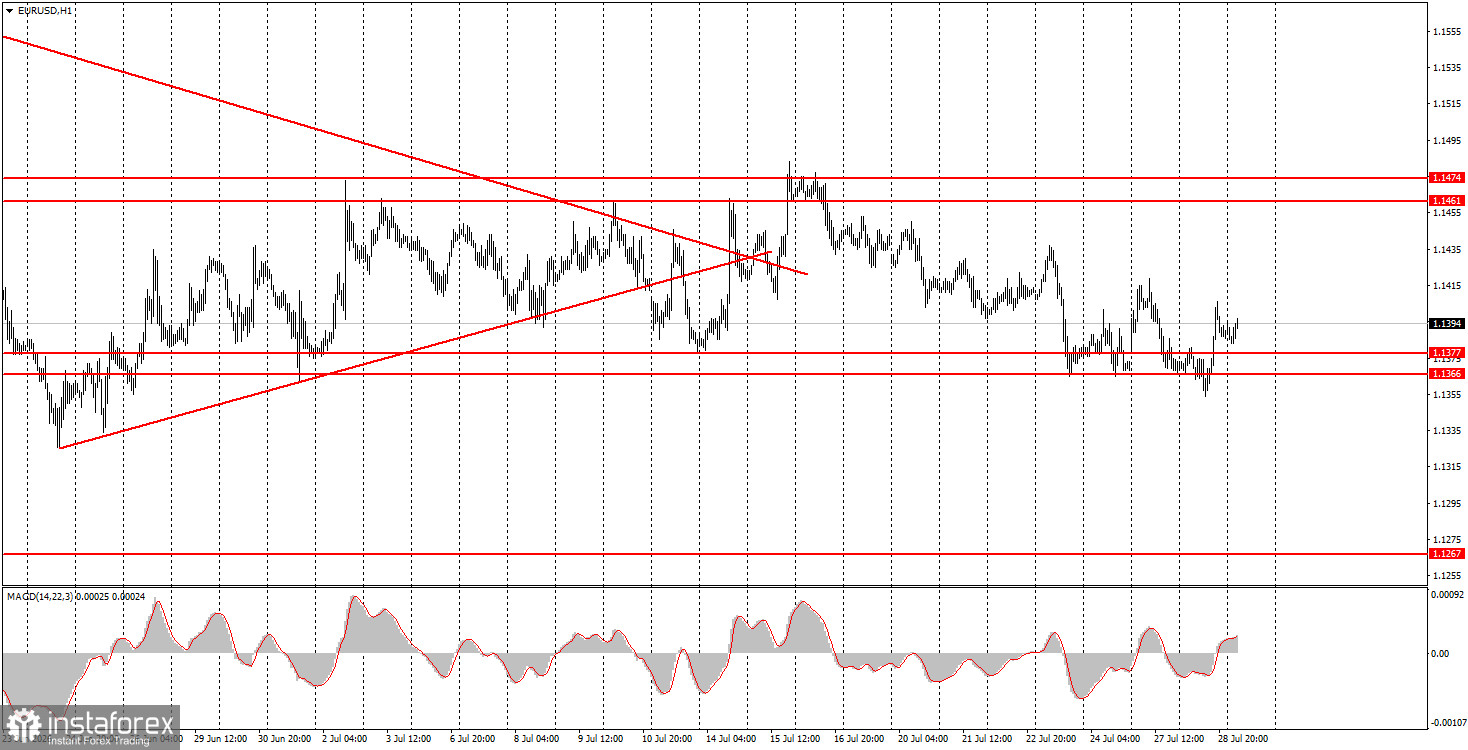
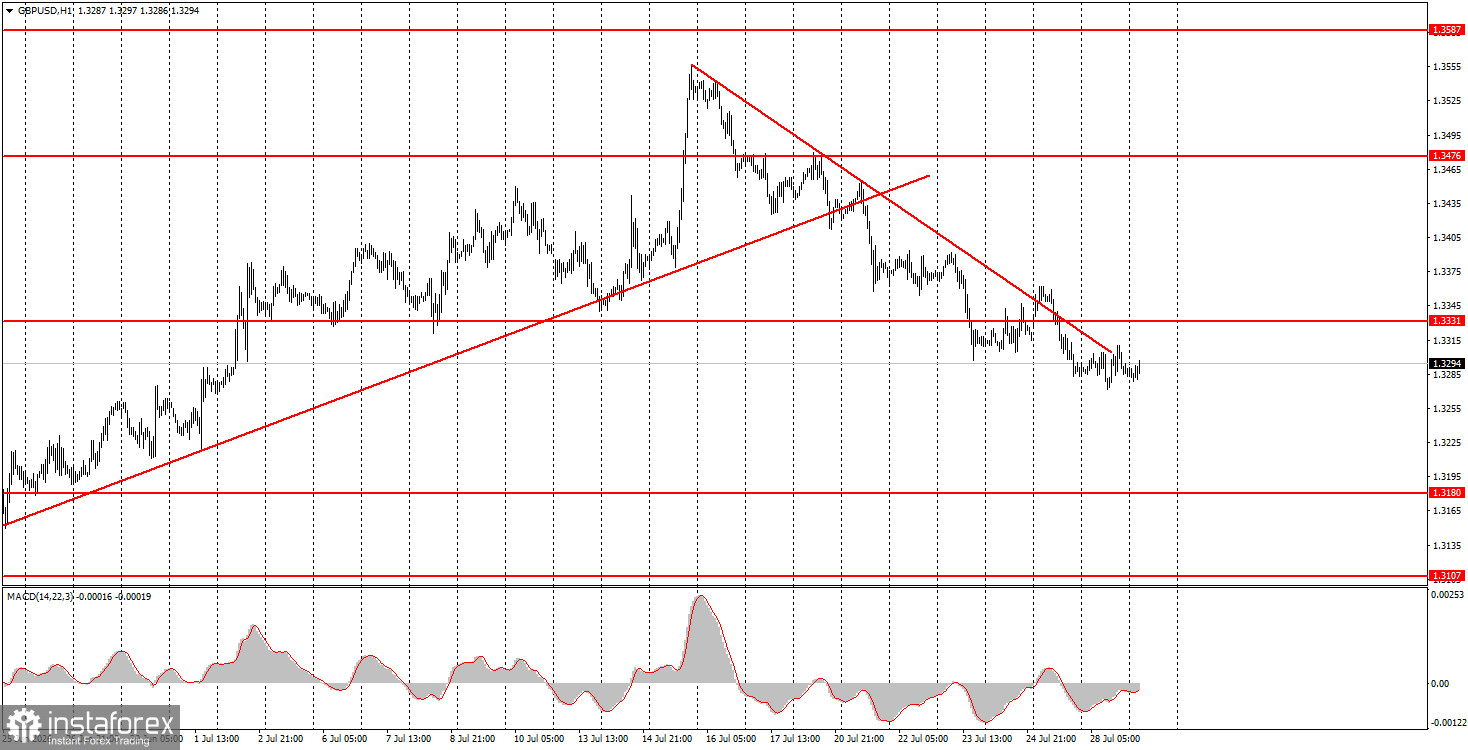
During the third trading day of the week, the European currency may continue to move within the sideways channel of 1.1366-1.1474 towards its upper boundary, while the British pound may attempt to start a new upward trend. The euro can be traded today from the area of 1.1366-1.1377, while the British pound can be traded from the areas of 1.3259-1.3267 and 1.3319-1.3331. Volatility for both currency pairs may sharply increase in the evening.
Basic Rules of the Trading System:
- The strength of a signal is evaluated based on the time it takes to form (bounce or breakout). The less time required, the stronger the signal.
- If two or more trades were opened at a particular level based on false signals, all subsequent signals from that level should be ignored.
- In a flat market, any pair may generate many false signals or none at all. Technical levels may be overlooked.
- On the hourly timeframe, trading signals from the MACD indicator should be executed only when volatility is good, and a trend line or channel confirms a trend.
- If two levels are too close together (5 to 20 pips), they should be considered a support or resistance area.
- After moving 15 pips in the correct direction, a Stop Loss should be set at breakeven.
What's on the Charts:
Price levels (areas) of support and resistance are targets when opening long or short positions or sources of signals.
Red lines indicate channels or trend lines that display the current trend and indicate the preferred direction for trading.
The MACD indicator (14,22,3) – histogram and signal line – is a supplementary indicator that can also be used as a source of signals.
Important speeches and reports (contained in the news calendar) can significantly impact the movement of the currency pair. Therefore, during their release, trading should be conducted with maximum caution, or one should exit the market to avoid sharp reversals against preceding movements.
Beginners trading in the forex market should remember that not every trade can be profitable. Developing a clear strategy and practicing money management are key to long-term success in trading.


