


















Having been burned by milk, one blows on water. Speculators have learned this lesson from the bitter experience of last week, when the euro was first bought on rumors of hawkish rhetoric from the European Central Bank, only to be sold off before the Governing Council's meeting. History is repeating itself. The US dollar was bought ahead of the July FOMC meeting, and then they started selling it off, even before the Federal Reserve's verdict. EUR/USD is bouncing back and forth like a weather vane in the wind.
Citadel Securities is confident that the monetary policy tightening in July will put a stop to the inflation surge and underscore the central bank's independence. Wrightson ICAP sees no compelling reasons for the Fed not to raise rates. PGIM believes that the futures market is underestimating the likelihood of monetary policy tightening.
Dynamics of Market Expectations for the Fed Rate
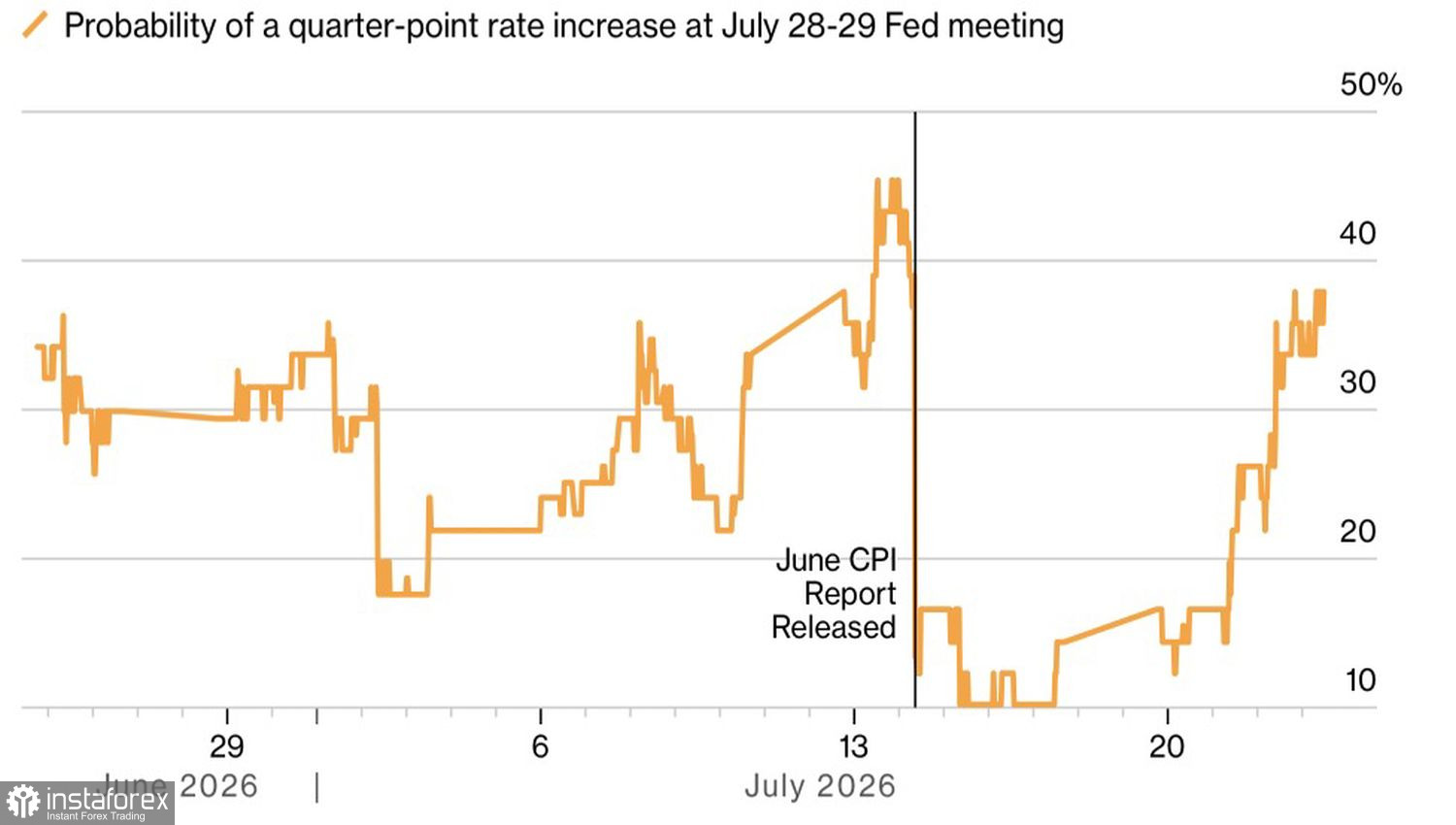
However, the most likely scenario remains the maintenance of rates. This approach would align with the Fed's dependence on data: the latest employment statistics were disappointing, and inflation has slowed. JP Morgan expects exactly this pause but warns that the decision will be contentious. At least two hawks, Beth Hammack and Lori Logan, risk opposing it. There will be no updated forecasts, so investors will have to settle for signals from the press conference.
As usual, Donald Trump hinted at what he expects from his protege. According to him, Kevin Warsh would like to "do the right thing," but to do so, the Fed Chair needs consensus within the Committee. The hint is more than transparent.
Dynamics of Speculative Positions on the US Dollar
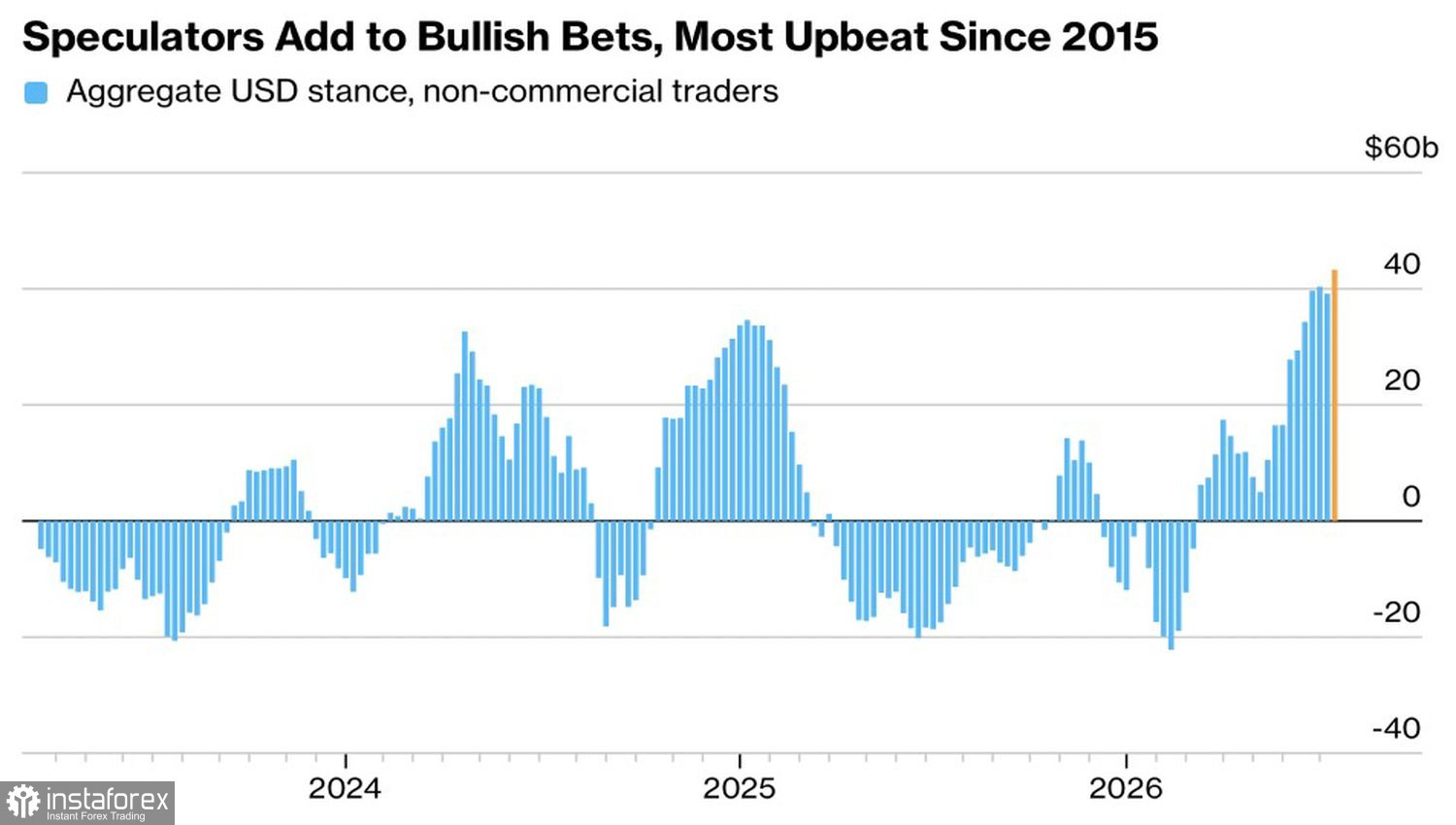
According to TD Securities, if the Fed holds rates and the number of dissenters does not exceed 2, the US dollar will weaken significantly. The logic is simple: speculators have held record net longs in the greenback since 2015, and unwinding these positions could provide momentum for a rally in EUR/USD.
Meanwhile, geopolitical issues are coming to the forefront again. The ceasefire between the US and Iran has proven fragile. The Islamic Revolutionary Guard Corps was the first to attack US forces in the Middle East, launching several ballistic missiles at them — fortunately, the projectiles were intercepted. In response, Washington and Riyadh struck Iran-backed militias in Iraq, ending a multi-day lull in hostilities. Oil reacted to this with a rise: Brent rallied above $90 per barrel, increasing the chances of the Fed tightening monetary policy in July from 32% to 36% and supporting the bears in EUR/USD.
It creates a closed loop: monetary policy pulls the pair in one direction, while geopolitics pulls in another. As long as these forces are roughly balanced, EUR/USD is doomed to a nervous consolidation while awaiting any clarity.
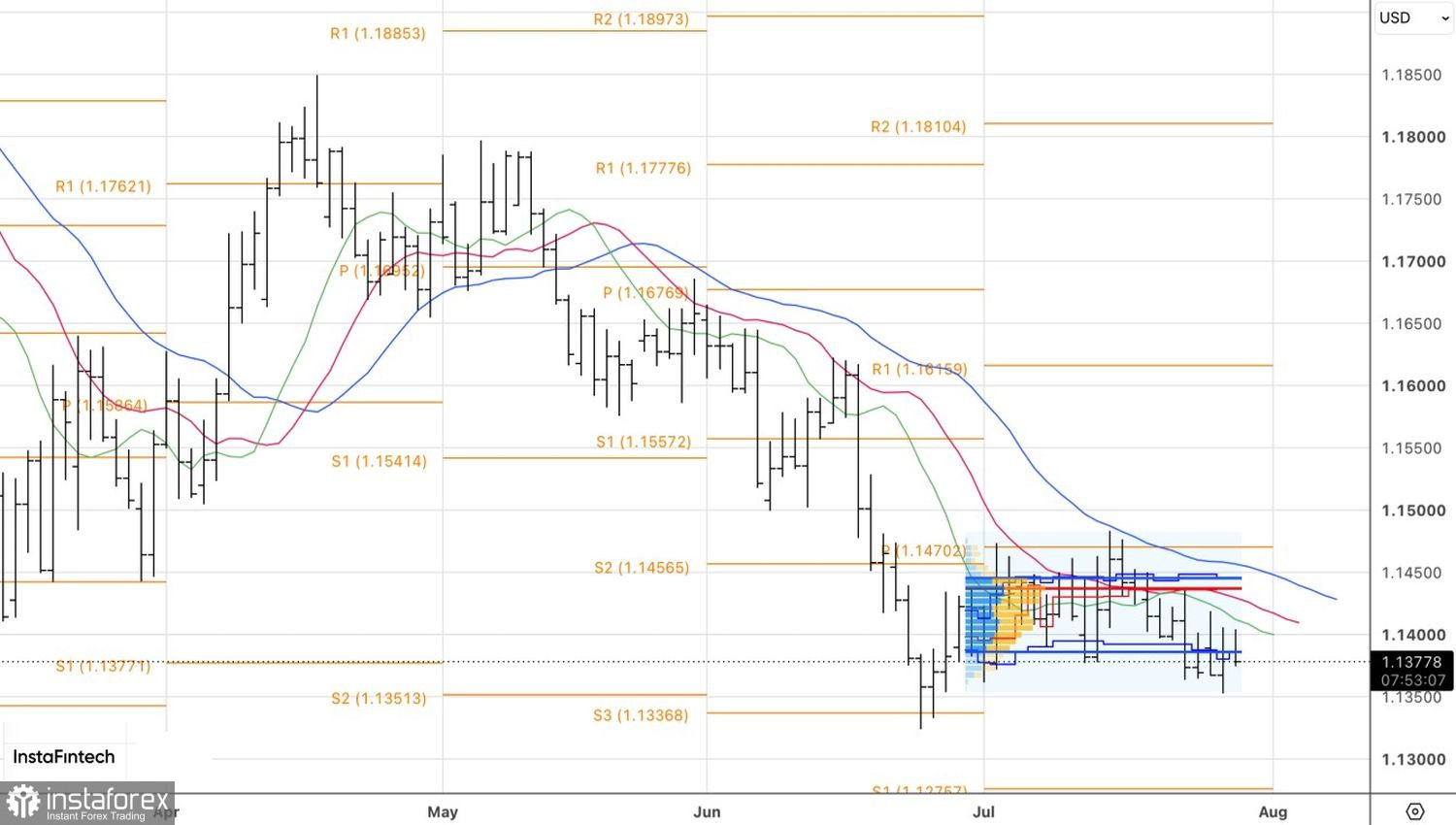
From a technical perspective, the daily chart of EUR/USD continues to consolidate within the 1.1365-1.1405 range. Only breaking out of this range will allow the pair to determine the direction of its further movement. It makes sense to set pending buy orders at the upper boundary and sell orders at the lower boundary.


