


















Analysis of Macroeconomic Reports:
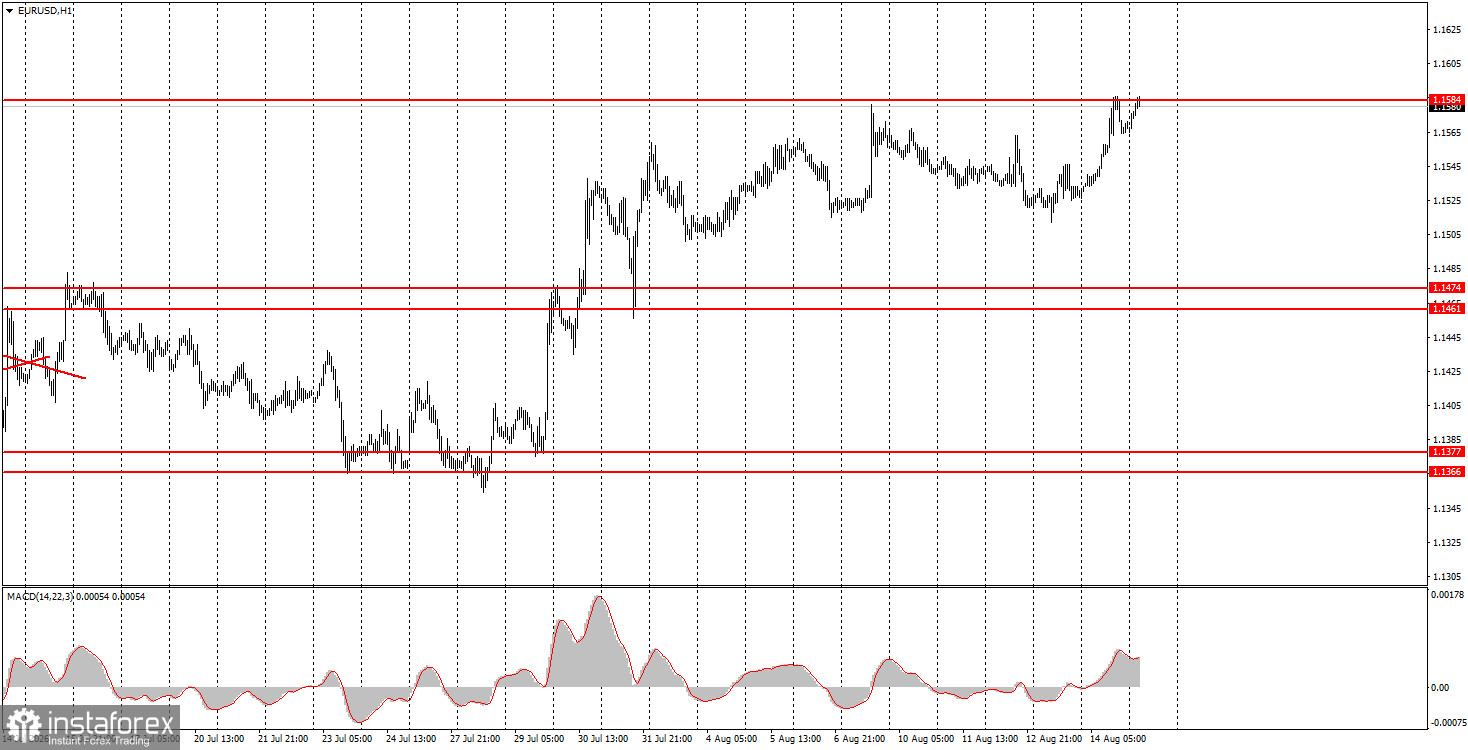
No macroeconomic publications are scheduled for Monday. Thus, there will be few drivers for movement today. Most likely, we are in for a "boring Monday" with minimal volatility. The euro and pound may continue their modest growth based on technical factors.
Analysis of Fundamental Events:
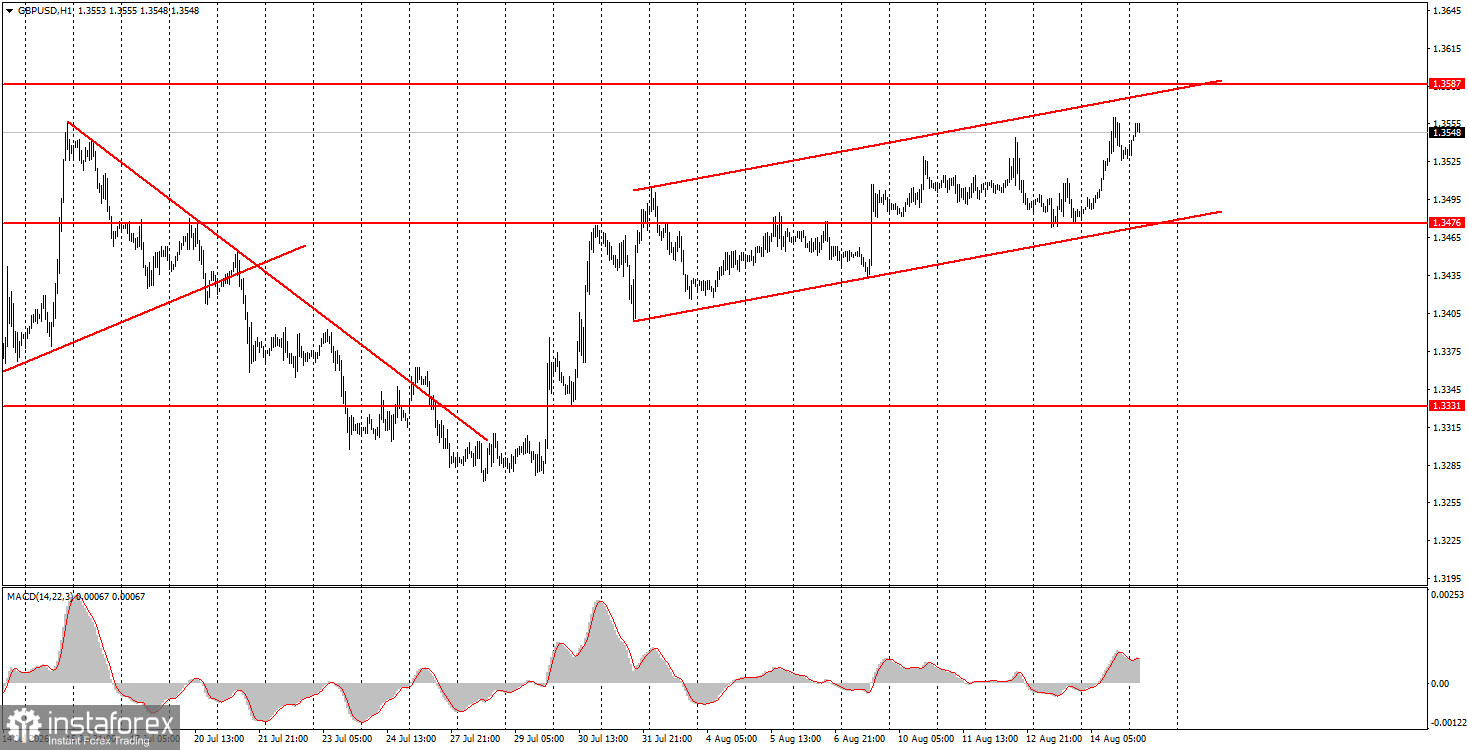
Among the key events on Monday, we can highlight the speech by the European Central Bank's Chief Economist, Philip Lane. It should be noted that the ECB is the only G7 central bank to have already tightened monetary policy in response to rising inflation amid the geopolitical conflict in the Middle East and the energy crisis. However, the ECB does not intend to stop there and is ready to conduct another one or two tightenings in the event of further increases in consumer price growth. Therefore, the comments from the Chief Economist may indicate to traders whether they should expect a further rate hike in September. In our view, the conflict in the Middle East will continue, so the chances of a complete opening of the Strait of Hormuz are virtually non-existent. This means that oil prices are unlikely to fall in the near future.
The geopolitical backdrop still leaves much to be desired. The US and Iran continue to exchange strikes regularly; negotiations are not being conducted at this time; the Strait of Hormuz remains closed or partially closed, and Yemeni Houthis maintain a blockade of Saudi Arabia. Tehran threatens to completely close the Bab-el-Mandeb Strait if Washington attempts to exert pressure again. Tehran has presented a list of demands to Washington necessary for reopening the Strait of Hormuz. Donald Trump has made his demands merely for show. Neither side intends to fulfill them. Today marks the expiration of a two-month memorandum of understanding that both sides have long since violated.
General Conclusions:
On the first trading day of the week, currency pairs may trade quite sluggishly again, as no significant news is expected today. The euro can be traded today from the area of 1.1584-1.1594, while the pound sterling can be traded from the area of 1.3587-1.3598. Overall, we expect further strengthening of the euro and pound against the US dollar.
Main Rules of the Trading System:
- The strength of the signal is assessed by the time it took to form the signal (bounce or level breakthrough). The less time required, the stronger the signal.
- If two or more trades are opened around a certain level based on false signals, all subsequent signals from that level should be ignored.
- In a flat, any pair can form a multitude of false signals or none at all. Technical levels may be disregarded.
- When trading based on MACD signals on the hourly timeframe, it is advisable to do so only when volatility is high and a trend line or channel supports the trend.
- If two levels are too close to each other (from 5 to 20 pips), they should be regarded as a support or resistance area.
- After a 15-pip move in the correct direction, a Stop Loss should be set to break even.
What the Charts Show:
Support and resistance price levels (areas) are the targets when opening buy or sell orders or sources of signals.
Red lines denote channels or trend lines that reflect the current trend and indicate in which direction trading is currently favored.
The MACD indicator (14,22,3) – histogram and signal line – is a supporting indicator that can also be used as a source of signals.
Important speeches and reports (as listed in the news calendar) can significantly influence the movement of the currency pair. Therefore, during their release, trading should be approached with utmost caution, or one should exit the market to avoid sharp price reversals against the preceding movement.
Beginners in Forex trading should remember that not every trade can be profitable. Developing a clear strategy and proper money management are essential for long-term trading success.


