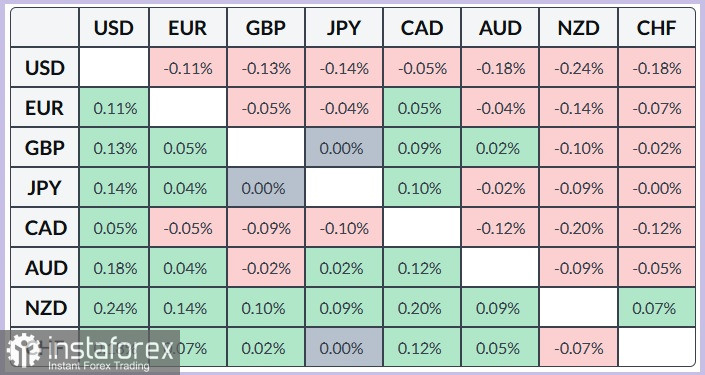
Today, on Monday, the NZD/USD pair attracts buyers' attention for the second consecutive day, rising above the key level of 0.5900 and setting a two-month high.
Weak inflation data from the US and deteriorating consumer spending figures published last week have disappointed expectations for an imminent interest rate hike by the Federal Reserve. This, in turn, weakened the US dollar and supported the NZD/USD pair's upward movement. The Consumer Price Index and Producer Price Index in the US also indicate signs of slowing inflation. It is also important to note that retail sales in the US fell by 0.6% in July, marking the largest monthly decline since May last year.
On the other side of the pair, the New Zealand dollar receives support from the Reserve Bank of New Zealand (RBNZ)'s tight policy. The Bank has repeatedly emphasized the need to gradually reduce support measures while maintaining the option to raise interest rates. However, ongoing geopolitical uncertainty, as well as inflation risks related to fluctuations in oil prices, may restrain a more significant decline of the US dollar, thereby limiting the growth of the NZD/USD pair.
Analysts at Brown Brothers Harriman note that the political situation remains favorable for the New Zealand dollar, indicating that "inflation exceeds the target level, and more optimistic domestic growth forecasts, along with an interest rate close to the lower end of the neutral range of the Reserve Bank of New Zealand (2.20%-4.10%), support expectations for further rate hikes." They also added that market prices already accurately reflect this hawkish stance, as "the swap curve already incorporates 75 basis points of increases over the next twelve months to 3.25%, which promises good prospects for the New Zealand dollar."
Regarding developments in the Middle Eastern conflict, Finance Minister Scott Morrison stated that the US is preparing to introduce economic measures against Iran that have not been implemented before, and that new steps in this direction are expected this week. Additionally, the standoff between the US and Iran, along with the effective closure of the Strait of Hormuz, heightens the risk of military action and supports oil prices. This places additional constraints on short positions in the US dollar and restrains the growth of the NZD/USD pair.
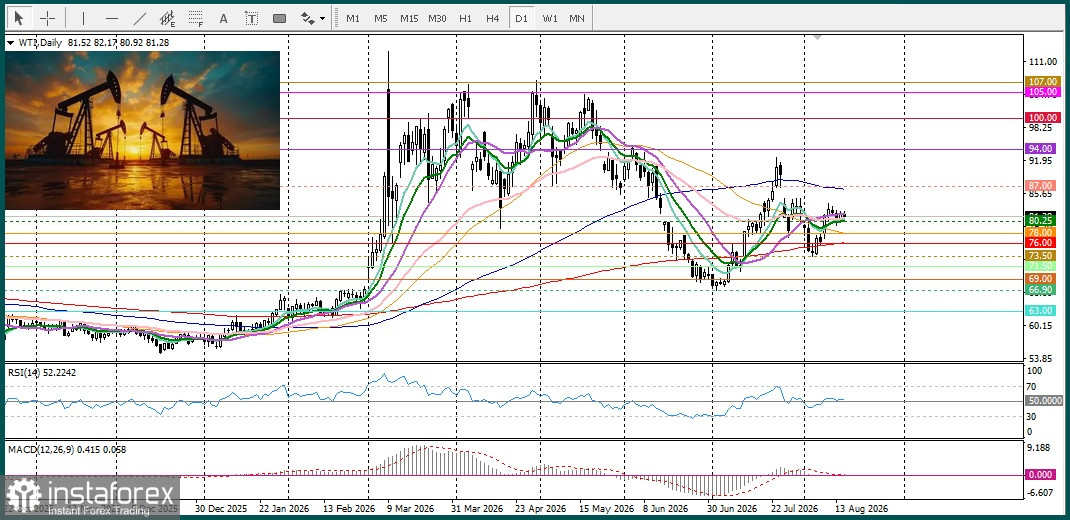
Nevertheless, the positive fundamental backdrop suggests that the path of least resistance for the currency pair remains upward. Therefore, any potential correction is likely to be limited by new buying opportunities.
To identify better trading opportunities, attention should be paid to the release of China's macroeconomic data. After that, focus can shift to the FOMC meeting minutes, which will be released on Wednesday and will have a significant impact on the US dollar's movement and the NZD/USD pair in the short term.
From a technical standpoint, oscillators are positive, confirming the bulls' advantage in the market. The next target for bullish traders will be 0.5935. Support is provided by the 9-day EMA around 0.5870. The table below shows the percentage change in the value of the New Zealand dollar against major currencies today, with the New Zealand dollar demonstrating the greatest strength against the US dollar.