


















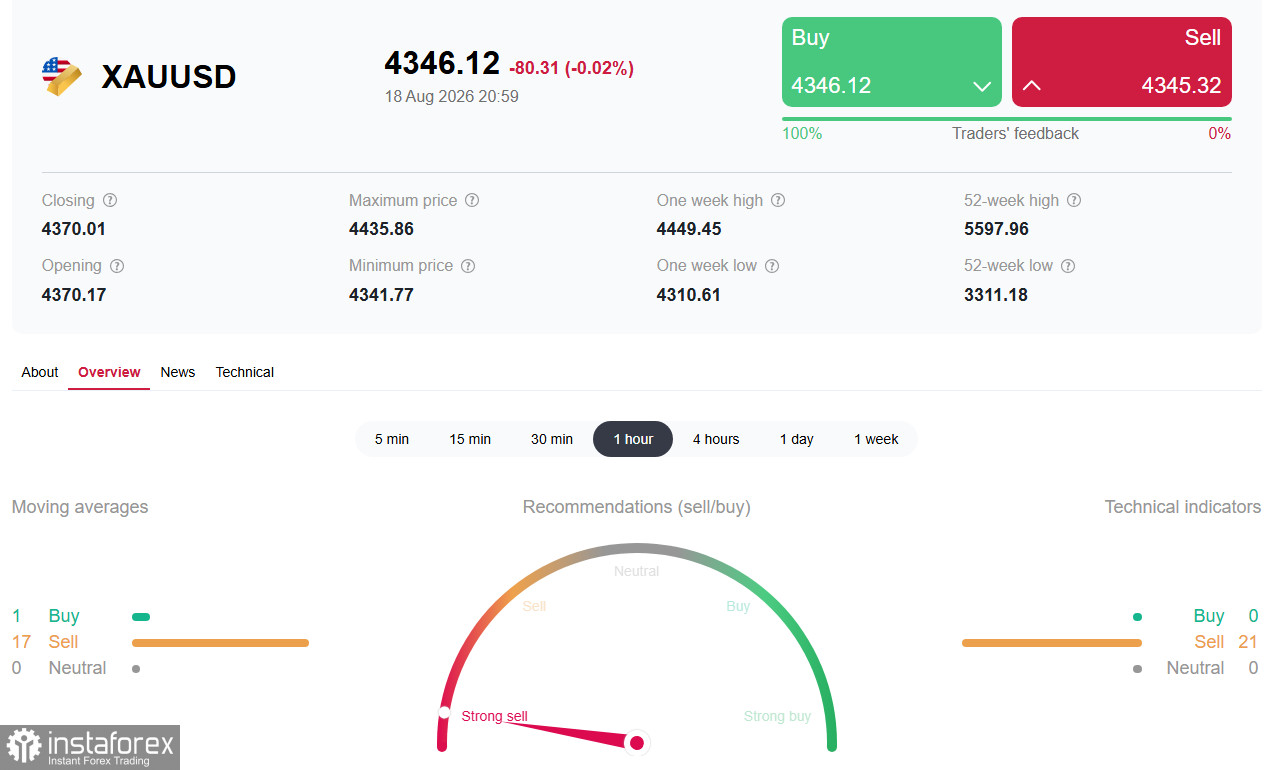
On Tuesday, gold appeared to lag, especially since oil prices stopped rising and returned to the previous day's closing levels. Let's try to understand the situation.
The movement in XAU/USD looks contradictory, but only at first glance.
Despite the stabilization of oil prices, the yellow metal has come under pressure. The key reason is the combined impact of two powerful factors that outweighed the influence of energy prices.
Factor 1: Rising U.S. Bond Yields (the main reason)
While oil prices stabilized, the yield on long-term U.S. Treasury bonds reached multi-year highs. This creates pressure on gold because:
- Increased Opportunity Costs: Higher bond yields make holding non-yielding gold less attractive for investors, as they can earn returns from other, safer assets. This, in turn, causes capital outflows from the precious metal.
- Strengthening Dollar: Rising yields typically support the U.S. dollar, and a stronger dollar makes gold more expensive for holders of other currencies.
Factor 2: Profit-Taking After a Strong Rally
Gold has significantly increased in price over the past two weeks. Tuesday's decline appears to be a natural technical correction and profit-taking after such growth, economists say. Investors locking in profits close their long positions, adding further pressure to the price.
Why Did Oil Have Less Influence?
Even if oil prices did not continue to rise on Tuesday, the increases kept inflation risks in focus: investors fear that high energy prices may force the Federal Reserve to maintain a more stringent monetary policy to combat inflation. This, in turn, supports high bond yields and strengthens the dollar, which pressures gold.
In conclusion, the pressure on gold was driven not by oil dynamics in itself, but by rising bond yields and profit-taking. These factors have proven stronger than any potential support from stabilizing oil prices.
Near-Term Prospects for XAU/USD This Week and Entry Points
Gold is in an interesting phase. According to a survey of 10 Wall Street analysts, 9 of them (90%) expect further increases in gold prices next week. Among 150 large retail investors, 68% also anticipate continued growth, media reports.
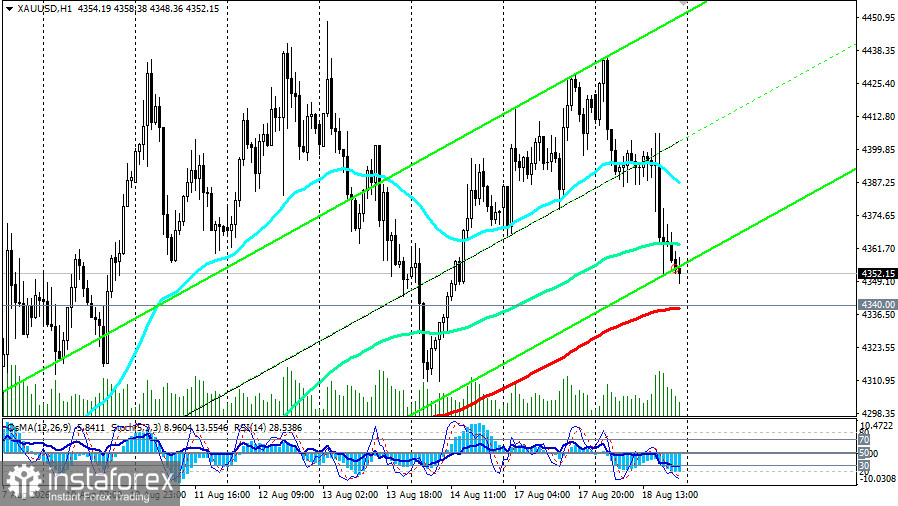
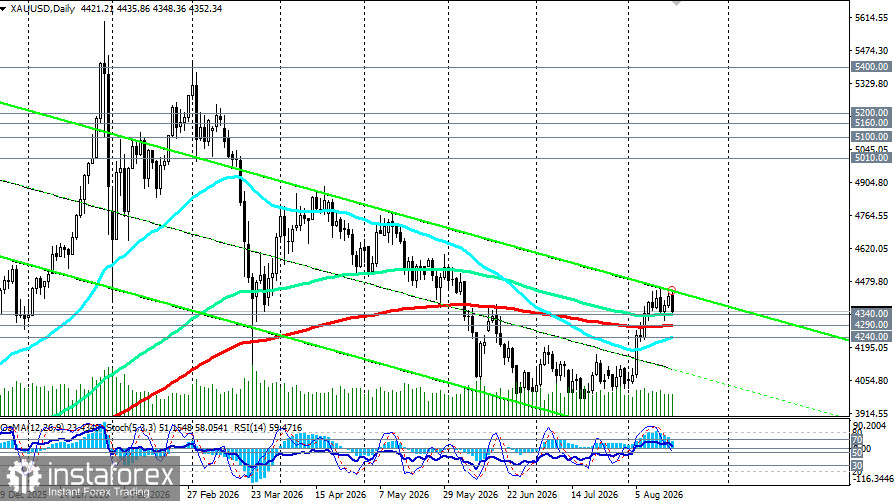
The current technical picture looks like a short-term correction within an ongoing upward trend. By the end of the American session on Tuesday, gold was testing support in the area of 4340.00 (EMA144 on the daily chart and EMA200 on the 1-hour chart) to 4350.00.
Key Events of the Week
The main driver will be the FOMC meeting minutes, which are expected to be released on Wednesday. They may provide key insights into how strong the disagreements within the Committee were. In July, the vote passed 9-3, marking the first three dissenting votes since 2016. If the minutes reveal more dissenters than previously thought, this could support gold. Otherwise, it could exert pressure.
Key Events to Watch
| Date | Event | Expected Impact on XAU/USD |
|---|---|---|
August 19 | FOMC Meeting Minutes | "Dovish" tone = support; "Hawkish" = pressure |
August 27-29 | Jackson Hole Symposium | Fed signals = key driver |
Market Entry Points
It is noted that now is not the best time for purchases—it's preferable to wait for a pullback.
Buy Scenario on a Pullback (Priority):
- Anticipation Zone: 4340.00-4320.00
- Stop-Loss: below 4310.00
- Alternative Zone: 4290.00 (EMA200 on the daily chart)-4240.00 (EMA50 on the daily chart)
- Stop-Loss: below 4230.00
- Targets: 4410.00–4420.00 (first target), 4430.00–4440.00, and 4490.00 (second and third targets).
- Logic: These levels represent a support and fair value zone where buyers could re-enter the market.
Breakout Scenario:
- Entry Condition: Confident close above 4400.00–4410.00.
- Targets: 4420.00–4425.00, then 4450.00–4460.00.
- Logic: Confirmation that buyers have overcome resistance.
Bearish Scenario:
- Condition: Break and close below support at 4340.00.
- Targets: 4300.00-4290.00 (next support).
- Logic: Weakening bullish momentum, which could lead to a deeper correction.
Most Likely Scenario — consolidation in the range of 4290.00–4450.00 with a subsequent breakout upward in response to favorable signals from the Fed.
Conclusion and Recommendations
- Maintain caution ahead of the publication of FOMC minutes and the Jackson Hole symposium—volatility may be high.
- Strictly adhere to stop-losses—breaking key levels can trigger significant moves.
- Monitor inflation data and comments from Fed representatives, which remain key drivers.
- Consider that rising oil prices amid geopolitical tensions may revive inflationary risks and bring back hawkish expectations for Fed rates, further limiting gold's growth.


