


















Morning brings wisdom. At least that was the case for the S&P 500. The broad index snapped a three-day losing streak and closed higher, with 10 of 11 sectors finishing in the green. Materials and communication services led the advance; only real estate slipped. The immediate catalyst for optimism was simple: oil halted its sharp rise, easing inflation worries. Until then, escalation between the United States and Iran over control of the Strait of Hormuz had been pushing Brent higher and rattling investors.
S&P 500 daily performance
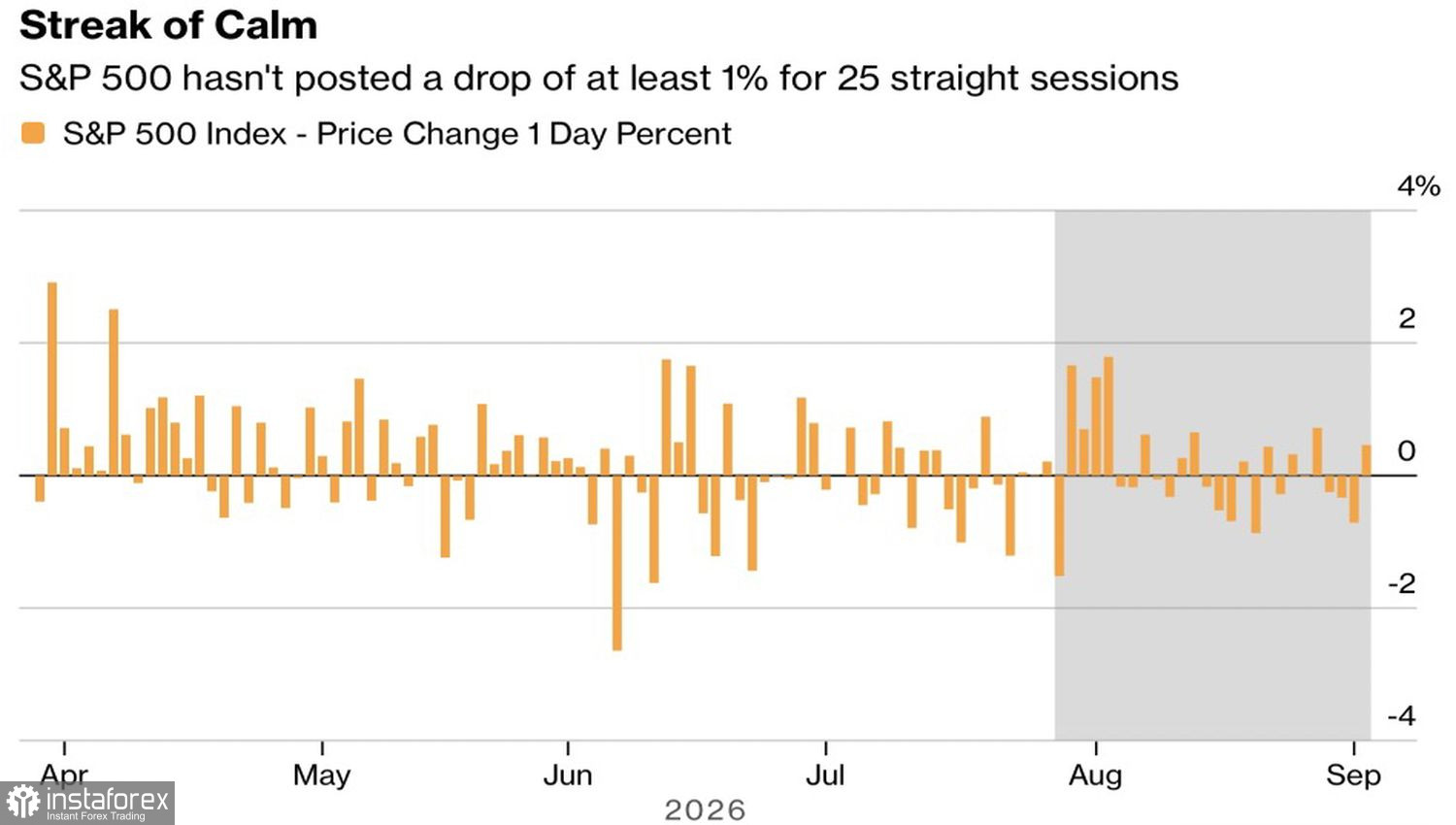
However, beneath the green headline numbers, the market looks far more cautious. The S&P 500 has gone 25 sessions without a decline of at least 1% — an uncommon stretch since mid-May — and it's trading less than 2% below its all-time high. Yet market breadth is narrowing again: the index holds gains, while fewer stocks are actually driving it up. Meanwhile, "fast money," JP Morgan estimates, carries the lowest directional risk since April 2025's "Liberation Day."
The real threat right now sits not in stocks but in bonds. Rising oil prices are feeding inflation concerns, and the 10-year Treasury yield has approached the psychological 5% level, a threshold traditionally viewed as toxic for equities. The 30-year yield is at a 19-year high.
S&P 500 and breadth indicators performance
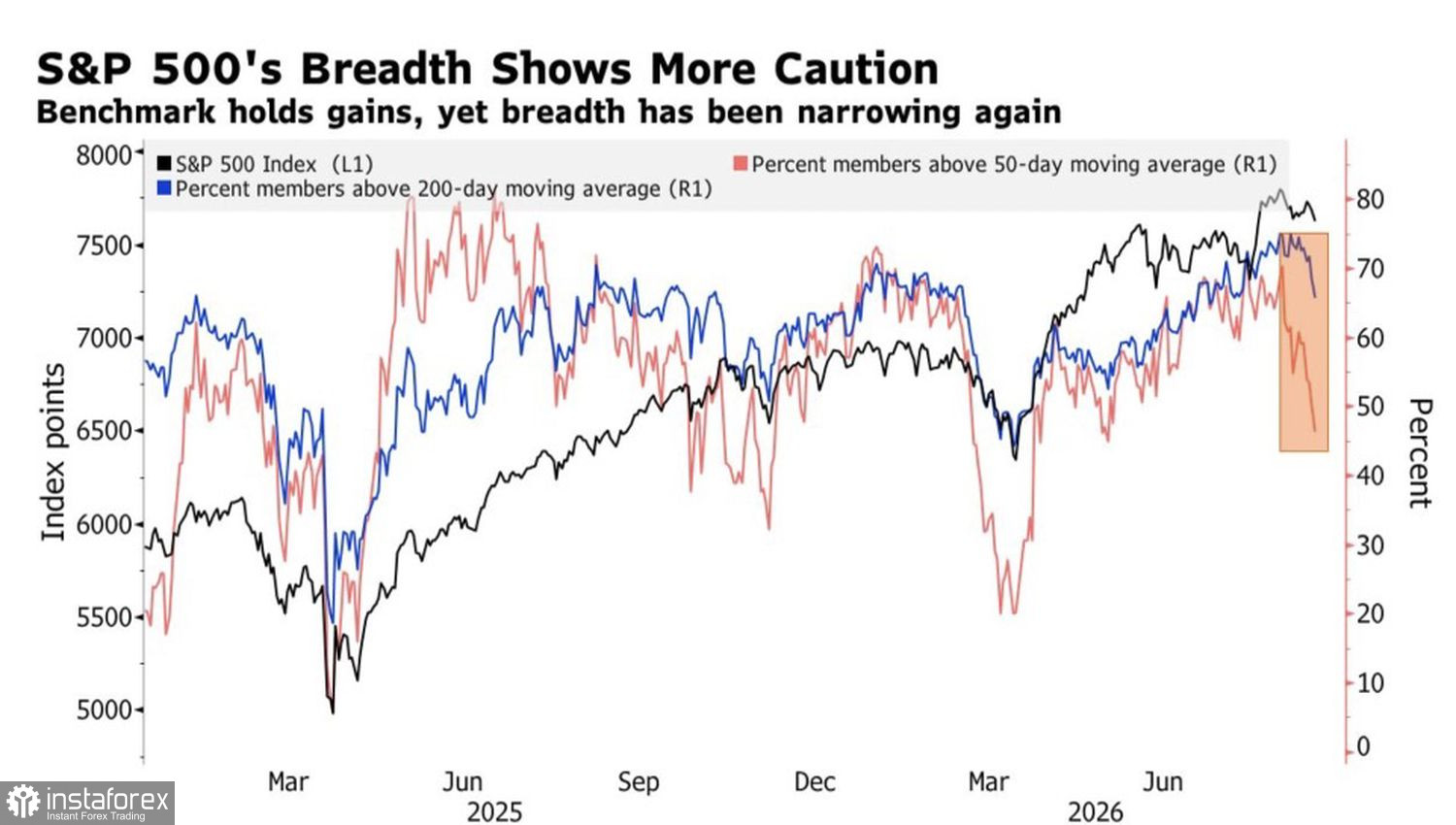
That 5% level matters psychologically, and JP Morgan warns you could see a reflexive reaction in the S&P 500 if it is breached. A 5–8% correction is plausible in the run-up to the US midterms. Most likely, it would be a healthy pullback rather than a structural break.
Labor market signals are adding to the unease. ADP data shows that private payrolls rose by just 38,000 in August, down from a revised 46,000 the prior month and below the 47,000 consensus. That's the smallest monthly gain so far this year. Investors are now focused on Friday's BLS report, which risks printing weaker than expected.
There are doubts that corporate profits, which jumped by roughly 30% in the US and 15% in Europe last quarter, can sustain that pace. Still, the breadth of earnings growth, supported by financials, industrials, and utilities, looks healthier than a rally concentrated solely in tech.
JP Morgan continues to view the capex supercycle as the main driver of the earnings supercycle, with the US remaining the preferred region. The question is whether stocks can withstand a 5% Treasury yield if that level is decisively broken.
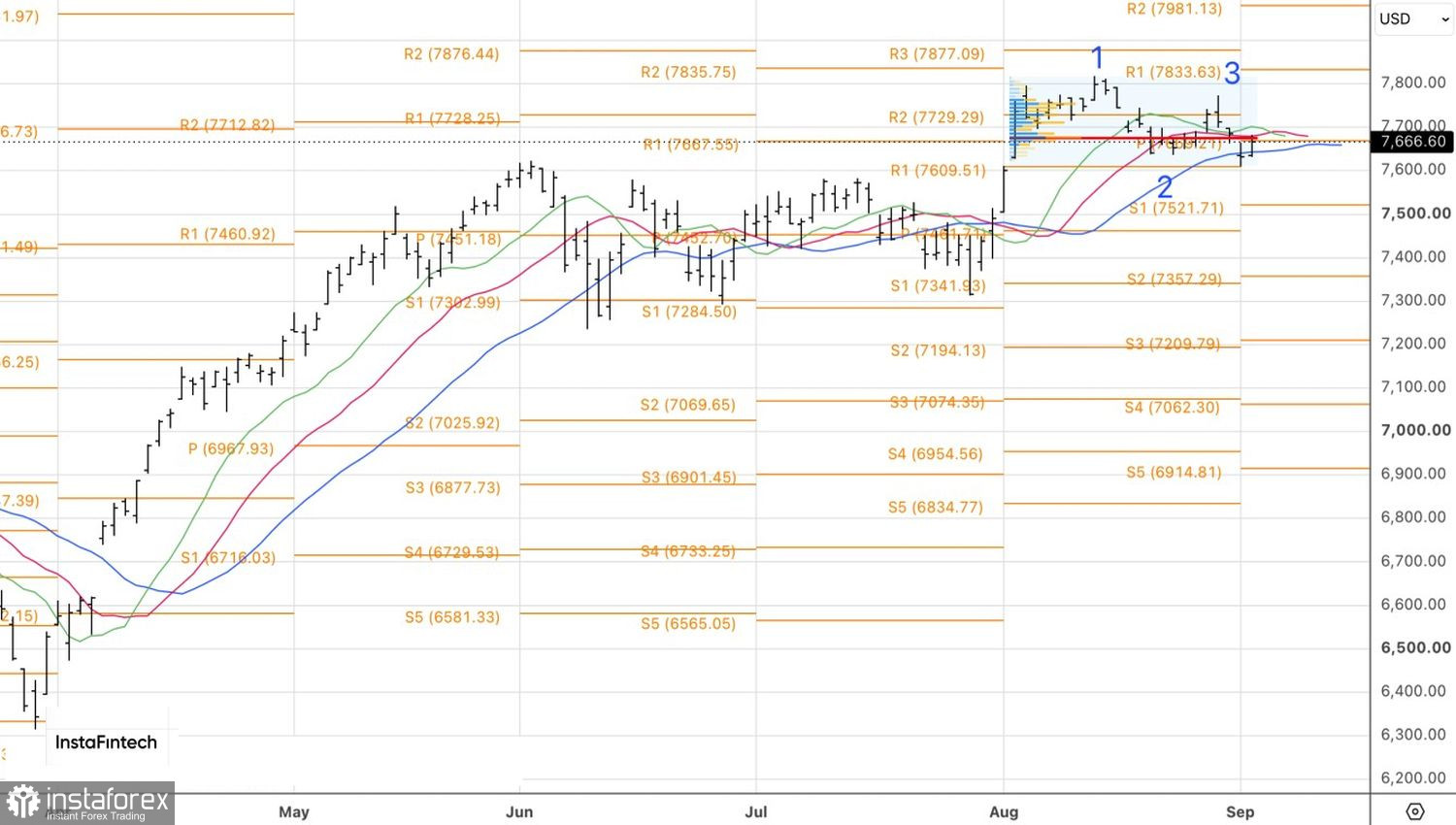
Technically, the S&P 500 registered a false breakout of the 1-2-3 correction low on the daily chart. The pattern can still complete and trigger a correction. That would require a drop below 7,610, which would be a sell signal. Conversely, a successful push above 7,685 would be a reason to buy.


