


















Gold's fate has turned out to be far less dramatic than one might have expected. History shows that at the beginning of Federal Reserve monetary tightening cycles, the precious metal usually declines, but then recovers as concerns grow that high interest rates will significantly slow GDP growth. They may even push the economy into recession. This time, monetary policy tightening is accompanied by the highest Treasury yields in two decades. Yet XAU/USD is holding up.
As a rule, rising bond-market yields create a headwind for gold, which does not generate interest income. However, several factors are behind the Treasury yield rally this time. These include concerns about Fed monetary tightening amid high inflation driven by rising oil prices, competition for resources from hyperscalers, economic strength, and concerns about US fiscal problems. The last factor is encouraging investors to buy XAU/USD.
Gold and Oil Price Dynamics
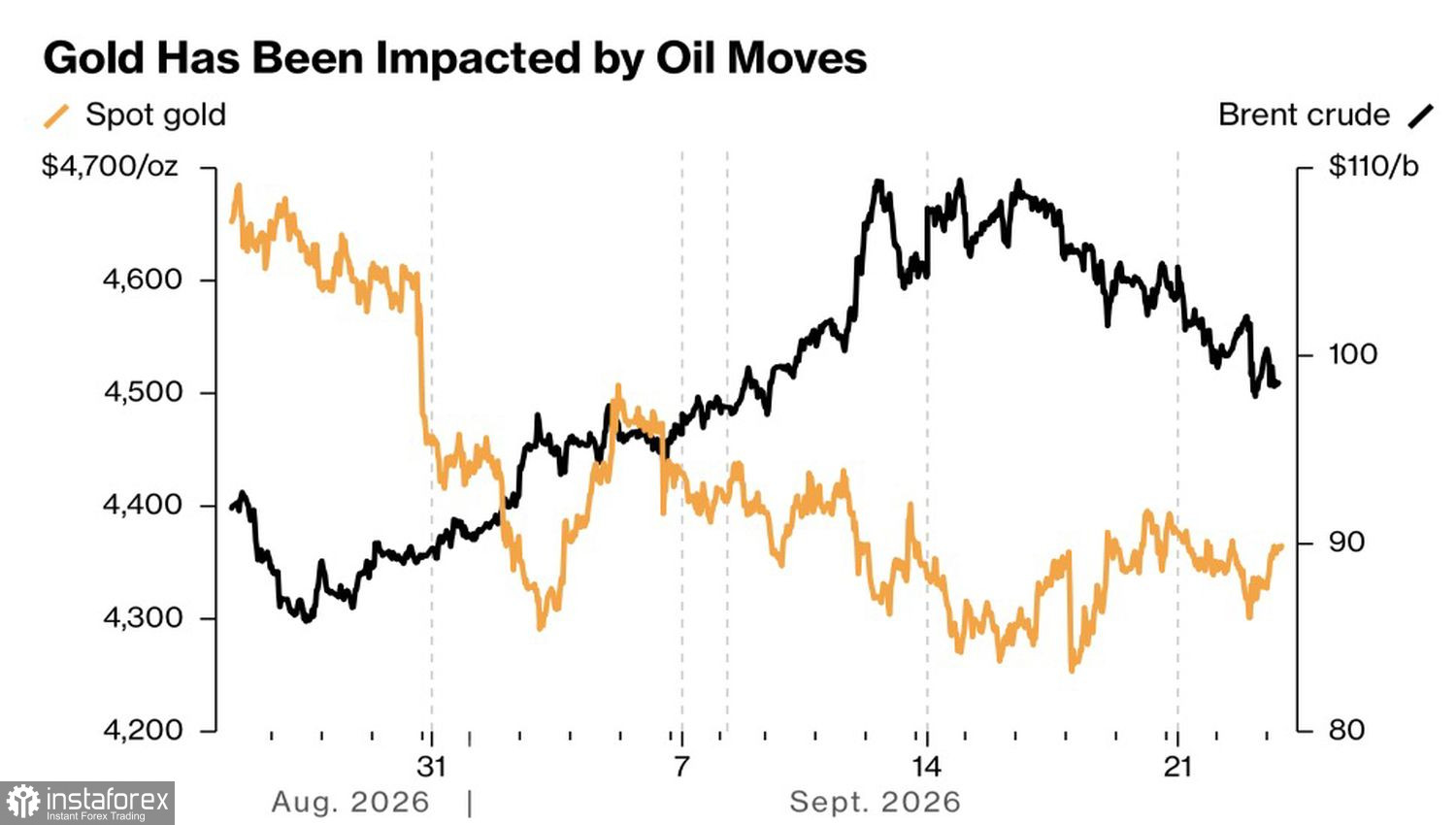
In the short term, gold's performance is determined by conditions in the oil market. A Brent rally raises inflation expectations and the likelihood of Fed monetary tightening, which leads to a decline in XAU/USD. Conversely, falling prices for the North Sea benchmark are good news for the precious metal.
In this regard, Donald Trump's statement that talks with Iranian representatives on the sidelines of the UN summit had been productive, together with the resumption of operations of Saudi Arabia's East-West pipeline, temporarily supported gold. Nevertheless, the hawkish rhetoric from FOMC officials calling for rate hikes brought it back down to earth.
China's Gold Import Dynamics
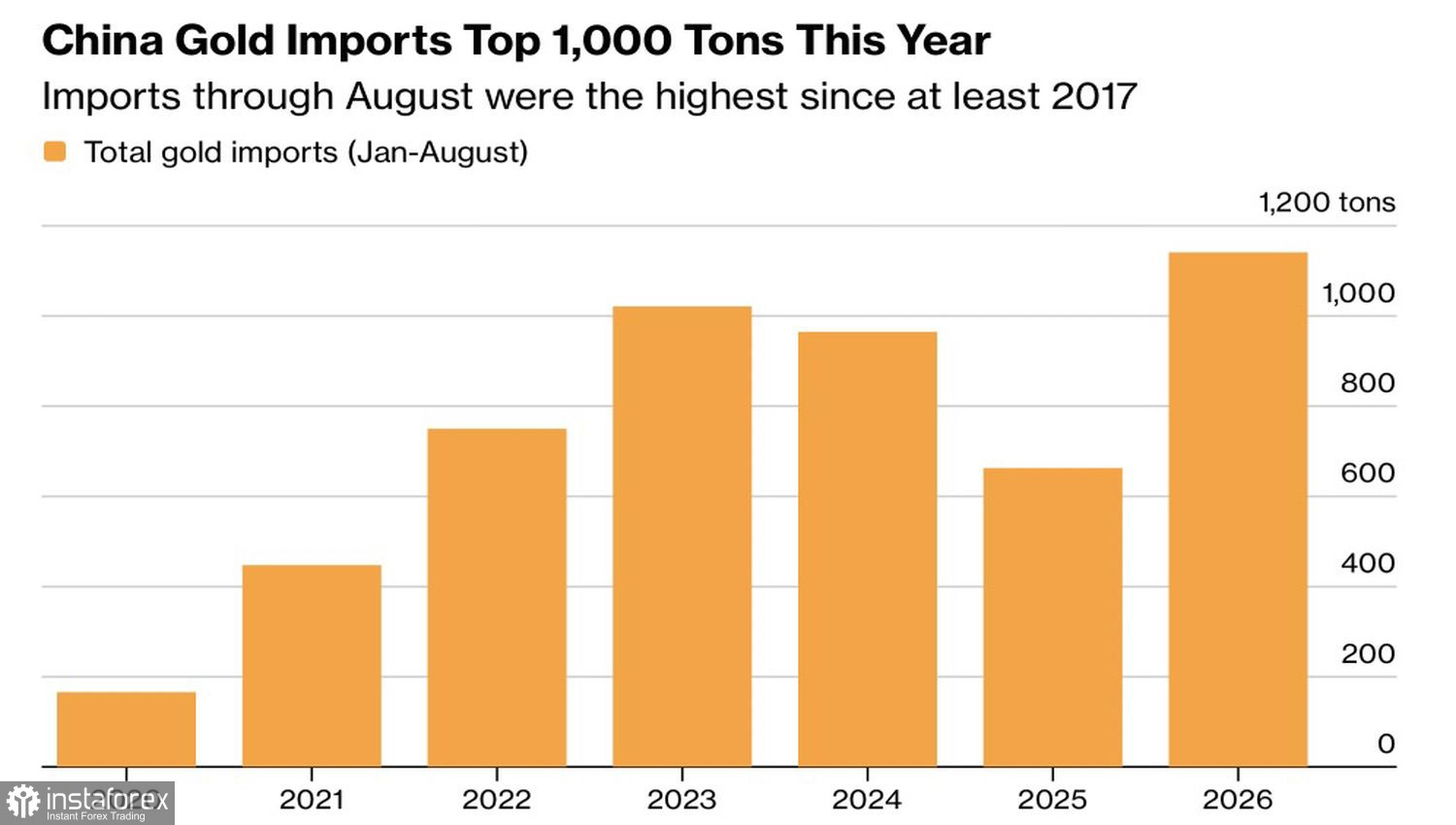
A silver lining for the precious metal, preventing it from falling sharply, is strong demand for the physical asset. Central banks have been buying twice as much bullion annually in 2022–2026 as they did in 2010–2021. ETF holdings are recovering after declining in the first half of the year, led by specialized Chinese funds. They attracted 44 tons in August, 18% more than during the same period in 2025. At the same time, China's gold imports exceeded 1,000 tons in the first eight months of the current year. This is more than in the entire previous year and the highest figure since 2017.
Strong demand for the physical asset makes it possible to draw parallels with 2022. At that time, the Fed was tightening monetary policy at the fastest pace in four decades, yet XAU/USD prices still rose. The explanation lay in the processes of dedollarization and diversification of central banks' foreign-exchange reserves. They purchased bullion regardless of its opportunity cost, which explains the breakdown in the relationship with Treasury yields.
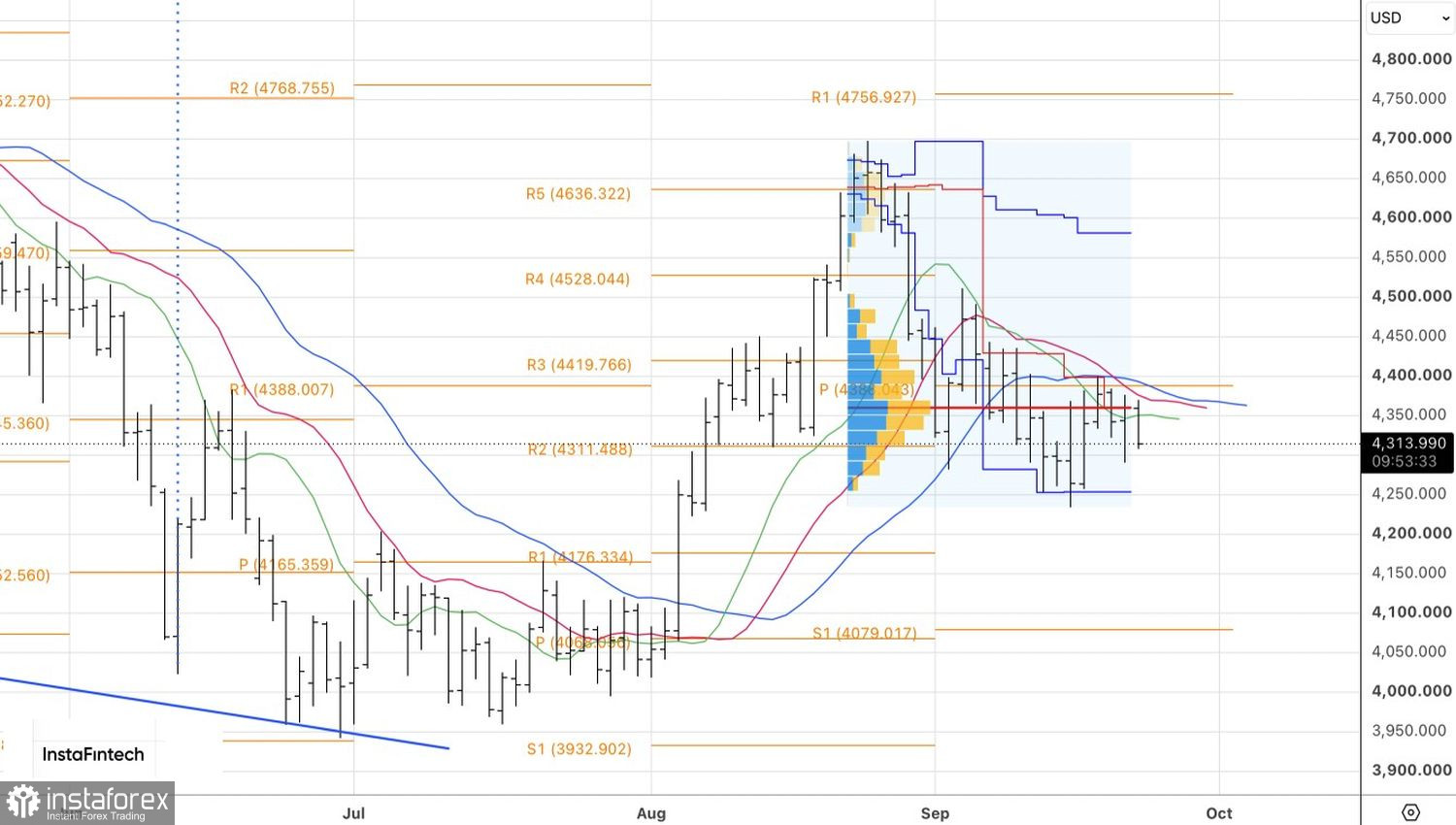
Technically, gold is consolidating in the 4,250-4,400 per ounce range on the daily chart. A breakout above the upper boundary would provide a basis for buying, while a breakout below the lower boundary would provide a basis for selling.


