


















Analysis of Trades and Trading Advice for the Japanese Yen
The test of the 157.60 price level occurred when the MACD indicator had just started moving downward from the zero line, confirming the validity of the entry point for a short position on the US dollar. As a result, the pair declined by almost 100 points.
The yen continues to strengthen against the US dollar, and the minutes of the Bank of Japan's July meeting, published this morning, provide additional support for the Japanese currency. The interest rate was left at around 1.0% at that meeting, but the discussion behind the decision was relatively hawkish. The rate was subsequently raised to 1.25% in September. Notably, policymakers described the risks to prices as tilted to the upside, while the main objective of monetary policy is now seen not as raising inflation to 2%, but as keeping it around that level. One board member noted that the market expects rate increases approximately once every six months, but the pace could be faster than expected. The current forecast is that the regulator will raise rates once every three months, particularly if inflation risks begin to materialize. The weakening of the yen was also discussed separately, as it makes imports more expensive and increases inflation expectations. I believe that such discussions make USD/JPY buyers less confident, while continued expectations of further rate hikes will support the yen until the US dollar has new strong arguments in its favor. However, this effect is temporary, as the US dollar is currently much more attractive to carry traders than the yen.
As for the intraday strategy, I will focus more on the implementation of Scenarios No. 1 and No. 2.
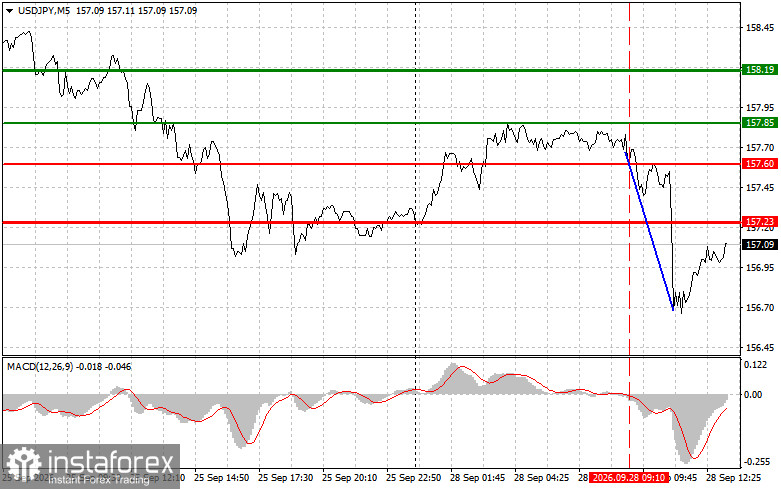
Buy Signal
Scenario No. 1: Today, I plan to buy USD/JPY when the entry point is reached around 157.29 (the green line on the chart), with a target of a move up to 157.85 (the thicker green line on the chart). Around 157.85, I will close the long position and open a short position in the opposite direction, targeting a move of 30–35 points in the opposite direction from the level. A rise in the pair today is possible, but the upward potential is relatively limited. Important! Before buying, make sure that the MACD indicator is above the zero line and has only just started rising from it.
Scenario No. 2: I also plan to buy USD/JPY today if the price tests 157.29 twice consecutively while the MACD indicator is in the oversold zone. This would limit the pair's downward potential and lead to an upward reversal. A rise toward the opposite levels of 156.86 and 156.86 can be expected.
Sell Signal
Scenario No. 1: Today, I plan to sell USD/JPY after the price breaks below 156.86 (the red line on the chart), which could lead to a rapid decline in the pair. The key target for sellers will be 156.20, where I will close the short position and immediately open a long position in the opposite direction, targeting a move of 20–25 points in the opposite direction from the level. Selling pressure on the pair may return today if the central bank intervenes. Important! Before selling, make sure that the MACD indicator is below the zero line and has only just started declining from it.
Scenario No. 2: I also plan to sell USD/JPY today if the price tests 157.29 twice consecutively while the MACD indicator is in the overbought zone. This would limit the pair's upward potential and lead to a downward reversal. A decline toward the opposite levels of 156.86 and 156.20 can be expected.
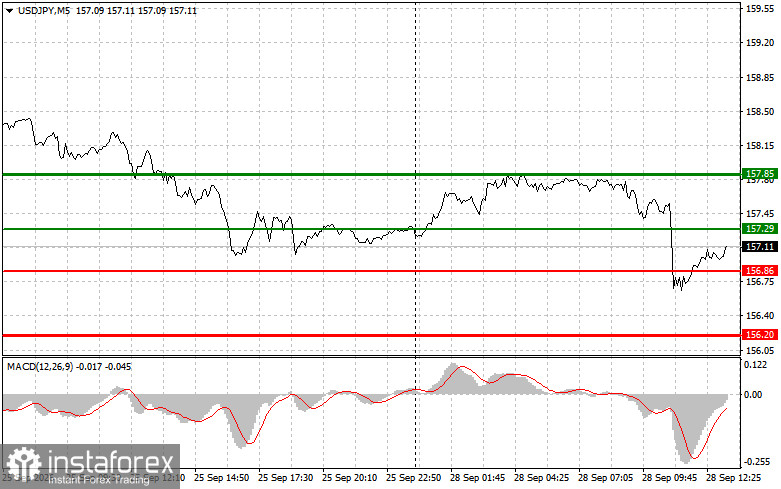
What Is Shown on the Chart:
- Thin green line – the entry price at which the trading instrument can be bought;
- Thick green line – the estimated price level where Take Profit can be placed or profits can be taken manually, as a further rise above this level is considered unlikely;
- Thin red line – the entry price at which the trading instrument can be sold;
- Thick red line – the estimated price level where Take Profit can be placed or profits can be taken manually, as a further decline below this level is considered unlikely;
- MACD indicator. When entering the market, it is important to take overbought and oversold zones into account.
Important. Beginner Forex traders should make entry decisions very carefully. Before the release of important fundamental reports, it is generally preferable to remain out of the market in order to avoid exposure to sharp exchange-rate fluctuations. If you decide to trade during news releases, always use stop orders to limit potential losses. Without stop orders, you can lose your entire trading deposit very quickly, especially if you do not use proper money management and trade large position sizes.
And remember that successful trading requires a clear trading plan, such as the one presented above. Making trading decisions spontaneously based on the current market situation is inherently an unsuccessful intraday trading strategy.


