



















The euro has continued to decline against the US dollar for the fourth consecutive day, falling below the psychological level of 1.1300 for the first time since May 2025. The combination of high oil prices, rising US Treasury yields, and growing concerns about France's government debt has contributed to the decline in EUR/USD. On Thursday, the pair reached a low of 1.1265, bringing its total decline over the past four weeks to approximately 2.8%.
Despite an upward revision to eurozone manufacturing activity data released earlier on Thursday, the figures provided no significant support for the euro.
The HCOB Eurozone Manufacturing PMI was revised upward to 52.9 from the preliminary estimate of 52.7. The growth rate of new orders reached its highest level in more than four years, employment and purchasing activity improved, and production expectations rose to their highest level since February. Similarly, September PMI data for the manufacturing sectors of Germany, France, and Italy exceeded forecasts, indicating stronger business activity.
Nevertheless, overall investor sentiment remains pessimistic, as Brent crude oil prices have exceeded the key level of $100 per barrel, putting significant pressure on economic growth in the eurozone. France's government debt has reached its highest level since 1946, while political instability within the government is hindering the implementation of spending-cutting programs, raising concerns about a potential debt crisis. The increase in US Treasury yields has completely offset the impact of weaker PCE inflation data.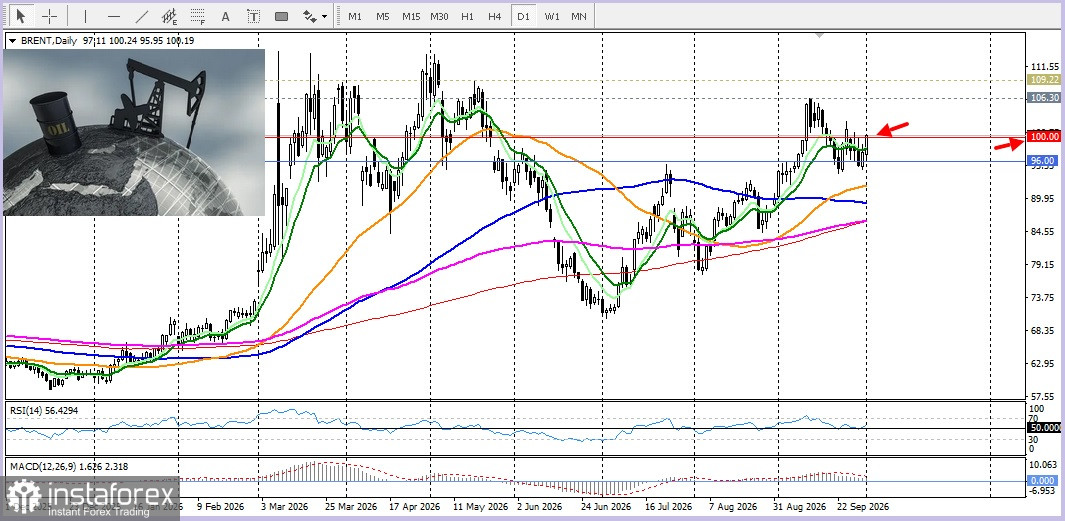 In the United States, a sharp rise in Treasury yields continues to strengthen speculative demand for the dollar, as uncertainty surrounding the conflict in the Middle East contributes to further increases in global inflation. On Wednesday, the yield on 10-year Treasury bonds reached a 24-year high, exceeding 5.30%, while the yield on 30-year bonds rose to 5.65%, also reaching its highest level since May 2002.
Under these conditions, weaker-than-expected US Personal Consumption Expenditures (PCE) Price Index data failed to have the desired impact on the dollar. According to data from the US Bureau of Economic Analysis, PCE inflation rose less than forecast in September, while the August figures were revised downward, prompting futures-market participants to revise their expectations for a series of Federal Reserve interest-rate hikes.
ING analysts believe that "unless there is a breakthrough in negotiations between the US and Iran, the dollar is likely to remain resilient in October." They also warn that the dollar could strengthen sharply if the data released tomorrow are unexpectedly strong or if a sell-off in European government bonds puts significant pressure on the euro.
From a technical perspective, EUR/USD is trading below the key moving averages and remains under strong selling pressure, confirming the bearish scenario. The oscillators are negative, indicating that the bears have the upper hand. However, the Relative Strength Index is in oversold territory, suggesting a potential correction. Nevertheless, any corrective rise is likely to be limited. The 1.1265 level provided support. The nearest important resistance level is 1.3222.


