


















Concerns about a repeat of the 2011–2012 debt crisis have returned to Europe. Risk premiums on peripheral bonds are rising, while markets are assessing which country could become the weakest link this time. France is not the only country attracting attention; Spain is also among the countries facing increased scrutiny.
Spanish Prime Minister Pedro Sanchez called early elections for November 29 after parliament rejected a housing plan aimed at curbing the rise in social protests. The yield on Spanish 10-year bonds changed little, but the spread against more stable German government debt widened to 65 basis points. EUR/USD responded by falling to its lowest level since May 2025.
Euro Reversal Risk Dynamics
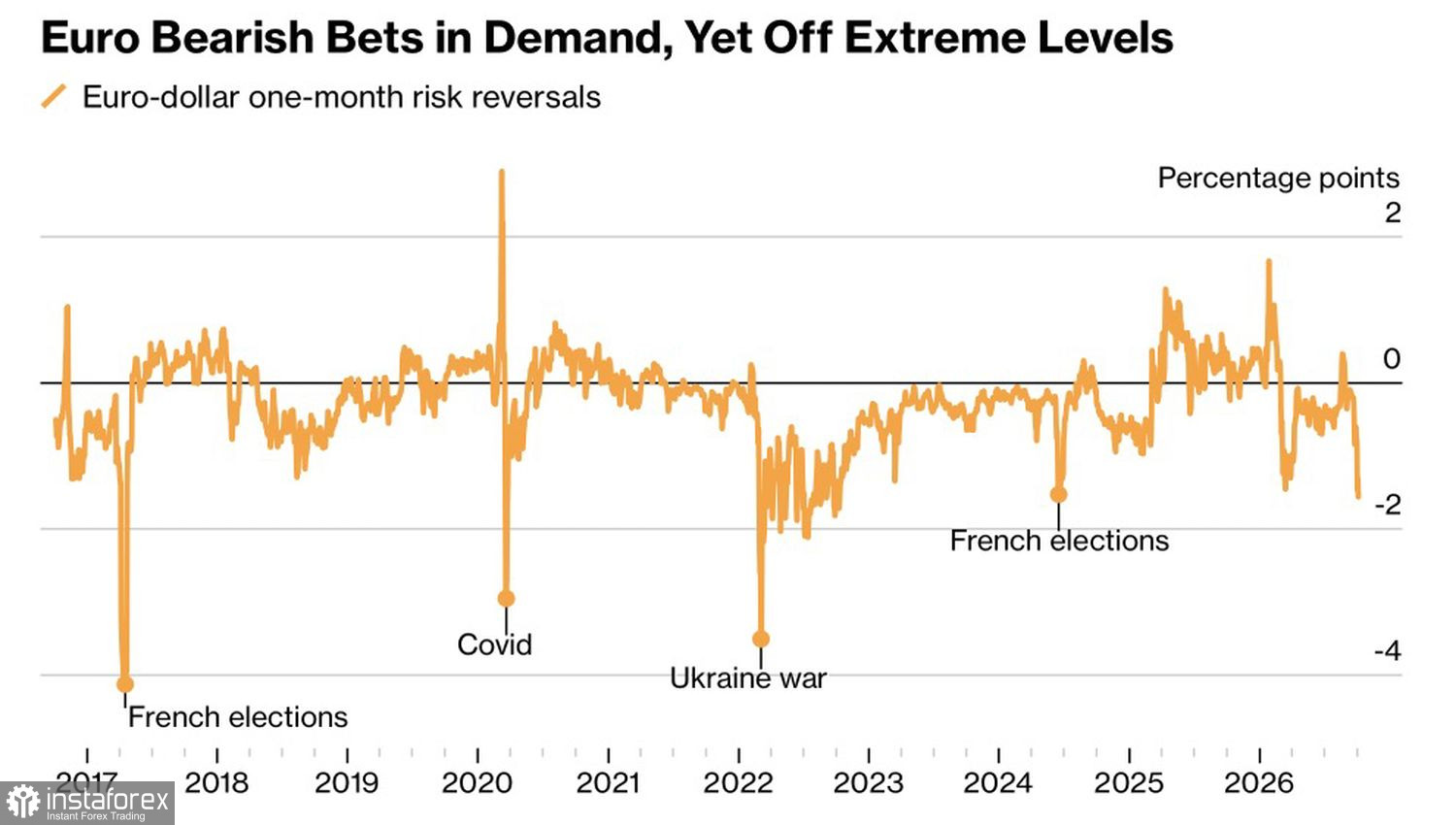
The escalation of political risks in two eurozone countries at the same time remains a negative factor for the euro. Credit Agricole believes that the news from Spain has had a limited impact on the currency, but it certainly does not support it. ING adds that the decline reflects a higher risk premium amid financial instability in the region, and that the EUR/USD decline could continue toward 1.10. Investors are recalling the debt crisis of 15 years ago, as the high debt burdens of France, Italy, and Belgium could become a vulnerability if borrowing costs rise.
Pressure on EUR/USD is also increasing as the US dollar strengthens. The futures market is pricing in the possibility of three federal funds rate hikes by July in an effort to contain inflation.
Euro weakness is evident not only against the US dollar. The currency has declined against the Swiss franc for a third consecutive session, has weakened against the pound, and has fallen to its lowest level against the yen since 2025. JP Morgan believes that the market has not yet fully priced in a widening of French bond spreads and expects EUR/CHF to decline.
However, the situation is not entirely straightforward. Commerzbank notes that German bonds remain stable for now, meaning that the euro's downward potential should remain limited. French bond yields are rising, while German yields are declining, reinforcing the status of German government bonds as a safe-haven asset.
Lazard believes that the ECB should suspend quantitative tightening, describing balance-sheet reduction as a secondary tool. ECB Chief Economist Philip Lane warned that a second wave of the energy shock poses risks to both inflation and economic growth.
European Inflation Dynamics
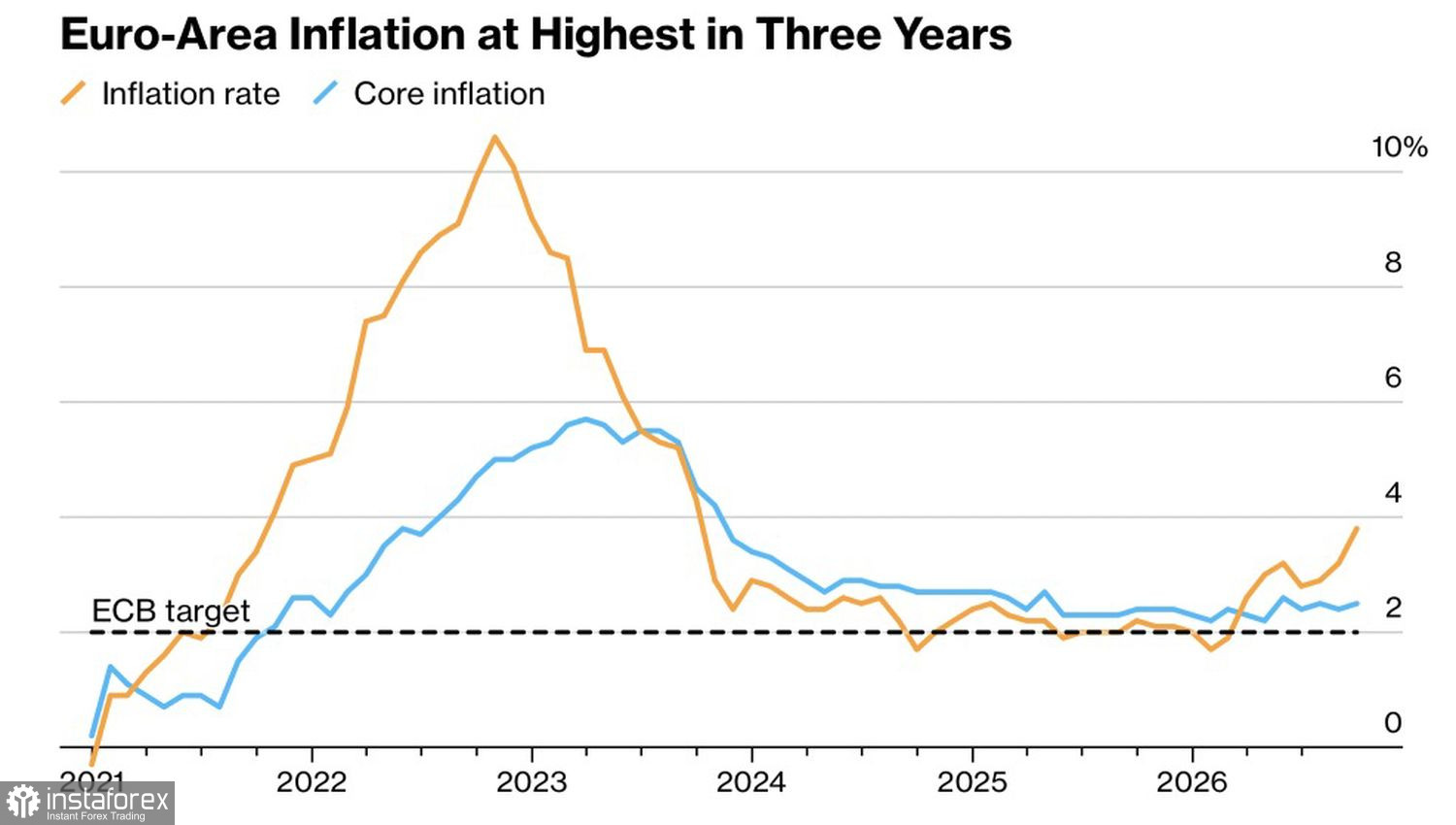
Meanwhile, eurozone inflation accelerated to 3.8% in September, its highest level in three years, compared with 3.2% in August. Rising energy prices could force the ECB to resume raising the deposit rate rather than maintain a pause. Under normal market conditions, this would be a positive factor for EUR/USD. In the current environment, however, such expectations could push bond yields higher and increase instability in the debt market.
Will the single currency withstand the combined pressure from political risks and rising inflation?
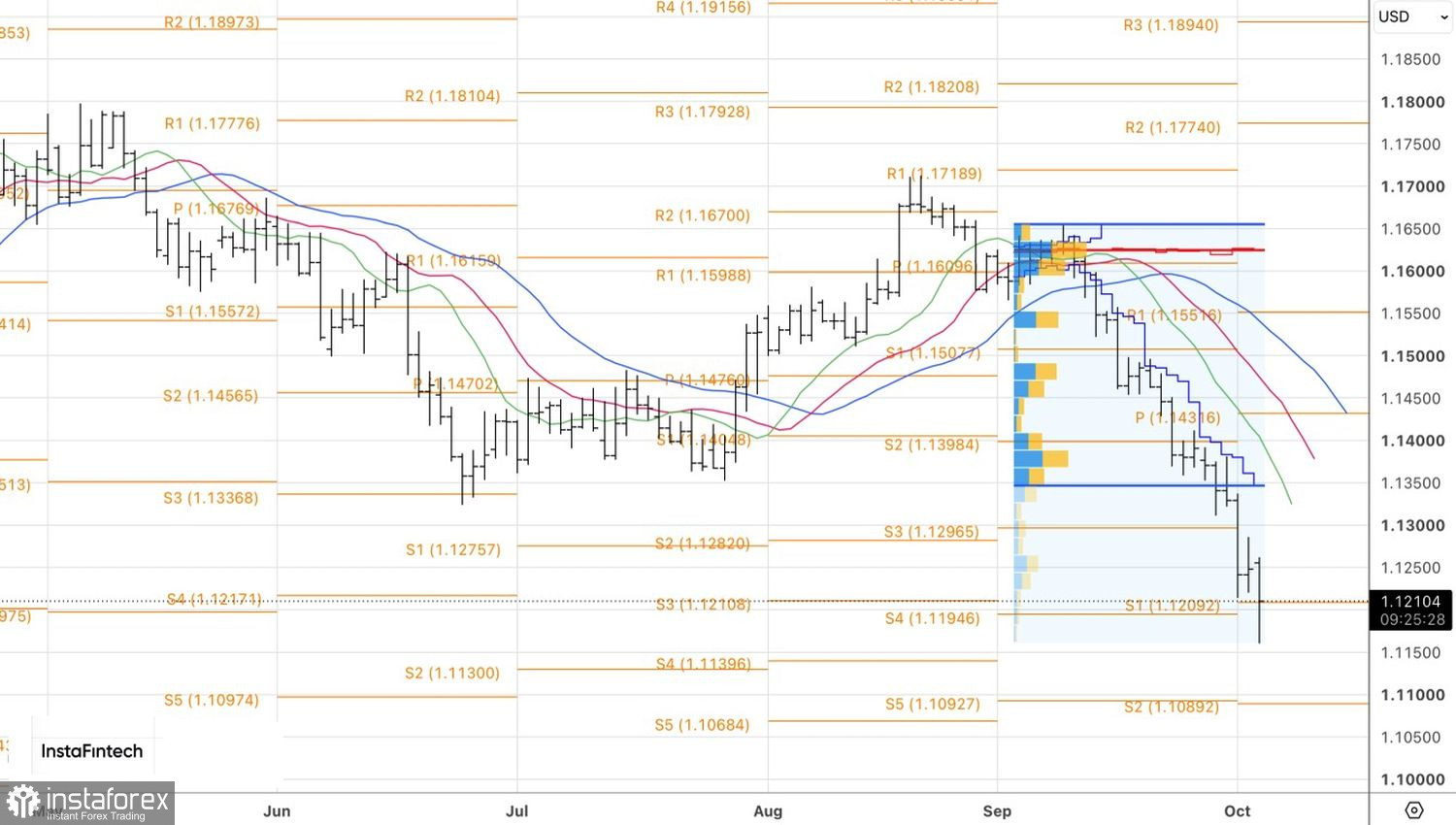
Technically, an inside bar was formed on the daily EUR/USD chart, allowing short positions to be increased. The targets are 1.110 and 1.087.


