


















Saudi Arabia, Turkey, and Pakistan agree to immediate collective defense commitments
The Saudi-backed government in Yemen, during a large-scale advance of ground forces against the Houthis, said it has regained control of the port city of Mocha and strategic territory around the Bab-el-Mandeb Strait. Maritime traffic in the region, however, remains at high risk: since the start of October there have been at least seven new attacks on tankers in the Strait of Hormuz area. Yemeni insurgents also launched missile and drone strikes on Saudi territory, damaging the Jizan and Najran airports.
Nevertheless, hopes for a restoration of Middle East supplies have pushed oil prices down for several sessions in a row — mainly thanks to supplies from Saudi Arabia and actions by the G7. According to Saudi Arabia's energy minister, flows through the key East–West pipeline reached 5.8 million barrels per day, and Middle Eastern export volumes in late September for several days even exceeded pre-war levels. Additional downward pressure on prices came from:
- the G7 decision to release 100 million barrels from emergency reserves
- a sharp cut in Saudi official selling prices for Asian buyers
- OPEC+ keeping November quotas unchanged
Vitol, Aramco, Shell, and Chevron warn
At the same time, several of the world's largest energy companies warn that the global market remains vulnerable heading into the winter season. The head of Vitol said Western stocks of oil have been depleted due to the military conflict with Iran, while the CEO of Saudi Aramco called global reserves "catastrophically constrained," stressing that the G7 intervention only provides a temporary respite and does not eliminate the deficit until the Strait of Hormuz is fully reopened (rebuilding inventories after the war could take up to two years).
The CEO of Shell estimated current Middle Eastern export flows at about 80% of pre-war levels, noting that a deeper crisis was avoided only thanks to increased production in other regions and lower consumption in China.
Chevron expects demand growth after the war. Speaking at the Energy Intelligence Forum in London, Chevron CEO Mike Wirth forecast further increases in global oil and gas demand once the Gulf conflict ends. The company has cut its rig count to a minimum due to technological progress and is exploring joining an international consortium to build a pipeline from Iraq to the Mediterranean coast.
Meanwhile, US President Donald Trump has definitively abandoned the idea of a temporary ban on US diesel exports, taking into account agreements with European allies to jointly tap strategic reserves. Chevron emphasized that US export restrictions would undermine partner trust and provoke a localized price spike.
China shifts to Iraqi Basrah crude. What about the EU?
Amid tougher US restrictions on Iranian exports, Chinese independent refineries have begun to massively switch purchases to Iraqi Basrah Heavy and Basrah Medium grades. The rush by Chinese importers has created fierce competition for physical volumes, with some November-loading parcels of Iraqi crude trading at record premiums of up to $18 per barrel to the Brent benchmark.
As for another major Middle Eastern buyer — the European Union — the fuel situation ahead of the heating season looks critical. To make matters worse, France is undergoing a compound crisis. A historic drought has put drinking-water supplies at risk for 1 million people (around 83,000 residents already receive water by tanker and in bottles), and it has inflicted heavy damage on agriculture and nuclear power generation.
On top of environmental troubles, social protests in France have intensified. About two dozen schools have been vandalized or burned, and roughly 300 students and teachers have been affected. Political uncertainty and a budget stalemate have prompted institutional investors to accelerate sales of French government bonds, heightening fears of a full-blown debt crisis in the eurozone.
As Mike Riddell, a fund manager at Fidelity International, put it: "France seems to be blindly heading toward a financial crisis."
Falling oil prices have been the main reason for easing pressure on the bond market. US stock indices, meanwhile, recorded a strong rally:
- S&P 500 rose to a record 7,817.2 points for the first time in history
- Nasdaq Composite jumped to 27,677.5
- Dow Jones reached 51,527.4 points
A new wave of AI euphoria is building in parallel: Nvidia's market cap hit record levels for a second consecutive day, approaching $6 trillion; AMD shares rose on Lisa Su's comments about strong chip demand; OpenAI is reportedly negotiating to raise $30 billion from UAE funds; and Alphabet jumped on news of purchases of nuclear capacity from Constellation Energy (+7%). UBS Global Wealth Management emphasizes that large-scale AI investments continue to be a strong supporting factor for the broader market.
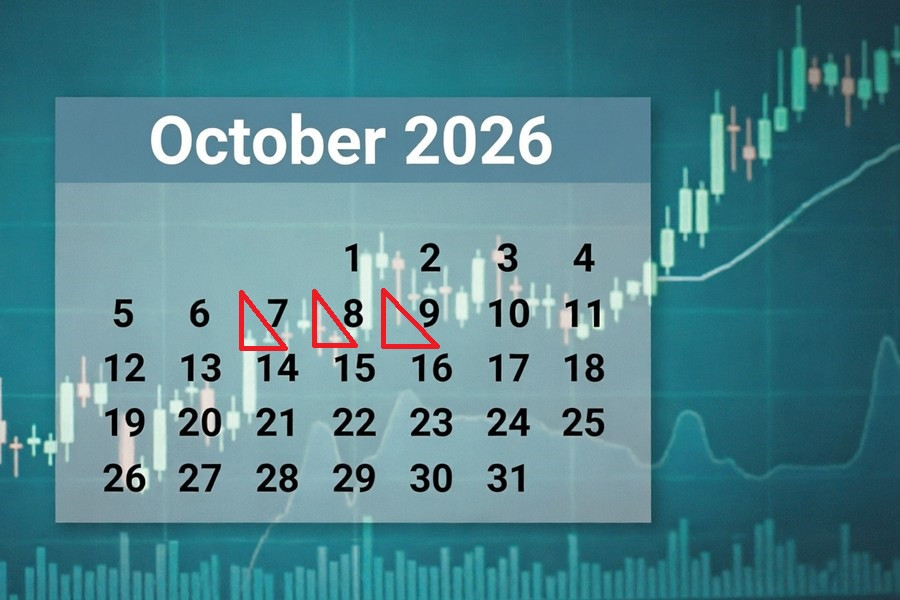
October 7
7 October, 01:30 / Australia / Ahead indicator — Business Activity Index for September / prev.: -26.2 / actual: -3.5 / forecast: -4.0 / AUD/USD — down Australia's business activity index for August showed growth, recording a strong recovery year to date. Conditions in the economy were characterized by:
- rising construction and business-services activity amid data-center projects
- a surge in sales volumes, new orders and employment growth
- supply constraints for commodities due to logistics disruptions and geopolitics
- increased pressure on labor costs as average wages rose
In September, analysts expect the business activity index to resume its decline. Cooling conditions in the economy will put pressure on the Australian dollar.
7 October, 02:00 / Japan / Reuters Tankan manufacturing sentiment index for October / prev.: 18 / actual: 21 / forecast: 23 / USD/JPY — down
The Reuters Tankan manufacturing sentiment index for September rose for the second month running, reaching multi-year highs. The sector's rise was supported by:
- steady demand for semiconductors and data-center equipment amid AI investments
- a jump in optimism in the electronics sector and firmer sentiment in metals production
- improvement in non-manufacturing firms thanks to domestic consumption
In October, experts expect further gains in the manufacturers' sentiment index. Strengthening business optimism will support the Japanese yen.
7 October, 02:30 / Japan / Average cash earnings for August / prev.: 4.0% / actual: 4.7% / forecast: 3.7% / USD/JPY — up
Average cash earnings in Japan for July rose, marking the largest annual increase since early 1997. Labor income dynamics were influenced by:
- the fastest growth in base salaries since 1992 and higher one-off payments and bonuses
- strong wage growth in construction, mining and transport
- a seventh consecutive month of real wage gains
In August, analysts expect a slowdown in wage growth. Cooling wage momentum will weaken the yen.
7 October, 04:30 / Australia / Building approvals for August / prev.: 9.2% / actual: 10.9% / forecast: 10.3% / AUD/USD — down
The number of housing building approvals in Australia for July rose, showing continued high construction activity. The indicator points to sustained developer sector activity. In August, experts predict a moderation in the pace of approvals. A slowdown in construction activity will pressure the Australian dollar.
7 October, 07:00 / Japan / Leading Economic Index for August / prev.: 116.2 / actual: 117.7 / forecast: 118.1 / USD/JPY — down
Japan's Leading Economic Index for July rose to its highest level in twelve years. Economic prospects were characterized by:
- support for activity from fiscal measures and energy subsidies
- inflation remaining close to the Bank of Japan's target
- unemployment falling to the year's lows and rising consumer confidence
In August, analysts expect continued growth in the leading index. Improved long-term economic prospects will support the yen.
7 October, 09:00 / Germany / Industrial production for August (m/m) / prev.: 0.0% / actual: -1.1% / forecast: 0.5% / EUR/USD — up
Germany's industrial production for July fell, marking the fourth negative result this year. The decline was driven by:
- a 9.2% drop in car manufacturing due to idle capacity
- reduced output of capital and consumer goods
- lower production in energy-intensive industries
- a local rise in wind and solar generation (+4.7%)
In August, markets expect a recovery in industrial production. A return to growth in industry will support the euro.
7 October, 09:00 / United Kingdom / Lloyds house price index for September (ahead) / prev.: 0.1% / actual: -0.4% / forecast: -0.2% / GBP/USD — up
The UK house-price index for August showed a decline, the first negative print since late 2023. The sector situation was shaped by:
- rising pressure from high inflation and borrowing costs on buyers
- a fall in the total number of property transactions
- the largest house-price falls in Greater London and the southeast
In September, analysts expect the pace of house-price declines to moderate. A reduction in negative housing dynamics will support the pound sterling.
7 October, 17:30 / US / EIA crude oil inventories / prev.: 2.969 mln bbl / actual: 0.922 mln bbl / forecast: — / Brent — volatile
US commercial crude stocks for the week to 25 September rose by 0.922 million barrels. The oil market picture featured:
- continued build-up of stocks at the Cushing hub (+0.553 mln bbl)
- gasoline stocks down by 1.684 mln bbl and distillates down by 2.251 mln bbl
- lower refinery throughputs and a drop in net imports
The absence of an official forecast keeps focus on upcoming reports. The accumulation of commercial crude inventories will continue to weigh on Brent prices.
October 8
8 October, 02:01 / United Kingdom / RICS house price balance for September / prev.: -29% / actual: -28% / forecast: -30% / GBP/USD — down
The balance of residential property prices in the UK for August improved, recording the best reading in five months. Conditions in the sector were shaped by:
- an increase in the net balance of new-buyer enquiries and improved sales
- continued leading demand in the rental market
- risks of negative impact from possible tax and interest-rate increases
In September, analysts expect a deepening of the negative house-price balance. A worsening housing-market decline will put pressure on the pound sterling.
8 October, 03:00 / Australia / Consumer inflation expectations (ahead) for October / prev.: 4.9% / actual: 4.9% / forecast: 5.0% / AUD/USD — up
Australian consumer inflation expectations for September remained at high levels. Public assessments were influenced by:
- core consumer inflation persisting well above the central bank's target range
- hawkish rhetoric from the Reserve Bank of Australia leadership
- rising probability of another policy-rate hike by the regulator before year-end
In October, analysts expect a further rise in inflation expectations. Higher pro-inflation risks will increase the likelihood of policy tightening, supporting the Australian dollar.
8 October, 09:00 / Germany / Trade balance for August / prev.: €15.4bn / actual: €21.3bn / forecast: €19.0bn / EUR/USD — down
Germany's trade surplus for July rose, posting the best result since summer 2024. External trade was influenced by:
- a 5.7% drop in imports with only a slight 0.8% fall in exports
- a strong increase in export shipments to the US (+19.1%) and a decline in shipments to China and the UK
- a rise in the trade surplus over the first seven months of the year to €125.8bn
In August, analysts expect the trade surplus to shrink. A deterioration in foreign trade figures will weigh on the euro.
8 October, 09:00 / Germany / New car registrations for September / prev.: 1.2% / actual: 2.6% / forecast: 4.0% / EUR/USD — up
New car registrations in Germany for August rose year-on-year. Market dynamics were characterized by:
- growth in private vehicle registrations (+16.9%) while commercial registrations fell
- a 75.1% surge in battery-electric vehicle (BEV) sales, raising their market share to 32.4%
- declines in petrol (-37.9%) and diesel (-17.3%) vehicle sales
In September, experts project further acceleration in new car registrations. Increased auto-market activity will support the euro.
8 October, 15:30 / US / Initial jobless claims / prev.: 198k / actual: 197k / forecast: 200k / USDX (6-currency USD index) — down
Initial claims for unemployment benefits in the US fell in the final week of September, reflecting a resilient labor market. Employment conditions were marked by:
- initial claims declining to lows not seen since mid-summer
- a drop in continuing claims to 1.701 million
- job protection supported by corporate profits and steady domestic demand
In the next report, analysts expect an increase in initial claims. Rising benefit applications would signal a weakening labor market, weighing on the US dollar.
October 9
9 October, 02:30 / Japan / Household consumption for August / prev.: -3.3% / actual: -3.6% / forecast: -3.6% / USD/JPY — volatile
Household consumption in Japan for July accelerated its decline, hitting the lowest level since early 2024. Spending dynamics were influenced by:
- annual household expenditure contracting for the eighth consecutive month
- falls in spending on utilities (-9.2%), transport (-8.5%) and housing (-16.4%)
- localized increases in spending on culture, leisure and furniture
In August, analysts expect continued steep declines in consumer spending. Ongoing weakness in domestic demand will pressure the yen.
9 October, 09:00 / Japan / Machinery orders for September / prev.: 50.4% / actual: 64.7% / forecast: 61.0% / USD/JPY — up
Machinery orders in Japan for August showed a record acceleration, posting the best growth rates since autumn 2021. The sector was characterized by:
- strong demand both domestically (+61.6%) and internationally (+65.8%)
- a 40.9% rise in orders over the first eight months of the year
- continued high demand for industrial equipment
In September, markets expect a slowdown in machinery-order growth. Cooling demand in industry will weaken the yen.
9 October, 15:30 / Canada / Change in employment for September / prev.: 75.1k / actual: -41.7k / forecast: 7.0k / USD/CAD — down
Canadian employment fell by 41.7 thousand in August. The decline was driven by:
- job losses in business services, construction, public administration and utilities
- reductions in employment in Quebec and Ontario and among youth
- the third consecutive monthly drop in public sector employment
- some offset from local gains in manufacturing (+1.2%)
In September, analysts expect employment to resume growth. A rebound in hiring will support the Canadian dollar.
9 October, 15:30 / Canada / Average hourly earnings for September / prev.: 3.0% / actual: 2.0% / forecast: 3.0% / USD/CAD — down
Canada's average hourly earnings growth slowed to 2.0% in August. The indicator reflects a temporary easing in wage growth momentum amid changing employment composition. In September, analysts expect an acceleration in hourly pay growth. Stronger labor income would boost the Canadian dollar.
9 October, 17:00 / US / University of Michigan consumer sentiment index for October (ahead) / prev.: 51.7 / actual: 48.1 / forecast: 47.6 / USDX (6-currency USD index) — down
The US consumer sentiment index for September was 48.1, remaining near historic lows. The reading reflected:
- a roughly 10% deterioration in households' assessments of personal finances
- consumer worries about high fuel prices and geopolitical risks
- weakening short-term business activity outlooks across political groups
- localized improvement in conditions for big?ticket purchases
In October, markets expect further declines in consumer sentiment. Weakening household confidence will put pressure on the dollar.
9 October, 17:00 / US / University of Michigan 1-year inflation expectations for October (ahead) / prev.: 4.0% / actual: 4.6% / forecast: 4.7% / USDX (6-currency USD index) — up
One-year inflation expectations in the US rose to 4.6% in September, the highest since early summer. The rise signals persistent public concern about high prices. In October, analysts expect further increases in inflation expectations. Higher pro-inflation risks will support the greenback.
October 7, 02:00 / US / Speech by Dallas Fed President Lorie Logan / USDX
October 7, 08:00 / Eurozone / Speech by Piero Cipollone of the ECB Executive Board / EUR/USD
October 7, 10:20 & 20:30 / Eurozone / Speeches by Boris Vujcic of the ECB Governing Council / EUR/USD
October 7, 21:00 / US / Federal Reserve meeting minutes (16 September) / USDX
October 8, 12:15 / United Kingdom / Speech by Megan Greene of the Bank of England Monetary Policy Committee / GBP/USD
October 8, 13:00 / Eurozone / Speech by Philip Lane of the ECB Supervisory Board / EUR/USD
October 8, 13:30 / United Kingdom / Speech by Hugh Pill of the Bank of England Monetary Policy Committee / GBP/USD
October 8, 16:00 / United Kingdom / Speech by Deputy Governor for Monetary Policy Claire Lombardelli / GBP/USD
October 8, 20:40 / US / Speech by St. Louis Fed President Alberto Musalem / USDX
October 9, 13:15 / Eurozone / Speech by Piero Cipollone of the ECB Executive Board / EUR/USD
October 9, 16:30 / Eurozone / Speech by Isabel Schnabel of the ECB Board / EUR/USD
October 9, 23:00 / US / Speech by Boston Fed President Susan Collins / USDX
Besides, speeches by officials from other major central banks are also expected these days. Their comments typically trigger volatility in the FX market because they can signal regulators' future policy plans.


