


















August's international-trade report was highly positive — exports rose 2.5% month-on-month after a temporary dip in July, while imports fell 2.0%, the first decline in seven months. Export growth was broad-based: eight of eleven commodity groups increased, with energy shipments rising 4.7% thanks to higher deliveries of crude oil, diesel and nuclear fuel. Consumer-goods exports jumped 6.6%, "other goods and materials" surged 43.3%, and industrial machinery & parts rose 10.1%.
The trade surplus with the United States widened to $11.2bn from $6.1bn the month before, while exports to other countries fell 8.5% after a record July. That underscores Canada's continued dependence on the U.S. market and the limited success so far in diversifying trade links.
Early-October business-activity indicators sketch a slowing but still expanding economy. The S&P Global Canada Composite PMI rose to 48.7 in September from 47.8 in August, but remained below the neutral 50 mark for the fourth consecutive month, indicating ongoing contraction in private-sector activity overall.
The Ivey PMI plunged to 58.2 from 64.3 in August, well below the consensus 65.2. Although the Ivey remains above 50 (signalling expansion), the sharp slowdown points to weakening business momentum.
There is no consensus on the Bank of Canada's next move. RBC keeps a view that rates will be held in the near term, with a gradual tightening cycle starting in early 2027. Desjardins — which earlier saw a first hike in January 2027 — now acknowledges risks that could move that timing earlier, but stresses it depends largely on oil-price dynamics.
The trade dispute between the U.S. and Canada continues to build; prospects for resumed talks remain unclear. Donald Trump has said a deal is possible but that the administration is in no rush, while the Canadian side says it is open to dialogue but will not take the initiative.
Net short positioning in CAD rose to $5.61bn over the reporting week, and the implied fair price is drifting higher.
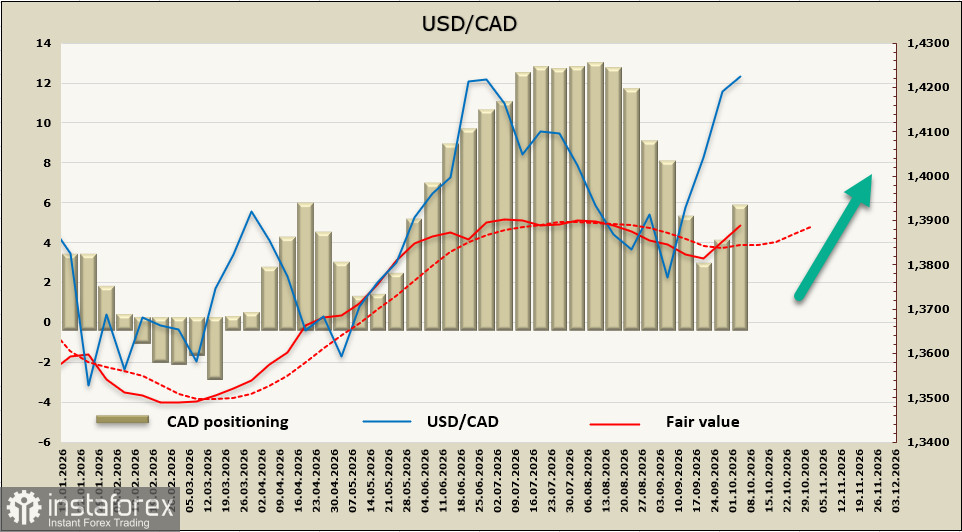
The first attempt to hold above June's high at 1.4246 failed, but all signs point to bulls trying again to push through that resistance, after which the next target would shift toward 1.4390–1.4410. There are fewer reasons now to expect a downside turn.


