


















Global equity indices slid sharply: the MSCI All?Country World Index fell by 0.2% and pulled back from a record it had approached within 1.5% earlier this week. US indices dropped on Wednesday, the day after closing at highs, while Asian markets lost about 1%. The catalyst was oil: Brent rose by 2% to top $102 per barrel, reviving inflation concerns.

Two reports triggered the oil jump. Sources say the White House asked the Pentagon to prepare options for strikes on Iran that could be executed before the midterm elections, and, at the same time, a storm disrupted some US production. Iran-linked Houthi forces also attacked two airports in Saudi Arabia. That marks a shift from yesterday's view that oil would move calmly to buyers. Tanker freight rates also hit fresh highs, adding costs across the fuel supply chain.
Expensive oil immediately hit bonds. The 10-year US Treasury yield rose by two basis points to 5.31%, near 2002 levels after spiking toward 5.35% on Monday. The move compounded the effect of the September Fed minutes, which showed all 19 participants supported the first rate increase since July 2023, often citing a need to guard against rising inflation.
Until now, equities had largely ignored costly energy and higher rates while setting records. Now they face a test: earnings season starts next week and will reveal whether the billions poured into AI infrastructure are generating proportional returns. That's also important for the Fed — meeting participants warned the AI boom could boost demand faster than supply and stoke inflation.
The dollar held yesterday's 0.3% gain, but neither the Fed nor oil alone is driving momentum. Notably, the minutes, which confirmed committee unity, didn't move markets much. Yields and oil remain the main drivers. Dollar buyers benefit while bonds are being sold, leaving those who bet on a pullback waiting.
In my view, stocks are likely to oscillate rather than drop sharply in the coming days so long as oil stays near $100 and yields do not break above 5.35%. A Brent consolidation above $105, combined with yields moving to new highs, would probably turn a small pullback into a more pronounced decline. Conversely, a calm reporting season and steady demand at long-bond auctions would restore the indices' chance of making new records.
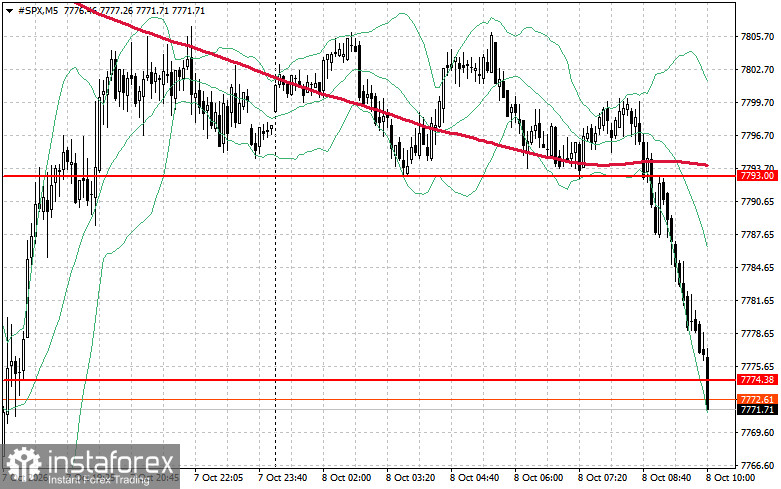
On S&P 500 technicals, the immediate task for buyers today is to overcome the resistance level of $7,793. That would signal upside and open the door to a push toward $7,810. Holding $7,824 is also a priority for bulls, as it would strengthen their position. If the price moves lower amid falling risk appetite, buyers need to show up around $7,774. A break below that level would likely send the index down to $7,756 and open the way to $7,737.


