


















Actions, not words. The market has finally decided what to react to: verbal interventions by policymakers or signals from the Bank of Japan — and it chose the regulator's signals, pushing USD/JPY higher.
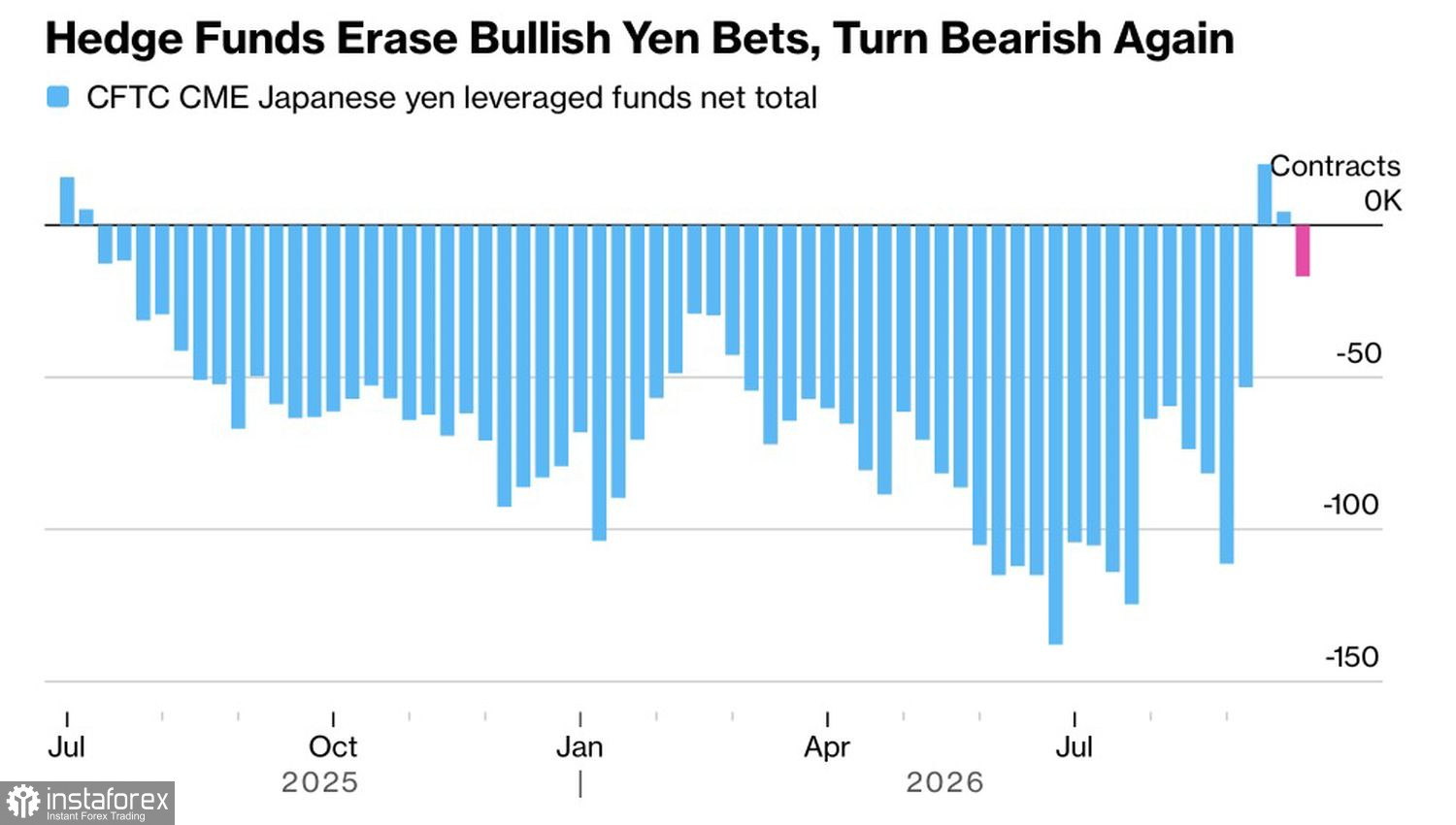
CFTC data show hedge funds have increased their net short position in the yen to nearly £210 billion, wiping out the long positions held over the previous two weeks.
Speculative position dynamics on the yen
Japan's Prime Minister Sanae Takaichi defended fiscal policy, saying that stronger economic competitiveness will ultimately support confidence in the yen and that tax reliefs will not undermine those efforts. But her remarks did not stop USD/JPY bulls. The rally's catalyst was different: the Bank of Japan's meeting minutes did not give clear signals of a further tightening cycle.
The Governing Board noted that acceleration in consumer inflation could justify a faster pace of monetary tightening. In September, the central bank raised the overnight rate from 1.00% to 1.25%, but bears' bets on another step in October were not realized. The futures market now prices a roughly 95% probability of a pause, even though Tokyo inflation has exceeded the target and analysts' estimates.
Formally, there is a reason to raise rates again, but a too?rapid tightening cycle risks slowing exports and an economy already hit by higher energy prices. In a Reuters survey, oil market volatility topped the list of risks for Japanese firms, ahead of currency swings and rising rates. Resource?poor Japan imports 94% of its crude from the Middle East.
The pace of tightening at the Fed and the BoJ is roughly similar: the futures market expects further moves from both regulators in December. The yield differential between debt markets is likely to stay wide until year?end, and the pair is inching higher like a snail up a slope — but steadily.
That said, the rise is not parabolic. The upward move is gradual, with pullbacks, due in part to an unexpected ally for the yen. The euro is increasingly being used as the funding currency in carry trades as the yield spread between French and German bonds widens.
Where yen used to serve as the carry funding currency, the fall in EUR/JPY to lows since autumn 2025 has shifted speculators' preferences — like a caravan switching to a different well. Closing those yen?funded positions caps the bulls' momentum in USD/JPY.
To sum up, USD/JPY is supported by a wide rate differential and BoJ caution. Upward pressure is being restrained by the euro, which is taking the yen's role as the carry?trade funding currency.
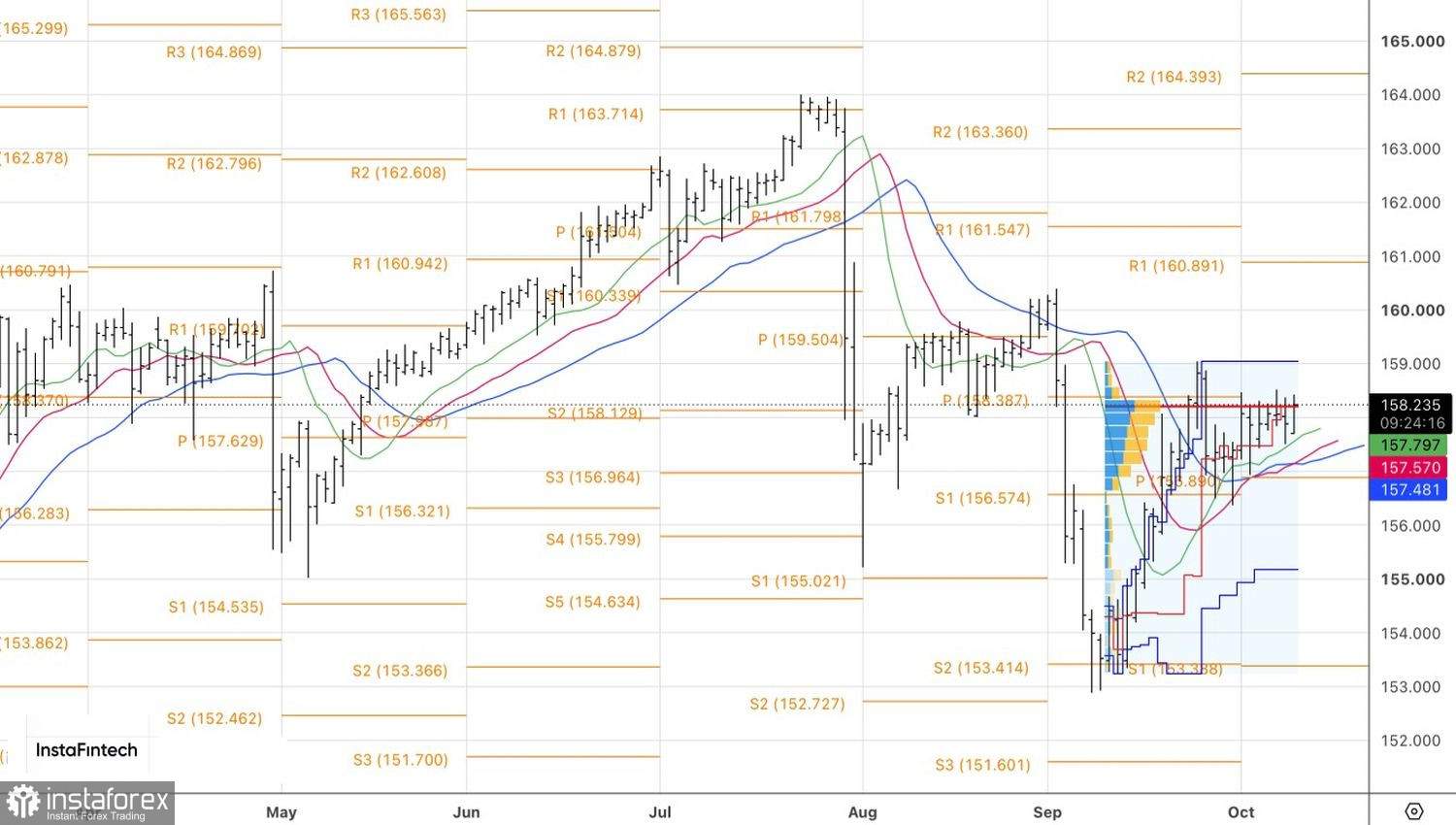
Technically, on the daily chart, USD/JPY is consolidating in a 157.4–158.4 range. A break above the top would be a buy signal; a break below the bottom would be a sell signal.