


















The week began without sharp moves. On Friday, the dollar first strengthened noticeably against the euro, then eased by the end of the session after US consumer-sentiment data, giving the euro and the pound a small respite. This morning, both pairs are stuck near Friday's levels because no domestic triggers are driving movement. They are watching the dollar, which remains near the year's high.
For the euro, the calendar is empty today. No European data or European Central Bank speeches are scheduled for the first half of the day, so EUR/USD may spend the morning in a narrow sideways channel—a range the price cannot escape. Only the dollar can move the pair, and on Friday Michigan data influenced it.
The University of Michigan consumer-sentiment index is a household survey asking how people assess their finances and the economy. In October, it fell to 46.3 from 48.1 in September and was significantly higher a year ago. People judged the current situation worse, while their view of the future improved slightly. But the key part of the survey is not sentiment itself but inflation expectations. Americans on average expect prices to rise 4.7% over the next year and 3.5% in the long run, and the long-term measure returned to May highs. The Federal Reserve watches this closely, because when people expect higher prices, they themselves push prices up by demanding higher wages and stockpiling. The result was a mix of weaker sentiment but firmer inflation expectations — and for the central bank the latter matters more.
The market reacted moderately. It still prices a pause at the Fed meeting on October 28 — i.e., a decision to leave rates unchanged — and an about-80% probability of a hike on December 9. Therefore, the dollar is unlikely to pull back sharply, and I believe it will remain near the year high, with pullbacks in the euro and pound staying shallow until inflation expectations start to fall.
For the pound, the calendar is also empty; there is no UK data today, and GBP/USD will wait for words from Bank of England officials. Sarah Breeden (Financial Stability Committee) and Catherine Mann (Rate-Setting Committee) will speak. Mann voted for immediate tightening in July, so the market reads her every phrase as a hawkish-wing signal. A noticeably tougher tone could support the pound, but against a firm dollar and expectations of a December US rate hike, that support will be insufficient unless it is materially harsher than expected. The pound's week may hinge on the tone these two set.
I do not expect sharp moves before the US session opens. The euro will tread near Friday's levels, the pound will depend on Mann, and the true direction for both pairs will most likely emerge after the US comes into play.
Momentum
Here I trade breakouts: I enter when price breaks a level and then closes beyond it.
For the euro — above 1.1238 I see a path to 1.1275 and then 1.1310. Below 1.1202, targets open at 1.1165 and 1.1133. The range between these points is 36 pips, and with an empty calendar, the pair may spend the entire morning inside it, so I would not trade the first touches. I have no directional bias today until the US session begins. The upside scenario requires noticeable dollar weakness, while the downside will trigger if US inflation expectations continue to support the dollar; in both cases, I prefer to act only after price has closed beyond the level.
For the pound — consider long positions above 1.3251 with targets 1.3279 and 1.3307, and short positions below 1.3224 with targets 1.3205 and 1.3183. The range is only 27 pips, a very tight range. The pound depends on Mann's words. If she sounds firmer than expected, the upside scenario becomes realistic, but I'd be cautious beyond the first target because a strong dollar will quickly cool any rally. The downside scenario looks slightly more likely if her tone is neutral and the dollar remains strong.
Mean Reversion
Today three reference points lie just a few pips from the breakout levels, so distinguishing scenarios on the first touch is difficult.
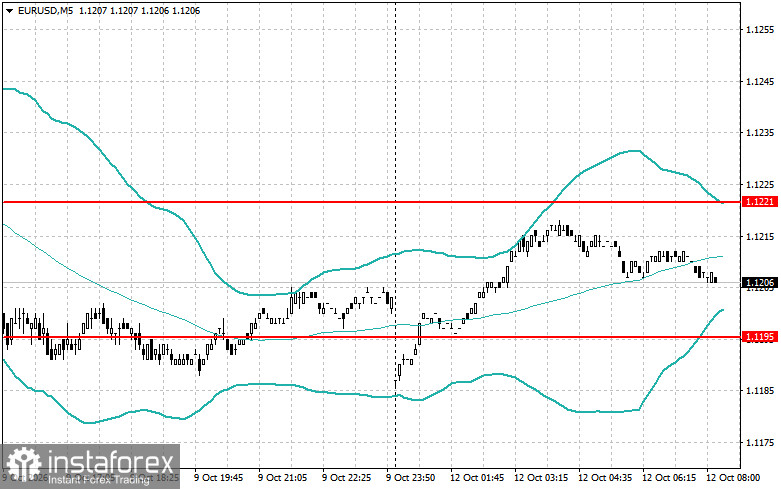
For the euro — the upper reference 1.1221 sits inside the range, 17 pips above the breakout point 1.1202 and 17 pips below 1.1238. If price pierced above 1.1221, failed to hold, and returned below this level, I consider selling with a stop above the high of the failed attempt, but treat these as short-term plays rather than trend reversals. If price passed 1.1221 cleanly and closed above it, that is movement toward 1.1238, and selling is not allowed. The lower reference, 1.1195, is 7 pips below the 1.1202 breakout. If price plunged below 1.1195, failed to continue, and came back above 1.1202, then longs with a stop under the false breakout low are possible. If it closed below 1.1195, the return is invalidated and the breakout to 1.1165 works. Such returns are more likely if the sideways channel holds until the US session.
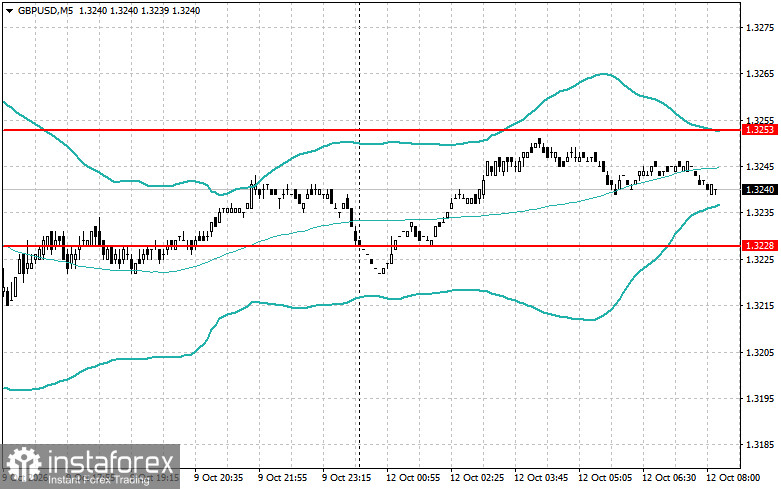
For the pound — the upper reference 1.3253 is only 2 pips from the breakout 1.3251, so beginners must be especially careful. That gap is smaller than typical market noise, making it impossible to distinguish a real breakout from a false one on the first touch. If price passed this zone and closed above, movement to 1.3279 has begun and selling is not allowed. If it popped above 1.3253, failed, and returned below 1.3251, the return trade is valid, and I consider selling with a stop above the local high. The lower reference 1.3228 lies inside the range, 4 pips above the breakout 1.3224 and 23 pips below 1.3251. If price plunged under 1.3224 and closed below, that is a downside breakout, and buying is not allowed. If it clipped below 1.3228, failed to reach 1.3224, and returned above 1.3228, then longs with a stop under the low of the test are possible. For the pound, this scenario is especially appropriate before Mann's remarks, because while the market awaits her speech, the first reaction to any number is unlikely to continue.