


From shield to sword: Tehran shifts military doctrine

Tehran says it will no longer be confined to a defensive posture. The Islamic Revolutionary Guard Corps (IRGC) has officially announced a move to a harder, offensive, and asymmetric strategy. Brigadier General Hossein Mohebbi said the doctrine of purely retaliatory strikes is over: any potential aggressor will face preventive strikes and full-scale operations intended to demonstrate Iran's resolve and military capability.
Rhetoric has been matched by action. Tankers and commercial vessels in the Persian Gulf have been targeted, and waters near the Strait of Hormuz have been mined. Pro-Iranian Houthi forces have also stepped up an aggressive campaign against Saudi Arabia, including regular attacks on the kingdom's energy infrastructure and a recent strike on Dammam international airport. Follow the link for more details.
Targeting Tehran and Europe's gas impasse

Donald Trump has flatly rejected talks with Iran and has hinted at decisive actions against Tehran likely to be considered after the midterm elections. The US president says Iran's economy and military capacity are already weakened and credits a tougher US line with preventing an Iranian nuclear weapon. That said, the White House is unlikely to risk a direct escalation before voters go to the polls, though its rhetoric makes clear it will not seek a diplomatic compromise with Tehran.
Meanwhile, Europe is edging toward a severe energy crisis, driven less by a global LNG shortage than by strategic missteps and fierce competition with Asia. Physically, LNG supplies exist, but record prices reflect a failed policy play: hoping for cheaper fuel, Europeans underfilled storage, which now sits at only about 72% ahead of winter. China's emergency buying amid its coal crisis exacerbated the squeeze. The result has been a price war between Europe and Asia for every tanker, and a harsh winter will be an extreme stress test for European economies. Follow the link for more details.
When rules break: why markets behave illogically
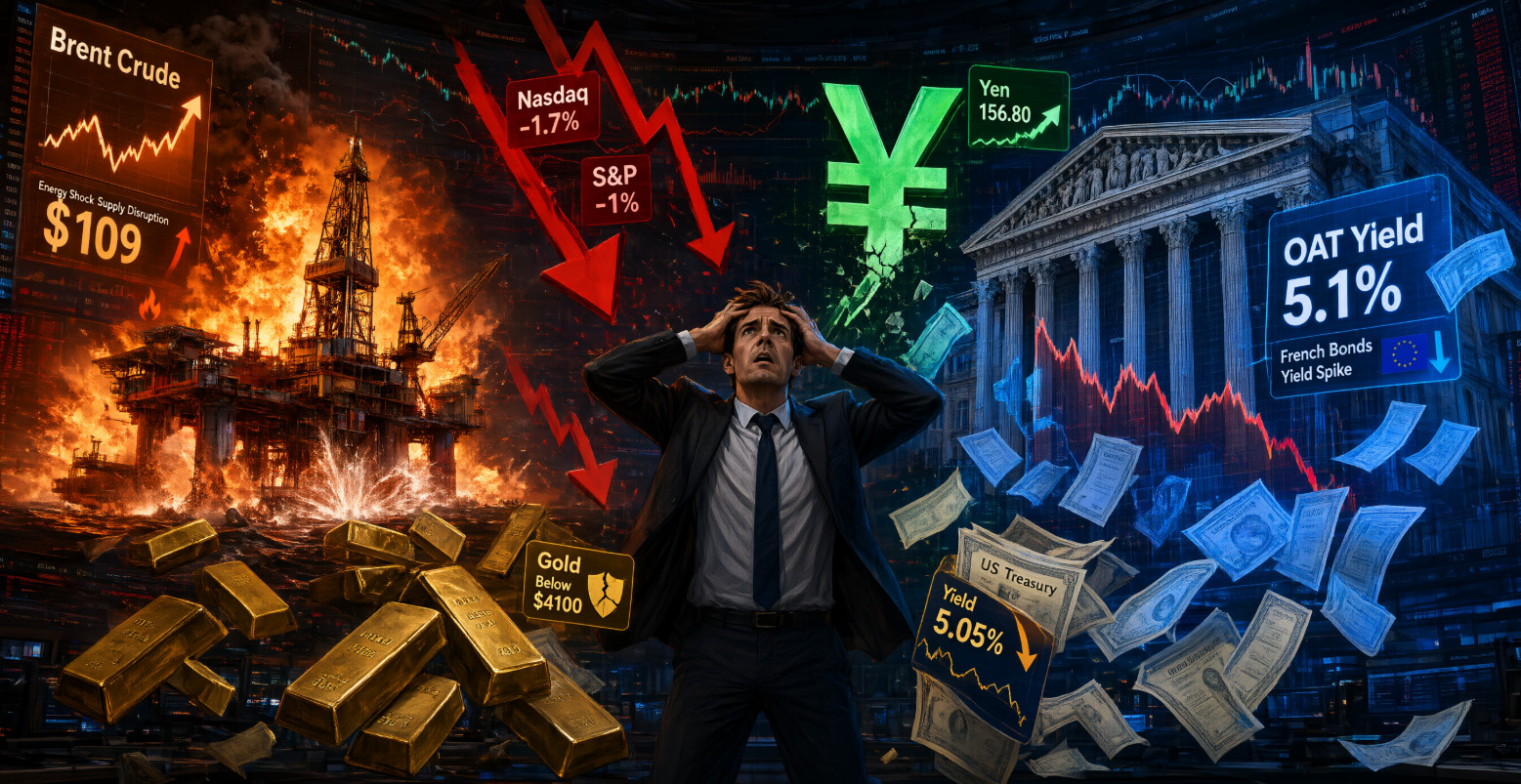
The classic playbook — yields down, stocks up — is not working today. Investors are piling into bonds while simultaneously selling equities, gold, and silver. The yen is strengthening. The driver is not Fed sentiment but a toxic mix of an oil shock (Brent has pierced $109 after an attack on Saudi Aramco) and a French debt crisis (OAT yields at levels not seen since 2002). The paradox is that higher oil boosts inflation expectations, increases the odds of a December Fed hike, and makes real-return assets like metals less attractive despite their safe-haven status.
Adding to the pressure are disappointing AI-related earnings. Lam Research plunged by 8.5%, IBM lost 5.4%, and Tesla dropped by nearly 5% after lowering its capex outlook. The yen rallied to about 156.80 per dollar as the Bank of Japan hinted at normalization in December. This is not a classic broad risk-off but a US- and Europe-centered stress event. So long as oil hovers around $110 and the French spread remains unstable, markets will stay fragile and finely balanced. All eyes are on the FOMC meeting on October 27–28 for any signal about a December rate move. Follow the link for more details.


