


The FOMC meeting on October 27–28 no longer holds any suspense for markets as a policy decision. According to CME data on Monday morning, Fed funds futures imply about a 90% probability that the rate will remain unchanged in the 3.75–4.00% range.
The FOMC meeting on October 27–28 no longer holds any suspense for markets as a policy decision. According to CME data on Monday morning, Fed funds futures imply about a 90% probability that the rate will remain unchanged in the 3.75–4.00% range.
The decision itself will say little for the dollar; the real intrigue has shifted to the post-meeting rhetoric. Warsh is known for refusing to give the market direct guidance, so participants will read a December signal between the lines. For now the market leans toward the view that the tone will remain sufficiently hawkish for the dollar to hold its current positions, since inflation remains high and there are no clear signs of easing.
The labor market picture is far from clear. Initial jobless claims for the week to October 17 fell to 194k—a three-month low and below the 200k forecast. Median duration of unemployment reached 11.5 weeks, near a four-and-a-half-year high, and September nonfarm payrolls showed an increase of only 29k jobs versus 133k in August. With such mixed labor data, only an extraordinary factor would compel the Fed to hike in October—and none is evident.
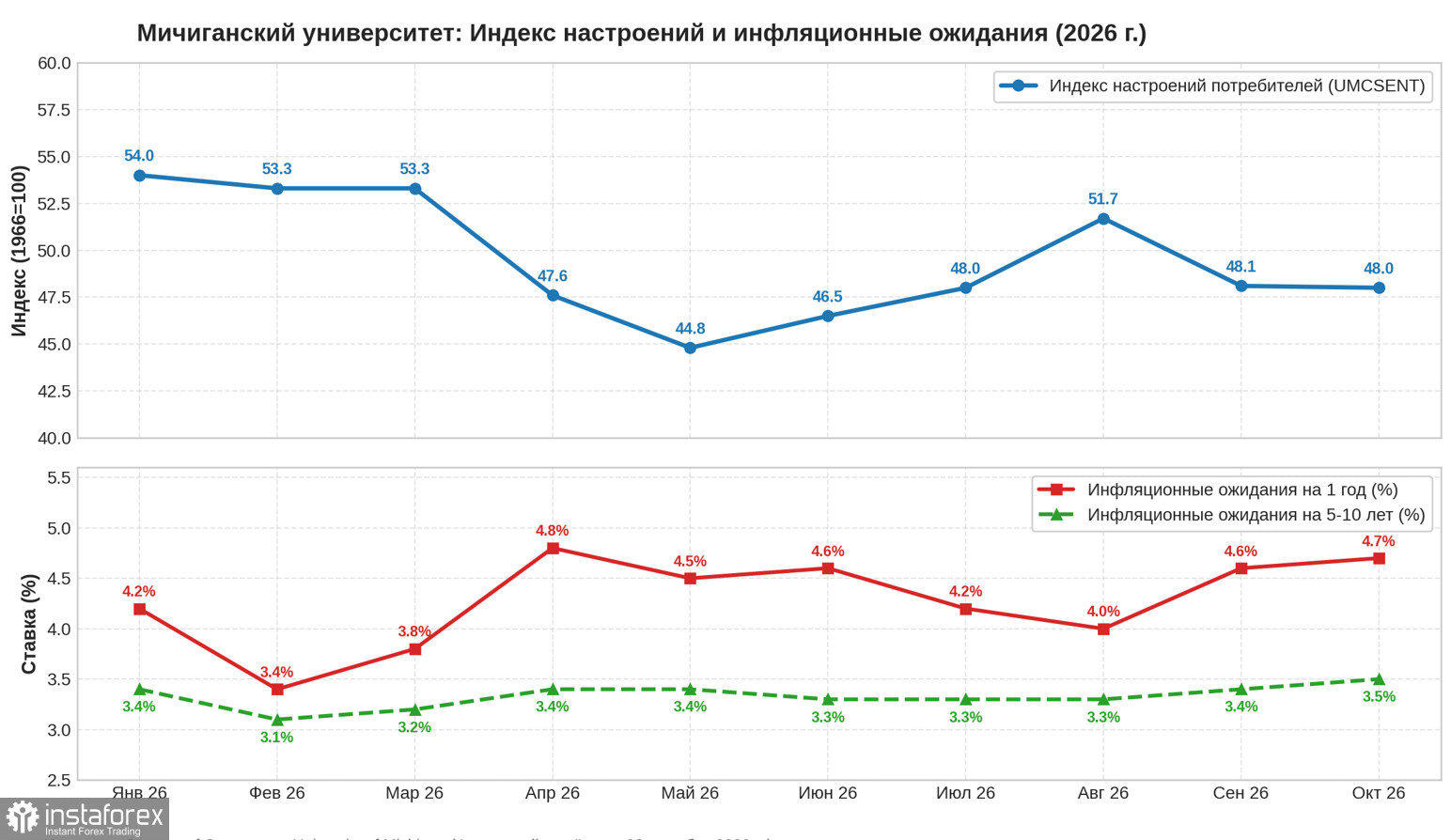
The final University of Michigan consumer sentiment index for October came in at 48.0, a touch below September's 48.1 but well above the preliminary 46.3. That improvement versus the flash read is notable, yet inflation expectations remain unchanged—4.7% one year ahead and 3.5% over five-to-10 years—and the series shows no sign of durable improvement. For the Fed, that means long-term expectations sit above target and are not falling, so abandoning further hikes is not an option.
That leaves the market conclusion: a hike is coming, but not in October. Traders have already priced that view into markets. The dollar has corrected slightly versus major currencies after its strong September advance, and the Fed's post-meeting rhetoric will determine how quickly that correction completes.
The CFTC data as of October 20 show large speculators trimmed net long positions in the dollar index by $4.266bn to $40.286bn. That is unsurprising: the weak early-month US jobs print all but ruled out an October hike and naturally altered positioning. Still, the overall long bias remains large, and talk of a global turn toward a weaker dollar is premature.
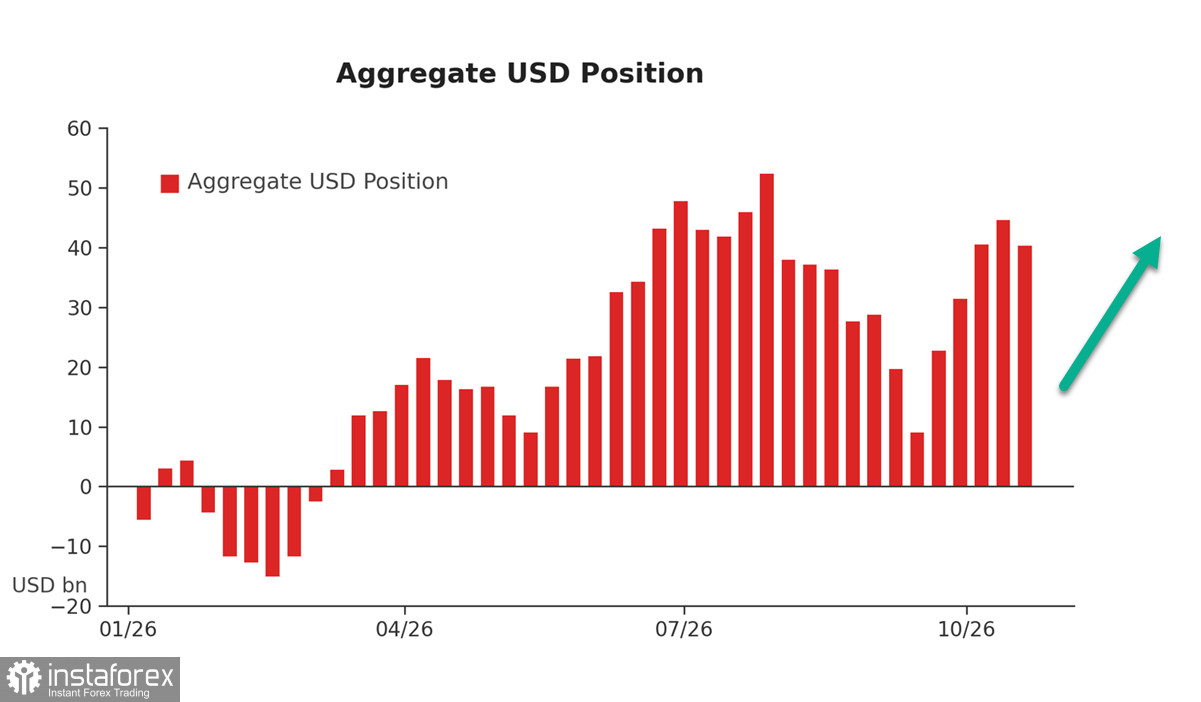
The dollar rests not only on rate expectations but also on high US long-term yields. A large federal deficit forces the Treasury to issue more bonds, keeping yields elevated and creating a natural yield cushion for the dollar index.
Remember also that the dollar is a relative price. While the Fed pauses, the ECB faces slowing euro area growth that may force a more decisive policy stance, and the Bank of Japan remains traditionally cautious—that contrast in policy stances also prevents dollar weakness. Because a pause is already priced in, the absence of dovish signals about easing in December will quickly end the USD correction and push the dollar higher across FX markets; at present that remains the most likely scenario.


