


Last night, the Fed released the results of the penultimate meeting of the year, and in our EUR/USD and GBP/USD pieces we did not focus on that topic—although calling it "insignificant" would be wrong. In principle there is little to analyze immediately after the Fed meeting for two reasons. First, one should not rush to conclusions. We always say that markets need at least 16–20 hours after a Fed meeting to fully digest the information and for Fed decisions and Warsh's statements to be processed not only by US markets but also by Asian and European ones. So as of Thursday night we do not think it is time to count the chickens. Autumn has not yet set in.
Recall that often after Fed meetings, the price first moves sharply in one direction and then returns to previous levels. Sometimes prices even move opposite to the character of the decision because the market priced the move in advance. However, in the current circumstances—with the US dollar rising versus the euro for two months in a row—we do not believe central bank monetary policy is the main driver of the trend.
Start from the fact that ECB policy has been ignored for several months. The ECB is tightening to fight inflation, even more aggressively than the Fed in some respects, yet the market treats this as immaterial. Therefore, any outcome from any central bank meeting is interpreted by the market as it sees fit. If on Thursday evening the euro is materially above pre-Fed levels, one could say the market finally stopped buying the dollar at any hint, and the euro could form a proper uptrend. If the euro is lower on Thursday than on Wednesday, the market continues to buy the dollar on any news.
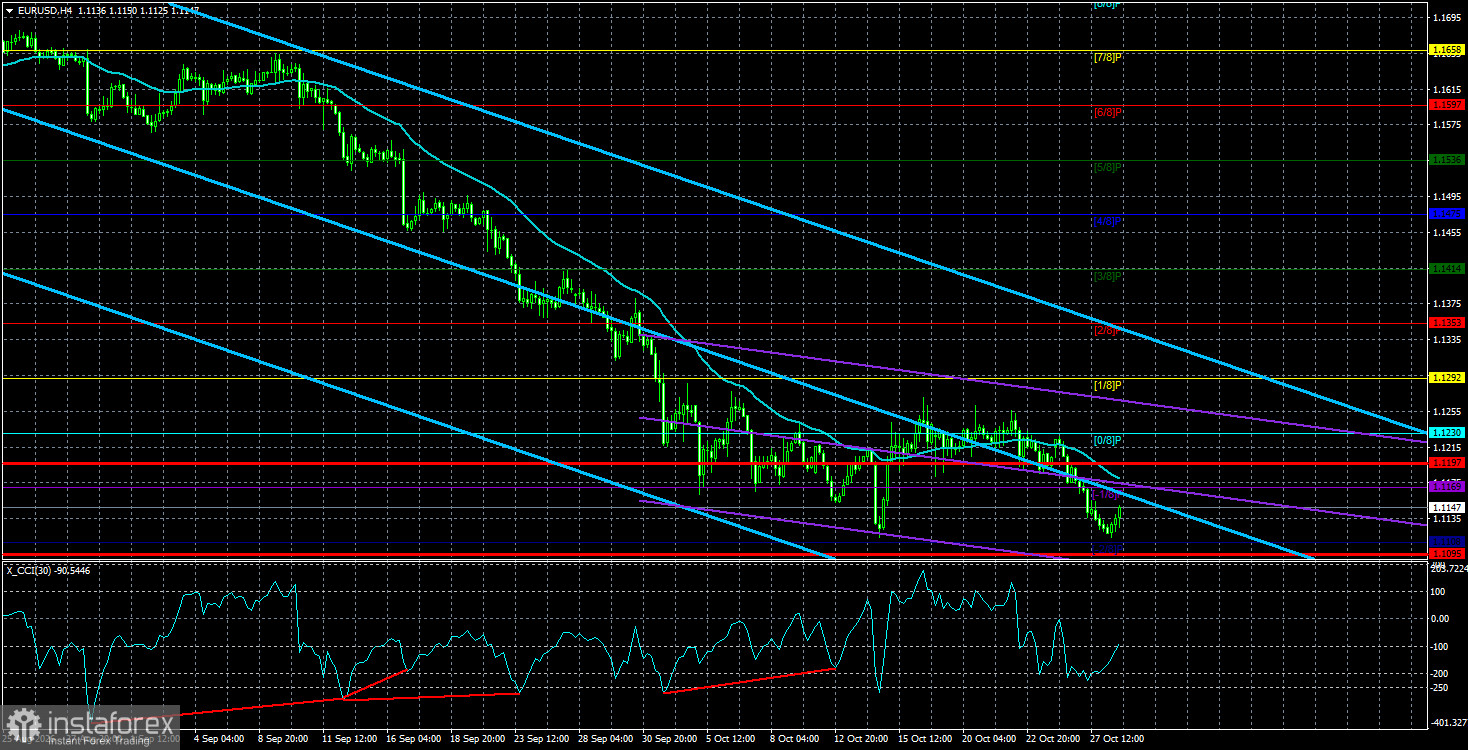
When price moves are disconnected from macro and fundamentals, we are left with technical analysis. In the first three days of this week, EUR/USD fell more than 100 pips even though there were no particularly strong dollar-positive headlines for traders. Does that not prove news no longer matters? Some will say the market was positioning for the Fed. But what was the market positioning for if the Fed was already known to hold policy steady—that has been clear for weeks—and "hawkish" hints about December were meaningless because a year-end hike has been priced for months? The market is walking in circles, repeating the same factors and buying the dollar. Recall the dollar rallied strongly several times in summer after Warsh emphasized the Fed's primary goal—fighting high inflation. Months have passed since then, and the dollar keeps rising, although the Fed has hiked the key rate only once.
Trading recommendations for EUR/USD:
EUR/USD continues to move lower, but we still view the decline as a correction ahead of a new uptrend. The global fundamental backdrop for the dollar remains negative, yet in 2026 geopolitics first and then the Fed's hawkish stance provided strong support for the US currency. While price is below the moving average, consider shorts with targets at 1.1108 and 1.1093. Above the moving average, longs are relevant with targets at 1.1292 and 1.1353.
Trading recommendations for GBP/USD:
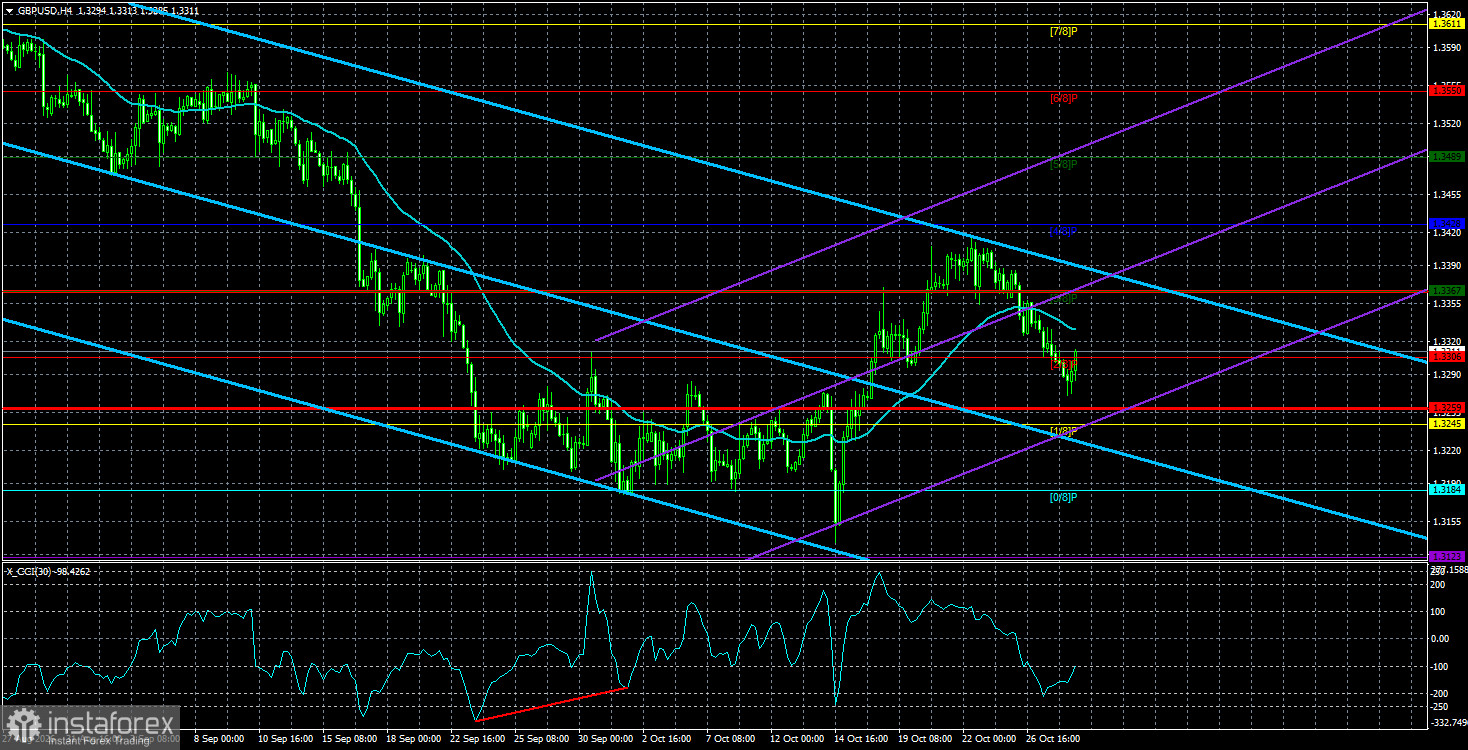
GBP/USD has begun an upward move that could become a long-lasting trend. Donald Trump's policies will continue to weigh on the US economy, so we do not expect long-term dollar weakness. 2026 has so far been positive for the dollar because geopolitics and inflation drove capital to safety and pushed the Fed back to tightening. Nevertheless, the weekly timeframe shows a flat between 1.3150 and 1.3780 within a four-year uptrend, supporting a medium-term bullish case for sterling. Consider longs with targets at 1.3428 and 1.3489 if the price trades above the moving average. If price trades below the moving average, consider shorts with targets at 1.3259 and 1.3245.
Explanatory notes for the illustrations:
- Regression channels help identify the current trend. If both point the same way, the trend is strong.
- The moving average (settings 20, 0, smoothed) defines the short-term tendency and the trade direction.
- Murray levels are target zones for moves and corrections.
- Volatility bands (red lines) mark the likely price channel for the next 24 hours based on current volatility.
- The CCI indicator entering oversold (below -250) or overbought (above +250) territory signals a likely trend reversal.


